3 PhD Positions in the ERC Project 'The Governance of Loss in the EU' at ACELG

3 PhD Positions in the ERC Project 'The Governance of Loss in the EU' at ACELG

Working at the UvA

Join us!

We are looking for 3 PhD Candidates in the ERC-Funded Project, the Governance of Loss in the EU (GovLoss-EU) at the Amsterdam Law School, and the Amsterdam Centre for European Law and Governance. You can read more about the project here, here or here.

The project will study the experiences of loss that emerge due to economic transformations linked to globalization, technological, and climate change (including efforts to mitigate it). These processes displace long-standing market and production arrangements and may create losers —workers, businesses, and consumers — who depend on these arrangements for their income and livelihoods or value them for other reasons. Think of small shops in the face of digital commerce; automotive workers in the face of robotization or the decline of the auto industry; web-developers whose jobs may be displaced by ever-more sophisticated AI tools; fisheries or farmers facing biodiversity loss. Understanding and being able to govern these transformation processes may be seen as key to Europe’s future prosperity.

With this premise, the project aims to study the legal and regulatory arrangements through which ‘losers’ can be assisted, and loss can be addressed (the Governance of Loss) in several industries, tentatively but not necessarily identified as the Automotive Industry, Agriculture and Fisheries, and Consumer Services (such as retail and tourism). Each selected candidate may study one industry, and/or several case studies within each industry, to be identified in consultation with the supervisors.

Possible themes and questions for your research project may include:

  • Who are the ‘losers’ in different economic, socio-technical, and ecological transformation processes, in different industries - what do they lose, and what are their concerns and demands?
  • What normative arguments justify assisting ‘losers’ in processes of economic, socio-technical, and ecological transformations? Which types of losses or categories of losers deserve assistance and which forms should this assistance take?
  • Are there legal and regulatory arrangements that address loss from different transformation, or could potentially do so? Potential areas of interest for the project include the Law of the Welfare state; EU economic law (e.g. internal market, competition, state aid, digital regulation or consumer law); the Common Agricultural and Fisheries Policy; but other fields of law may also be relevant (e.g. national private law, labor law, and administrative law).
  • How does the governance of loss work on the ground: how is it implemented in response to concrete problems; how does it affect market participants; and what are its unintended consequences? The provisional model is for such questions to be investigated in a specific sector or industry.

Working at the UvA

Join us!

We are looking for 3 PhD Candidates in the ERC-Funded Project, the Governance of Loss in the EU (GovLoss-EU) at the Amsterdam Law School, and the Amsterdam Centre for European Law and Governance. You can read more about the project here, here or here.

The project will study the experiences of loss that emerge due to economic transformations linked to globalization, technological, and climate change (including efforts to mitigate it). These processes displace long-standing market and production arrangements and may create losers —workers, businesses, and consumers — who depend on these arrangements for their income and livelihoods or value them for other reasons. Think of small shops in the face of digital commerce; automotive workers in the face of robotization or the decline of the auto industry; web-developers whose jobs may be displaced by ever-more sophisticated AI tools; fisheries or farmers facing biodiversity loss. Understanding and being able to govern these transformation processes may be seen as key to Europe’s future prosperity.

With this premise, the project aims to study the legal and regulatory arrangements through which ‘losers’ can be assisted, and loss can be addressed (the Governance of Loss) in several industries, tentatively but not necessarily identified as the Automotive Industry, Agriculture and Fisheries, and Consumer Services (such as retail and tourism). Each selected candidate may study one industry, and/or several case studies within each industry, to be identified in consultation with the supervisors.

Possible themes and questions for your research project may include:

  • Who are the ‘losers’ in different economic, socio-technical, and ecological transformation processes, in different industries - what do they lose, and what are their concerns and demands?
  • What normative arguments justify assisting ‘losers’ in processes of economic, socio-technical, and ecological transformations? Which types of losses or categories of losers deserve assistance and which forms should this assistance take?
  • Are there legal and regulatory arrangements that address loss from different transformation, or could potentially do so? Potential areas of interest for the project include the Law of the Welfare state; EU economic law (e.g. internal market, competition, state aid, digital regulation or consumer law); the Common Agricultural and Fisheries Policy; but other fields of law may also be relevant (e.g. national private law, labor law, and administrative law).
  • How does the governance of loss work on the ground: how is it implemented in response to concrete problems; how does it affect market participants; and what are its unintended consequences? The provisional model is for such questions to be investigated in a specific sector or industry.

All about this vacancy

This is what you will do

  • Your main task as PhD candidate will be to develop your PhD project within the framework of the overall project under the supervision of the Principal Investigator Giacomo Tagiuri and a supervisory team including scholars from within and outside UvA.
  • In addition to your own thesis research, you will contribute to the overall project research and its dissemination. This may include data collection and research for jointly written publication(s), as well as providing and sharing your expertise (disciplinary or methodological) with other team members.
  • You are expected to conduct field research for at least 4 to 8 weeks, in one or more European Member States relevant to your project. The design, location, duration and methods of your fieldwork will depend on your case selection and research experience to be decided together with your supervisor(s). The methods may include qualitative interviews with officials and stakeholders; ethnographic work; archival/historical research; among others.
  • Teaching (up to 10% of your time) and organizational support for the project leader may be part of your job responsibilities. These tasks will allow you to gain valuable professional experience for a future academic career.

What we ask of you

  • A master’s degree in law, the social sciences or the humanities. Possible disciplines include: law; sociology; anthropology; history (including economic history); political science (including international relations or public administration); economics (including political economy); philosophy and allied fields;
  • Some knowledge or curiosity about law and governance in the EU;
  • Experience and/or passion for academic research and writing;
  • Excellent command of English both oral and written  (knowledge of a second European language beyond English would be an advantage as the project seeks to produce findings representative of the diversity of European socio-economic arrangements;
  • Training or experience in qualitative social science methods (interviews; ethnography) may be an advantage;
  • Curiosity and willingness to engage in a collaborative interdisciplinary socio-legal project.

This is what we offer you

The position concerns temporary employment of 38 hours per week for a maximum term of four years which should result in the conferral of a doctorate. We offer an employment contract for one year with a probationary period of two months, preferably starting on 1 September 2026. The appointment will be extended for another three years upon a positive assessment, i.e until 31 August 2030. The employment contract is for 38 hours a week.

Your salary will start at € 3.059 gross per month increasing till € 3.881 (year 4) on the basis of a full working week of 38 hours. This sum does not include the 8% holiday allowance and the 8.3% year-end allowance. A favourable tax agreement, the 30% ruling, may apply to non-Dutch applicants.

All about this vacancy

This is what you will do

  • Your main task as PhD candidate will be to develop your PhD project within the framework of the overall project under the supervision of the Principal Investigator Giacomo Tagiuri and a supervisory team including scholars from within and outside UvA.
  • In addition to your own thesis research, you will contribute to the overall project research and its dissemination. This may include data collection and research for jointly written publication(s), as well as providing and sharing your expertise (disciplinary or methodological) with other team members.
  • You are expected to conduct field research for at least 4 to 8 weeks, in one or more European Member States relevant to your project. The design, location, duration and methods of your fieldwork will depend on your case selection and research experience to be decided together with your supervisor(s). The methods may include qualitative interviews with officials and stakeholders; ethnographic work; archival/historical research; among others.
  • Teaching (up to 10% of your time) and organizational support for the project leader may be part of your job responsibilities. These tasks will allow you to gain valuable professional experience for a future academic career.

What we ask of you

  • A master’s degree in law, the social sciences or the humanities. Possible disciplines include: law; sociology; anthropology; history (including economic history); political science (including international relations or public administration); economics (including political economy); philosophy and allied fields;
  • Some knowledge or curiosity about law and governance in the EU;
  • Experience and/or passion for academic research and writing;
  • Excellent command of English both oral and written  (knowledge of a second European language beyond English would be an advantage as the project seeks to produce findings representative of the diversity of European socio-economic arrangements;
  • Training or experience in qualitative social science methods (interviews; ethnography) may be an advantage;
  • Curiosity and willingness to engage in a collaborative interdisciplinary socio-legal project.

This is what we offer you

The position concerns temporary employment of 38 hours per week for a maximum term of four years which should result in the conferral of a doctorate. We offer an employment contract for one year with a probationary period of two months, preferably starting on 1 September 2026. The appointment will be extended for another three years upon a positive assessment, i.e until 31 August 2030. The employment contract is for 38 hours a week.

Your salary will start at € 3.059 gross per month increasing till € 3.881 (year 4) on the basis of a full working week of 38 hours. This sum does not include the 8% holiday allowance and the 8.3% year-end allowance. A favourable tax agreement, the 30% ruling, may apply to non-Dutch applicants.

Your place at the UvA

Where will you work

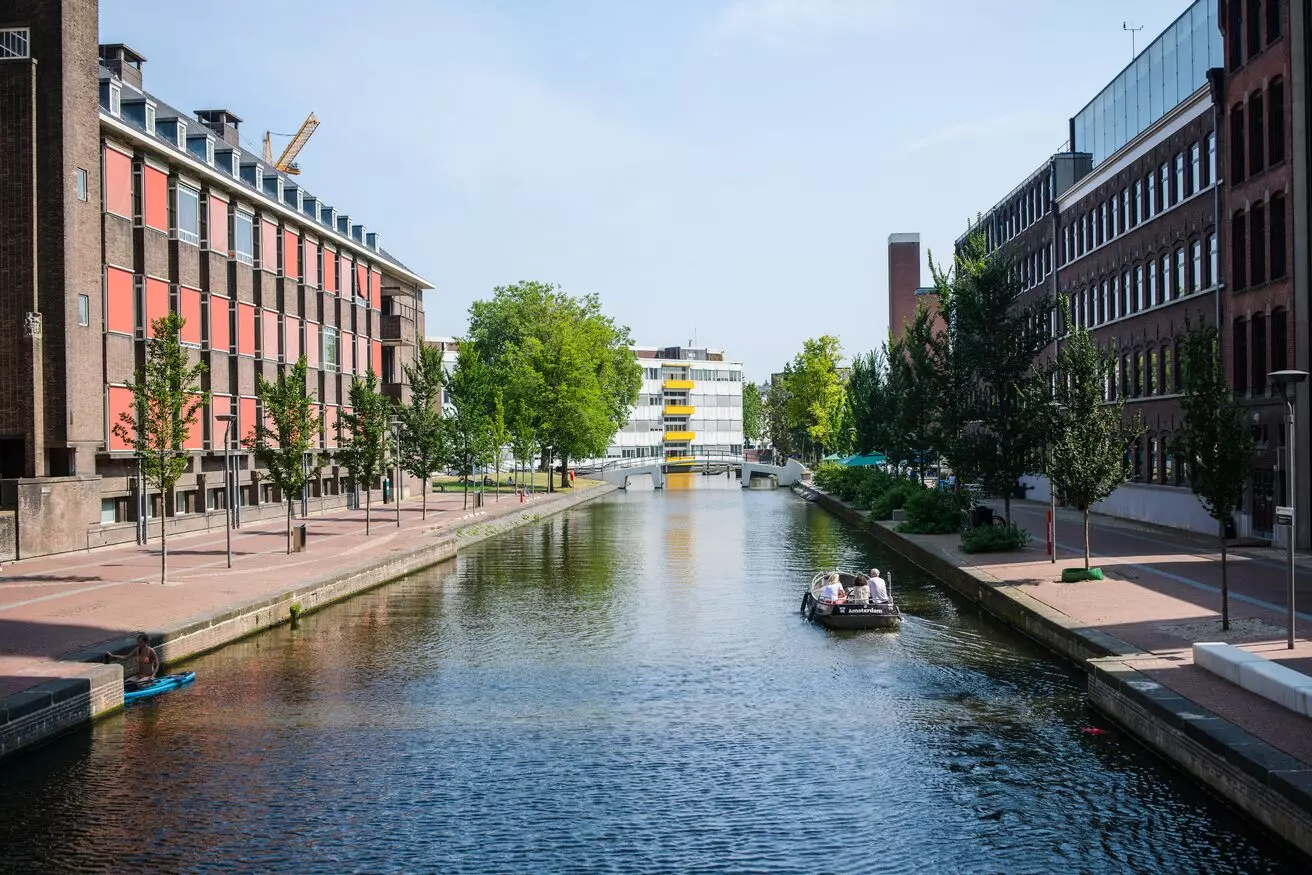
The research project will contribute to the research of the Amsterdam Centre for European Law and Governance (ACELG). Members of our research centers and groups have a strong track-record of excellent research and sustain a dynamic research culture through events and initiatives.

The Department of International and European Public Law, consists of approximately 50 employees who, with great commitment and dedication, work in research and education in the fields of International Public Law and European Public Law. The department is responsible for teaching different Bachelor's courses and provides the English-taught Master's program in International and European Law with 4 different tracks. The research is being done in the two research centers ACELG and ACIL.

You will participate in the Amsterdam Law School’s PhD training programme and be part of its PhD community.

About the Amsterdam Law School

Committed, responsible and open-minded. This is how we at the Amsterdam Law School view the role of law in a constantly changing (international) society. With over 5,000 students and 600 staff, we are one of the larger law faculties in the Netherlands. We educate legal professionals who know how to apply the law effectively with the aim of actually contributing to solutions for society. We respond to social developments through innovative and pioneering research. In this way, we always keep in touch with society.

Your place at the UvA

This is where you will be working

Where will you work

The research project will contribute to the research of the Amsterdam Centre for European Law and Governance (ACELG). Members of our research centers and groups have a strong track-record of excellent research and sustain a dynamic research culture through events and initiatives.

The Department of International and European Public Law, consists of approximately 50 employees who, with great commitment and dedication, work in research and education in the fields of International Public Law and European Public Law. The department is responsible for teaching different Bachelor's courses and provides the English-taught Master's program in International and European Law with 4 different tracks. The research is being done in the two research centers ACELG and ACIL.

You will participate in the Amsterdam Law School’s PhD training programme and be part of its PhD community.

About the Amsterdam Law School

Committed, responsible and open-minded. This is how we at the Amsterdam Law School view the role of law in a constantly changing (international) society. With over 5,000 students and 600 staff, we are one of the larger law faculties in the Netherlands. We educate legal professionals who know how to apply the law effectively with the aim of actually contributing to solutions for society. We respond to social developments through innovative and pioneering research. In this way, we always keep in touch with society.

Important to know

Your application & contact

We look forward to receiving your applications. We will accept applications until April 12 2026. Please apply online via the red button by providing the documents below. 

Please note that it is only possible to upload two documents, therefore please combine the required files in two (PDF-)documents.

  • A CV including the title of your master thesis and a list of publications, if relevant;
  • A motivation letter (of no more than 500 words);
  • A provisional research project situated within the overall GovLoss-EU project design. Please indicate the preferred industries/sectors and processes of transformation that you would like to study and your favored methodologies (between 1000 and 2500 words);
  • Writing sample of a recent single authored paper (e.g. an article you published, your master’s thesis or other work written during your degree) in English;
  • Transcripts of your bachelor’s and master’s degrees (including passed courses and grades);
  • The contact details of two referees (no reference letters required at this stage) to be listed at the end of the CV;

Do you have any questions, or do you require additional information? Please contact: Giacomo Tagiuri ([email protected])

Diversity, Equity & Inclusion

As an employer, the UvA maintains an equal opportunities policy. We value diversity and are fully committed to being a place where everyone feels at home. We nurture inquisitive minds and perseverance and allow room for persistent questioning. With us, curiosity and creativity are the prevailing culture.
Studies show that women and members of underrepresented groups only apply for jobs if they meet 100% of the qualifications. Do you meet the educational requirements but not yet all of the requested experience? The UvA encourages you to apply anyway.

Important to know

Your application & contact

We look forward to receiving your applications. We will accept applications until April 12 2026. Please apply online via the red button by providing the documents below. 

Please note that it is only possible to upload two documents, therefore please combine the required files in two (PDF-)documents.

  • A CV including the title of your master thesis and a list of publications, if relevant;
  • A motivation letter (of no more than 500 words);
  • A provisional research project situated within the overall GovLoss-EU project design. Please indicate the preferred industries/sectors and processes of transformation that you would like to study and your favored methodologies (between 1000 and 2500 words);
  • Writing sample of a recent single authored paper (e.g. an article you published, your master’s thesis or other work written during your degree) in English;
  • Transcripts of your bachelor’s and master’s degrees (including passed courses and grades);
  • The contact details of two referees (no reference letters required at this stage) to be listed at the end of the CV;

Do you have any questions, or do you require additional information? Please contact: Giacomo Tagiuri ([email protected])

As an employer, the UvA maintains an equal opportunities policy. We value diversity and are fully committed to being a place where everyone feels at home. We nurture inquisitive minds and perseverance and allow room for persistent questioning. With us, curiosity and creativity are the prevailing culture.
Studies show that women and members of underrepresented groups only apply for jobs if they meet 100% of the qualifications. Do you meet the educational requirements but not yet all of the requested experience? The UvA encourages you to apply anyway.

Don't miss out on your dream job!

Sign up for a job alert and you'll receive automatic updates about new and relevant vacancies.

Don't miss out on your dream job!

Sign up for a job alert and you'll receive automatic updates about new and relevant vacancies.