PhD in Modelling Offshore Windfarm Impacts on Marine Bird Populations

PhD in Modelling Offshore Windfarm Impacts on Marine Bird Populations

Working at the UvA

About the position

As offshore wind farms rapidly expand in the North Sea, understanding and mitigating their ecological impact on marine ecosystems is essential. The North Sea POWER project tackles this challenge by reducing key knowledge gaps on underwater noise, biomass and water flows, and wildlife disturbance (seabirds and bats), supporting a sustainable green energy transition. The project is funded through the Dutch Research Agenda (NWA) in collaboration with the Dutch Ministry of Economic Affairs and Climate.

Led by Wageningen University & Research, North Sea POWER is a transdisciplinary consortium of universities, societal stakeholders, conservation organizations, and energy sector partners. This PhD position is one of twelve PhD and postdoc roles in the consortium. You will be based at IBED (University of Amsterdam), studying offshore wind disturbances and marine bird population dynamics in close collaboration with Wageningen Marine Research (WMR), and working in a team with shared meetings and training.

The aim of the PhD project is to explore potential consequences of offshore wind farms (OWFs) on marine bird populations developing and analyzing models that are capable of accounting for the cumulating effects of OWFs, such as ecosystem changes, displacement of marine birds from their habitats and/or collisions of marine birds with turbines, over the full life history. The population models will be based on individual level energetics over the full annual cycle and life history (from egg to adult) for two seabird species (northern gannet and common guillemot). OWF impacts on energetic costs, feeding opportunities, mortality, and reproduction will be mechanistically integrated, while accounting for species and colony specific exposure.

Working at the UvA

About the position

As offshore wind farms rapidly expand in the North Sea, understanding and mitigating their ecological impact on marine ecosystems is essential. The North Sea POWER project tackles this challenge by reducing key knowledge gaps on underwater noise, biomass and water flows, and wildlife disturbance (seabirds and bats), supporting a sustainable green energy transition. The project is funded through the Dutch Research Agenda (NWA) in collaboration with the Dutch Ministry of Economic Affairs and Climate.

Led by Wageningen University & Research, North Sea POWER is a transdisciplinary consortium of universities, societal stakeholders, conservation organizations, and energy sector partners. This PhD position is one of twelve PhD and postdoc roles in the consortium. You will be based at IBED (University of Amsterdam), studying offshore wind disturbances and marine bird population dynamics in close collaboration with Wageningen Marine Research (WMR), and working in a team with shared meetings and training.

The aim of the PhD project is to explore potential consequences of offshore wind farms (OWFs) on marine bird populations developing and analyzing models that are capable of accounting for the cumulating effects of OWFs, such as ecosystem changes, displacement of marine birds from their habitats and/or collisions of marine birds with turbines, over the full life history. The population models will be based on individual level energetics over the full annual cycle and life history (from egg to adult) for two seabird species (northern gannet and common guillemot). OWF impacts on energetic costs, feeding opportunities, mortality, and reproduction will be mechanistically integrated, while accounting for species and colony specific exposure.

All about this vacancy

What are you going to do?

Your PhD project will investigate how offshore wind farms affect marine bird populations, focusing on two sensitive seabird species: northern gannet and common guillemot.

Tasks and responsibilities: 

  • Develop mechanistic population models based on individual energetics and covering the full annual cycle and life history (egg to adult).
  • Integrate sublethal effects (displacement, ecosystem change) and lethal effects (collisions) to assess individual and population-level outcomes.
  • Account for species- and colony-specific exposure to offshore wind farms over space and time.
  • Use physiologically structured population models (PSPMs) to link feeding, energetic costs, growth, mortality, and environmental conditions.

The work will contribute directly to improving Dutch assessments of offshore wind impacts on marine birds and will involve close collaboration with a project postdoc, stakeholders, and international research groups through co-creation and information exchange.

Your profile

Your experience and profile:

  • MSc degree in ecology, preferably with specialization in theoretical ecology or theoretical biology, or with strong quantitative skills and experience in population or foodweb dynamic modelling,
  • Affinity with marine biology and/or seabird ecology,
  • Interest in developing scientific knowledge with societal relevance,
  • Good computational skills,
  • Willingness to work in a multidisciplinary environment and engage in stakeholder information exchange meetings,
  • Experience with bifurcation analysis and bioenergetic models will be considered an advantage.

All about this vacancy

What are you going to do?

Your PhD project will investigate how offshore wind farms affect marine bird populations, focusing on two sensitive seabird species: northern gannet and common guillemot.

Tasks and responsibilities: 

  • Develop mechanistic population models based on individual energetics and covering the full annual cycle and life history (egg to adult).
  • Integrate sublethal effects (displacement, ecosystem change) and lethal effects (collisions) to assess individual and population-level outcomes.
  • Account for species- and colony-specific exposure to offshore wind farms over space and time.
  • Use physiologically structured population models (PSPMs) to link feeding, energetic costs, growth, mortality, and environmental conditions.

The work will contribute directly to improving Dutch assessments of offshore wind impacts on marine birds and will involve close collaboration with a project postdoc, stakeholders, and international research groups through co-creation and information exchange.

Your profile

Your experience and profile:

  • MSc degree in ecology, preferably with specialization in theoretical ecology or theoretical biology, or with strong quantitative skills and experience in population or foodweb dynamic modelling,
  • Affinity with marine biology and/or seabird ecology,
  • Interest in developing scientific knowledge with societal relevance,
  • Good computational skills,
  • Willingness to work in a multidisciplinary environment and engage in stakeholder information exchange meetings,
  • Experience with bifurcation analysis and bioenergetic models will be considered an advantage.

Your place at the UvA

Our offer

A temporary contract for 38 hours per week for the duration of 4 years (the initial contract will be for a period of 18 months and after satisfactory evaluation it will be extended for a total duration of 4 years). The preferred starting date is January 4, 2027. This should lead to a dissertation (PhD thesis). We will draft an educational plan that includes attendance of courses and (international) meetings. We also expect you to assist in teaching undergraduates and master students. For this position the University Job Classification profile “Promovendus” (PhD candidate) applies. Your salary will be €3,204 gross per month in the first year and will increase to €4,051 in the final year, based on full-time employment of 38 hours per week. In addition, you will receive a 8% holiday allowance and 8.3% year-end allowance.

A favourable tax agreement, the ‘30% ruling’, may apply to non-Dutch applicants. The Collective Labour Agreement of Universities of the Netherlands is applicable.

Besides the salary and a vibrant and challenging environment at Science Park, we offer you multiple fringe benefits:

  • 232 holiday hours per year (based on fulltime) and extra holidays between Christmas and 1 January;
  • multiple courses to follow from our Teaching and Learning Centre;
  • a complete educational program for PhD students;
  • multiple courses on topics such as leadership for academic staff;
  • multiple courses on topics such as time management, handling stress and an online learning platform with 100+ different courses;
  • 7 weeks birth leave (partner leave) with 100% salary;
  • partly paid parental leave;
  • the possibility to set up a workplace at home;
  • a pension at ABP for which UvA pays two third part of the contribution;
  • the possibility to follow courses to learn Dutch;
  • help with registration at UvA- Housing for a studio or small apartment when you’re moving from abroad. 

Are you curious to read more about our extensive package of secondary employment benefits, take a look here.

About us

The Institute for Biodiversity and Ecosystem Dynamics (IBED) is one of eight research institutes of the Faculty of Science at the University of Amsterdam. The research at IBED aims to unravel how ecosystems function in all their complexity, and how they change due to natural processes and human activities. At its core lies an integrated systems approach to study biodiversity, ecosystems and the environment. IBED adopts this systems approach to ecosystems, addressing abiotic (soil and water quality) and biotic factors (ecology and evolution of plants, animals, and microorganisms), and the interplay between those. The IBED vision includes research encompassing experimental and theoretical approaches at a wide variety of temporal and spatial scales, i.e. from molecules and microorganisms to patterns and processes occurring at the global scale. The University of Amsterdam has excellent high performance computing facilities. Furthermore, IBED has a dedicated computational support team with specialized knowledge of bioinformatics, (geo)database management and scientific programming. IBED also works with non-academic partners to deliver transdisciplinary science for society.

The position will be based in the Department of Theoretical and Computational Ecology. Research in the Department of Theoretical and Computational Ecology focuses on understanding the complexity of ecological systems by using theoretical and advanced computational approaches. We generate insights into the dynamics of individual organisms, populations, species, communities, the abiotic environment, and interactions among these system components on ecological and evolutionary timescales of populations and communities. We expect the successful candidate to share working time between the Department of Theoretical and Computational Ecology (Amsterdam) and  Wageningen Marine Research (IJmuiden).

Want to know more about our organisation? Read more about working at the University of Amsterdam.

More about the UvA

The University of Amsterdam is ambitious, creative and committed. An inspiration to students since 1632, a vanguard player in international science and a partner in innovation.
The University of Amsterdam is the largest university in the Netherlands, with the broadest range of courses on offer. An intellectual hub with 42,000 students, 6,000 staff and 3,000 PhD students. Connected by a culture of curiosity.

Your place at the UvA

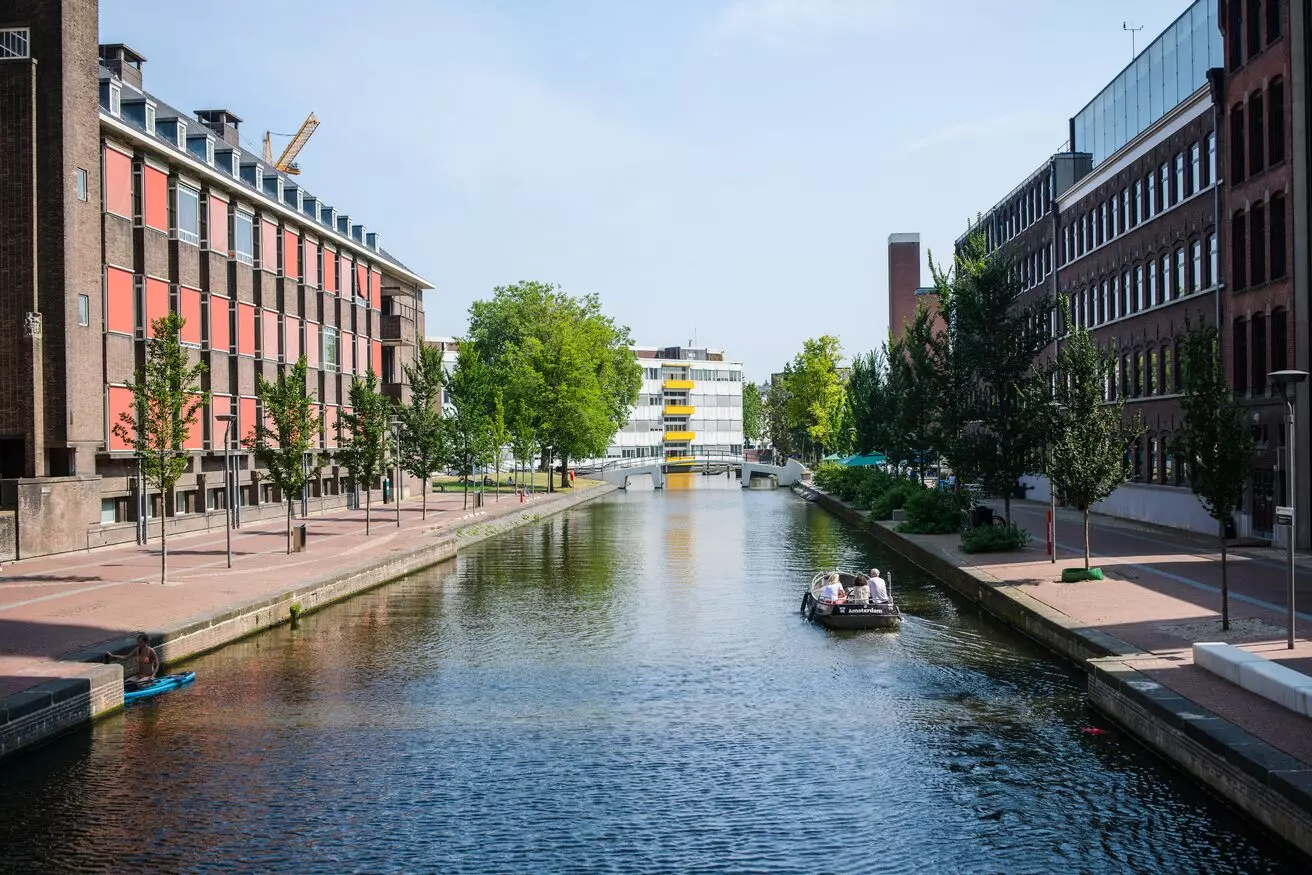
This is where you will be working

Our offer

A temporary contract for 38 hours per week for the duration of 4 years (the initial contract will be for a period of 18 months and after satisfactory evaluation it will be extended for a total duration of 4 years). The preferred starting date is January 4, 2027. This should lead to a dissertation (PhD thesis). We will draft an educational plan that includes attendance of courses and (international) meetings. We also expect you to assist in teaching undergraduates and master students. For this position the University Job Classification profile “Promovendus” (PhD candidate) applies. Your salary will be €3,204 gross per month in the first year and will increase to €4,051 in the final year, based on full-time employment of 38 hours per week. In addition, you will receive a 8% holiday allowance and 8.3% year-end allowance.

A favourable tax agreement, the ‘30% ruling’, may apply to non-Dutch applicants. The Collective Labour Agreement of Universities of the Netherlands is applicable.

Besides the salary and a vibrant and challenging environment at Science Park, we offer you multiple fringe benefits:

  • 232 holiday hours per year (based on fulltime) and extra holidays between Christmas and 1 January;
  • multiple courses to follow from our Teaching and Learning Centre;
  • a complete educational program for PhD students;
  • multiple courses on topics such as leadership for academic staff;
  • multiple courses on topics such as time management, handling stress and an online learning platform with 100+ different courses;
  • 7 weeks birth leave (partner leave) with 100% salary;
  • partly paid parental leave;
  • the possibility to set up a workplace at home;
  • a pension at ABP for which UvA pays two third part of the contribution;
  • the possibility to follow courses to learn Dutch;
  • help with registration at UvA- Housing for a studio or small apartment when you’re moving from abroad. 

Are you curious to read more about our extensive package of secondary employment benefits, take a look here.

About us

The Institute for Biodiversity and Ecosystem Dynamics (IBED) is one of eight research institutes of the Faculty of Science at the University of Amsterdam. The research at IBED aims to unravel how ecosystems function in all their complexity, and how they change due to natural processes and human activities. At its core lies an integrated systems approach to study biodiversity, ecosystems and the environment. IBED adopts this systems approach to ecosystems, addressing abiotic (soil and water quality) and biotic factors (ecology and evolution of plants, animals, and microorganisms), and the interplay between those. The IBED vision includes research encompassing experimental and theoretical approaches at a wide variety of temporal and spatial scales, i.e. from molecules and microorganisms to patterns and processes occurring at the global scale. The University of Amsterdam has excellent high performance computing facilities. Furthermore, IBED has a dedicated computational support team with specialized knowledge of bioinformatics, (geo)database management and scientific programming. IBED also works with non-academic partners to deliver transdisciplinary science for society.

The position will be based in the Department of Theoretical and Computational Ecology. Research in the Department of Theoretical and Computational Ecology focuses on understanding the complexity of ecological systems by using theoretical and advanced computational approaches. We generate insights into the dynamics of individual organisms, populations, species, communities, the abiotic environment, and interactions among these system components on ecological and evolutionary timescales of populations and communities. We expect the successful candidate to share working time between the Department of Theoretical and Computational Ecology (Amsterdam) and  Wageningen Marine Research (IJmuiden).

Want to know more about our organisation? Read more about working at the University of Amsterdam.

More about the UvA

The University of Amsterdam is ambitious, creative and committed. An inspiration to students since 1632, a vanguard player in international science and a partner in innovation.
The University of Amsterdam is the largest university in the Netherlands, with the broadest range of courses on offer. An intellectual hub with 42,000 students, 6,000 staff and 3,000 PhD students. Connected by a culture of curiosity.

Important to know

Your application & contact

If you feel the profile fits you, and you are interested in the job, we look forward to receiving your application. You can apply online via the ‘Apply’-button on the vacancy’s webpage. We accept applications until and including 30 September 2026.

Applications should include the following information (all files besides your cv should be submitted in one single pdf file):

  • a detailed CV including the months (not just years) when referring to your education and work experience and a list of publications;
  • a personally written letter of motivation (not AI generated), of maximally two A4s length, including a description of research interests;
  • the names and email addresses of two references who can provide letters of recommendation.

Only complete applications received within the response period via the link below will be considered.

A knowledge security check can be part of the selection procedure.(for details: national knowledge security guidelines)

The interviews will be held on the 30th of October with a possible second round on the 19th of November. We will invite potential candidates for interviews within 4 weeks after the closing date.

Do you have any questions, or do you require additional information? Please contact: Dr. Floor Soudijn, Senior Researcher Wageningen Marine Research, [email protected]

T: +31 628577836

Acquisition in response to this vacancy is not appreciated.

Diversity, Equity & Inclusion

As an employer, the UvA maintains an equal opportunities policy. We value diversity and are fully committed to being a place where everyone feels at home. We nurture inquisitive minds and perseverance and allow room for persistent questioning. With us, curiosity and creativity are the prevailing culture.
Studies show that women and members of underrepresented groups only apply for jobs if they meet 100% of the qualifications. Do you meet the educational requirements but not yet all of the requested experience? The UvA encourages you to apply anyway.

Important to know

Your application & contact

If you feel the profile fits you, and you are interested in the job, we look forward to receiving your application. You can apply online via the ‘Apply’-button on the vacancy’s webpage. We accept applications until and including 30 September 2026.

Applications should include the following information (all files besides your cv should be submitted in one single pdf file):

  • a detailed CV including the months (not just years) when referring to your education and work experience and a list of publications;
  • a personally written letter of motivation (not AI generated), of maximally two A4s length, including a description of research interests;
  • the names and email addresses of two references who can provide letters of recommendation.

Only complete applications received within the response period via the link below will be considered.

A knowledge security check can be part of the selection procedure.(for details: national knowledge security guidelines)

The interviews will be held on the 30th of October with a possible second round on the 19th of November. We will invite potential candidates for interviews within 4 weeks after the closing date.

Do you have any questions, or do you require additional information? Please contact: Dr. Floor Soudijn, Senior Researcher Wageningen Marine Research, [email protected]

T: +31 628577836

Acquisition in response to this vacancy is not appreciated.
As an employer, the UvA maintains an equal opportunities policy. We value diversity and are fully committed to being a place where everyone feels at home. We nurture inquisitive minds and perseverance and allow room for persistent questioning. With us, curiosity and creativity are the prevailing culture.
Studies show that women and members of underrepresented groups only apply for jobs if they meet 100% of the qualifications. Do you meet the educational requirements but not yet all of the requested experience? The UvA encourages you to apply anyway.

Don't miss out on your dream job!

Sign up for a job alert and you'll receive automatic updates about new and relevant vacancies.

Don't miss out on your dream job!

Sign up for a job alert and you'll receive automatic updates about new and relevant vacancies.