PhD Position in NeuroAI for Video Perception in the Human Brain

PhD Position in NeuroAI for Video Perception in the Human Brain

Working at the UvA

Research project “BrainShorts” on video perception in humans

We are looking for a PhD candidate to join our research project entitled “BrainShorts: Identifying neural mechanisms of dynamic video perception with deep learning”, funded by a NWO Vidi grant awarded to Iris Groen.

The public summary of the project is as follows: Videos are everywhere these days. The popularity of platforms such as TikTok shows how much these ‘stimuli’ appeal to our brain. Physically, video shorts consist of a few seconds of pixels changing luminosity over time. Our visual brain effortlessly distils a meaningful message from this, while even the most advanced AI techniques still struggle. Moreover, modern AI requires a lot of training data and energy to analyse a short video, while the brain continuously operates in a dynamic world on a few watts only. What clever computations does the brain use to achieve efficient processing of videos?

This PhD project aims to address this question by developing stimulus-computable models of human electroencephalogram (EEG) responses to video shorts. Together with a research assistant and post-doctoral researcher, you will collect an unprecedented, large-scale EEG dataset of dynamic brain measurements of the video-watching brain, and use these data to:

a) curate an open-science, neural prediction benchmark for deep learning video-AI models;

b) assess representational alignment of bio-inspired deep learning models to the human brain.

The bio-inspired models will be enriched with different temporal integration mechanisms hypothesized to underlie efficient neural processing of dynamic inputs. By directly comparing models with and without brain-inspired computations, you will identify the contribution of each type of computation to effective human video perception.

Working at the UvA

Research project “BrainShorts” on video perception in humans

We are looking for a PhD candidate to join our research project entitled “BrainShorts: Identifying neural mechanisms of dynamic video perception with deep learning”, funded by a NWO Vidi grant awarded to Iris Groen.

The public summary of the project is as follows: Videos are everywhere these days. The popularity of platforms such as TikTok shows how much these ‘stimuli’ appeal to our brain. Physically, video shorts consist of a few seconds of pixels changing luminosity over time. Our visual brain effortlessly distils a meaningful message from this, while even the most advanced AI techniques still struggle. Moreover, modern AI requires a lot of training data and energy to analyse a short video, while the brain continuously operates in a dynamic world on a few watts only. What clever computations does the brain use to achieve efficient processing of videos?

This PhD project aims to address this question by developing stimulus-computable models of human electroencephalogram (EEG) responses to video shorts. Together with a research assistant and post-doctoral researcher, you will collect an unprecedented, large-scale EEG dataset of dynamic brain measurements of the video-watching brain, and use these data to:

a) curate an open-science, neural prediction benchmark for deep learning video-AI models;

b) assess representational alignment of bio-inspired deep learning models to the human brain.

The bio-inspired models will be enriched with different temporal integration mechanisms hypothesized to underlie efficient neural processing of dynamic inputs. By directly comparing models with and without brain-inspired computations, you will identify the contribution of each type of computation to effective human video perception.

All about this vacancy

What you will do

The PhD student is responsible for helping achieve the objectives outlined above. The ideal candidate for this position has a strong background in machine learning, combined with strong motivation to collect and analyze human brain data. We are looking for an enthusiastic and creative individual who is interested in the following:

Tasks and responsibilities: 

  • Perform high-impact research on NeuroAI, resulting in publications at top-tier international AI conferences and neuroscience journals;
  • Conduct human subjects research to collect EEG responses during video watching, and curate an open-source dataset based on these measurements;
  • Benchmark existing and novel video-AI models on the neural dataset using representational aligment techniques such as RSA and encoding models;
  • Collaborate with other team members on the project, and with other PhD students in the lab;
  • Assist with teaching by being Teaching Assistant and supervising BSc or MSc students;
  • Present your work at local and international conferences.

What we ask of you

  • An MSc degree in Artificial Intelligence, Computer Science, Computational Neuroscience, Cognitive Psychology, or related discipline;
  • A strong interest in interdisciplinary research at the intersection of AI and neuroscience (NeuroAI), and human vision;
  • A background in machine learning, deep learning, and/or representational alignment research;
  • Strong experience in programming, e.g. Python, MATLAB, cluster compute
  • Strong grasp of the English language;
  • Eager to collaborate and to publish high-impact papers.

All about this vacancy

What you will do

The PhD student is responsible for helping achieve the objectives outlined above. The ideal candidate for this position has a strong background in machine learning, combined with strong motivation to collect and analyze human brain data. We are looking for an enthusiastic and creative individual who is interested in the following:

Tasks and responsibilities: 

  • Perform high-impact research on NeuroAI, resulting in publications at top-tier international AI conferences and neuroscience journals;
  • Conduct human subjects research to collect EEG responses during video watching, and curate an open-source dataset based on these measurements;
  • Benchmark existing and novel video-AI models on the neural dataset using representational aligment techniques such as RSA and encoding models;
  • Collaborate with other team members on the project, and with other PhD students in the lab;
  • Assist with teaching by being Teaching Assistant and supervising BSc or MSc students;
  • Present your work at local and international conferences.

What we ask of you

  • An MSc degree in Artificial Intelligence, Computer Science, Computational Neuroscience, Cognitive Psychology, or related discipline;
  • A strong interest in interdisciplinary research at the intersection of AI and neuroscience (NeuroAI), and human vision;
  • A background in machine learning, deep learning, and/or representational alignment research;
  • Strong experience in programming, e.g. Python, MATLAB, cluster compute
  • Strong grasp of the English language;
  • Eager to collaborate and to publish high-impact papers.

Your place at the UvA

What we offer you

A temporary contract for 38 hours per week for the duration of 4 years (the initial contract will be for a period of 18 months and after satisfactory evaluation it will be extended for a total duration of 4 years). The starting date is between April 1st and Sept 1st, 2026. This should lead to a dissertation (PhD thesis). We will draft an educational plan that includes attendance of courses and (international) meetings. We also expect you to assist in teaching undergraduates and master students.

The gross monthly salary, based on 38 hours per week and dependent on relevant experience, ranges between € 3,059 to € 3,881 (scale P).This does not include 8% holiday allowance and 8,3% year-end allowance. The UFO profile PhD Candidate is applicable. A favourable tax agreement, the ‘30% ruling’, may apply to non-Dutch applicants. The Collective Labour Agreement of Universities of the Netherlands is applicable.

Curious about our extensive secondary benefits package? You can read more about it here.

More about the UvA

The University of Amsterdam is ambitious, creative and committed. An inspiration to students since 1632, a vanguard player in international science and a partner in innovation.
The University of Amsterdam is the largest university in the Netherlands, with the broadest range of courses on offer. An intellectual hub with 42,000 students, 6,000 staff and 3,000 PhD students. Connected by a culture of curiosity.

Your place at the UvA

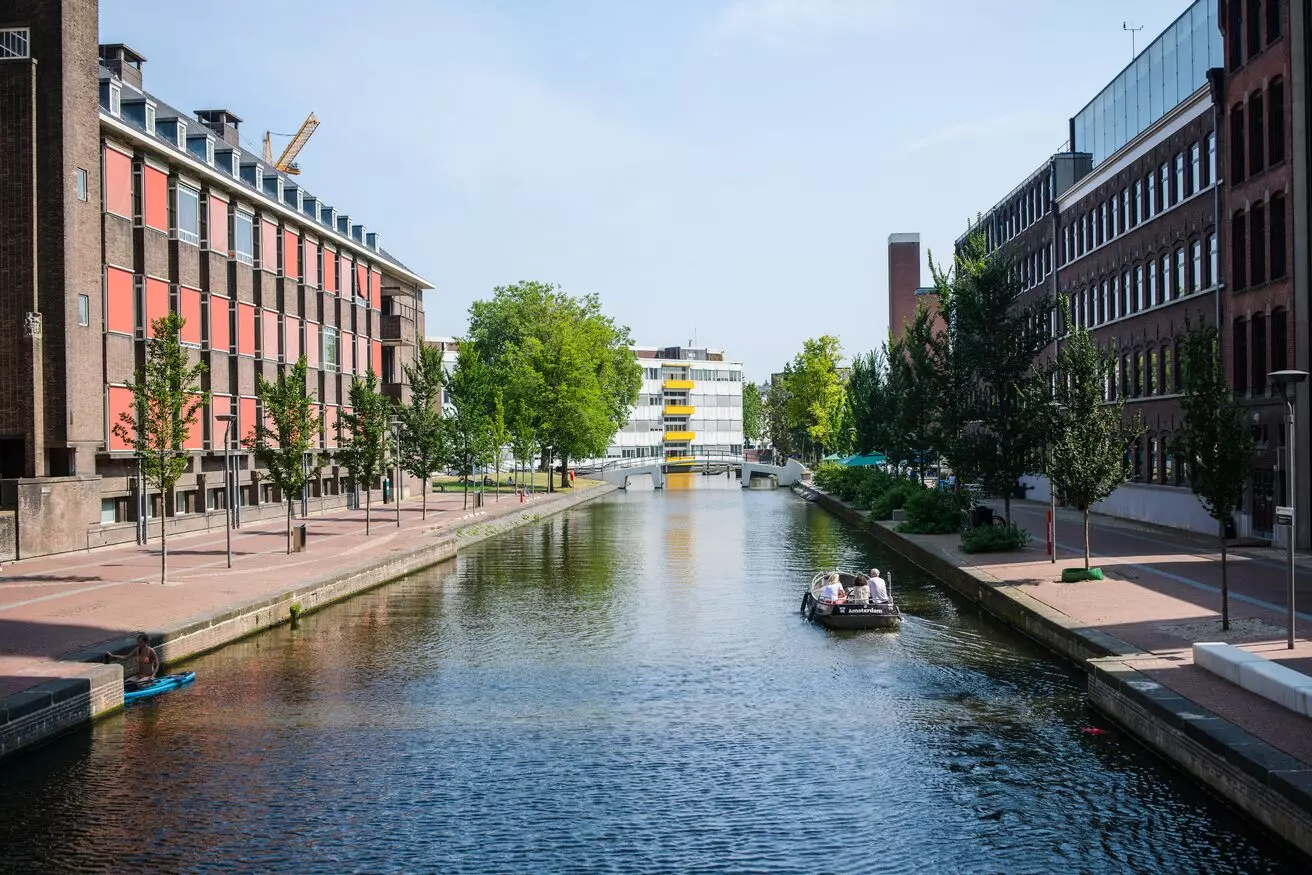
This is where you will be working

What we offer you

A temporary contract for 38 hours per week for the duration of 4 years (the initial contract will be for a period of 18 months and after satisfactory evaluation it will be extended for a total duration of 4 years). The starting date is between April 1st and Sept 1st, 2026. This should lead to a dissertation (PhD thesis). We will draft an educational plan that includes attendance of courses and (international) meetings. We also expect you to assist in teaching undergraduates and master students.

The gross monthly salary, based on 38 hours per week and dependent on relevant experience, ranges between € 3,059 to € 3,881 (scale P).This does not include 8% holiday allowance and 8,3% year-end allowance. The UFO profile PhD Candidate is applicable. A favourable tax agreement, the ‘30% ruling’, may apply to non-Dutch applicants. The Collective Labour Agreement of Universities of the Netherlands is applicable.

Curious about our extensive secondary benefits package? You can read more about it here.

More about the UvA

The University of Amsterdam is ambitious, creative and committed. An inspiration to students since 1632, a vanguard player in international science and a partner in innovation.
The University of Amsterdam is the largest university in the Netherlands, with the broadest range of courses on offer. An intellectual hub with 42,000 students, 6,000 staff and 3,000 PhD students. Connected by a culture of curiosity.

Important to know

Your application & contact

If you feel the profile fits you, and you are interested in the job, we look forward to receiving your application. You can apply online via the button below. We accept applications until and including February 15th, 2026. Applications will be reviewed and interviews conducted in March.

Applications should include the following information (all files besides your cv should be submitted in one single pdf file):

  • a detailed CV including the months (not just years) when referring to your education and work experience (max 2 pages);
  • a letter of motivation, which includes your preference for the field of NeuroAI, video perception, and large-scale data collection (max 1 page);
  • a list of publications or prior projects (max 1 page);
  • the names and email addresses of two references who can provide letters of recommendation (do not submit any reference letters).
  • a link to your MSc thesis, if available (do not submit the full thesis).

A knowledge security check can be part of the selection procedure.
(for details: 
national knowledge security guidelines)

Only complete applications received within the response period via the link below will be considered.

If you have any questions or do you require additional information? Please contact:

Diversity, Equity & Inclusion

As an employer, the UvA maintains an equal opportunities policy. We value diversity and are fully committed to being a place where everyone feels at home. We nurture inquisitive minds and perseverance and allow room for persistent questioning. With us, curiosity and creativity are the prevailing culture.
Studies show that women and members of underrepresented groups only apply for jobs if they meet 100% of the qualifications. Do you meet the educational requirements but not yet all of the requested experience? The UvA encourages you to apply anyway.

Important to know

Your application & contact

If you feel the profile fits you, and you are interested in the job, we look forward to receiving your application. You can apply online via the button below. We accept applications until and including February 15th, 2026. Applications will be reviewed and interviews conducted in March.

Applications should include the following information (all files besides your cv should be submitted in one single pdf file):

  • a detailed CV including the months (not just years) when referring to your education and work experience (max 2 pages);
  • a letter of motivation, which includes your preference for the field of NeuroAI, video perception, and large-scale data collection (max 1 page);
  • a list of publications or prior projects (max 1 page);
  • the names and email addresses of two references who can provide letters of recommendation (do not submit any reference letters).
  • a link to your MSc thesis, if available (do not submit the full thesis).

A knowledge security check can be part of the selection procedure.
(for details: 
national knowledge security guidelines)

Only complete applications received within the response period via the link below will be considered.

If you have any questions or do you require additional information? Please contact:

As an employer, the UvA maintains an equal opportunities policy. We value diversity and are fully committed to being a place where everyone feels at home. We nurture inquisitive minds and perseverance and allow room for persistent questioning. With us, curiosity and creativity are the prevailing culture.
Studies show that women and members of underrepresented groups only apply for jobs if they meet 100% of the qualifications. Do you meet the educational requirements but not yet all of the requested experience? The UvA encourages you to apply anyway.

Don't miss out on your dream job!

Sign up for a job alert and you'll receive automatic updates about new and relevant vacancies.

Don't miss out on your dream job!

Sign up for a job alert and you'll receive automatic updates about new and relevant vacancies.