We, and third parties, use cookies on our website. We use cookies to ensure that our website functions properly, to store your preferences, to gain insight into visitor behavior, but also for marketing and social media purposes (showing personalized advertisements). By clicking 'Accept', you agree to the use of all cookies. In our Cookie Statement. you can read more about the cookies we use and save or change your preferences. By clicking 'Refuse' you only agree to the use of functional cookies.

.jpg)
The Cellular and Circuit Neuroscience group of the Swammerdam Institute for Life Science at the University of Amsterdam has a position available for a PhD student in the Cellular and Circuit Neuroscience group.

The Cellular and Circuit Neuroscience group of the Swammerdam Institute for Life Science at the University of Amsterdam has a position available for a PhD student in the Cellular and Circuit Neuroscience group.
Our research group studies the synaptic plasticity mechanisms that underlie memory consolidation during sleep, and examines how amyloid-beta interferes with these plasticity mechanisms. You will study how neurodegeneration disrupts the stability of memory circuits and the specific role of the sleep-wake cycle in accelerating this decay.
The project combines cutting-edge techniques such as in vivo and ex vivo electrophysiology, live-imaging of calcium indicators and neurotransmitter sensors (fiber photometry), opto- and chemogenetics, engram visualization and mouse behavior. By joining our team at the University of Amsterdam, you will contribute to a deeper understanding of how memories are lost so early in the progression of AD.

Our research group studies the synaptic plasticity mechanisms that underlie memory consolidation during sleep, and examines how amyloid-beta interferes with these plasticity mechanisms. You will study how neurodegeneration disrupts the stability of memory circuits and the specific role of the sleep-wake cycle in accelerating this decay.
The project combines cutting-edge techniques such as in vivo and ex vivo electrophysiology, live-imaging of calcium indicators and neurotransmitter sensors (fiber photometry), opto- and chemogenetics, engram visualization and mouse behavior. By joining our team at the University of Amsterdam, you will contribute to a deeper understanding of how memories are lost so early in the progression of AD.
As a PhD student, you are expected to:
· complete and defend a PhD thesis within the official appointment duration of four years;
· gain knowledge of the field through literature survey, discussion with team members, and internal lab meetings;
· contribute to the design of experiments and perform experiments;
· analyse and interpret results of experiments;
· participate in the Faculty of Science PhD training programme and enroll in the training program for PhD students in the graduate school ONWAR (Graduate School Neurosciences Amsterdam Rotterdam);
· teach seminars and/or practical for bachelor and master students;
· supervise bachelor and master student projects;
· present data at local, national and international scientific meetings.
We are looking for a highly motivated, ambitious student with a Master degree in Biomedical Sciences or equivalent. Analytical and theoretical skills as well as experimental talent are essential. A background in or cellular and circuit neuroscience is an advantage. We require an enthusiastic person with appreciable communication skills, who communicates very constructively in a team-based environment, and with excellent writing skills in English.
You are passionate about science and interested in synaptic plasticity processes that drive memory processing. You like a challenge and are motivated to work in an interdisciplinary environment. You are a team player and a nice colleague with good communication and problem-solving skills. You have a high intrinsic motivation and aptitude for fundamental research (reflected by your CV).
A temporary contract for 38 hours per week for the duration of 4 years (the initial contract will be for a period of 18 months and after satisfactory evaluation it will be extended for a total duration of 4 years). The preferred starting date is to be discussed. This should lead to a dissertation (PhD thesis). We will draft an educational plan that includes attendance of courses and (international) meetings. We also expect you to assist in teaching undergraduates and master students.
Based on a full-time appointment (38 hours per week) the gross monthly salary will range from €3.059 in the first year to €3.881 (scale P) in the last year. This does not include 8% holiday allowance and 8,3% year-end allowance. The UFO profile PhD candidate is applicable. A favourable tax agreement, the ‘30% ruling’, may apply to non-Dutch applicants. The Collective Labour Agreement of Universities of the Netherlands is applicable.
Curious about our extensive secondary benefits package? You can read more about it here.
As a PhD student, you are expected to:
· complete and defend a PhD thesis within the official appointment duration of four years;
· gain knowledge of the field through literature survey, discussion with team members, and internal lab meetings;
· contribute to the design of experiments and perform experiments;
· analyse and interpret results of experiments;
· participate in the Faculty of Science PhD training programme and enroll in the training program for PhD students in the graduate school ONWAR (Graduate School Neurosciences Amsterdam Rotterdam);
· teach seminars and/or practical for bachelor and master students;
· supervise bachelor and master student projects;
· present data at local, national and international scientific meetings.
We are looking for a highly motivated, ambitious student with a Master degree in Biomedical Sciences or equivalent. Analytical and theoretical skills as well as experimental talent are essential. A background in or cellular and circuit neuroscience is an advantage. We require an enthusiastic person with appreciable communication skills, who communicates very constructively in a team-based environment, and with excellent writing skills in English.
You are passionate about science and interested in synaptic plasticity processes that drive memory processing. You like a challenge and are motivated to work in an interdisciplinary environment. You are a team player and a nice colleague with good communication and problem-solving skills. You have a high intrinsic motivation and aptitude for fundamental research (reflected by your CV).
A temporary contract for 38 hours per week for the duration of 4 years (the initial contract will be for a period of 18 months and after satisfactory evaluation it will be extended for a total duration of 4 years). The preferred starting date is to be discussed. This should lead to a dissertation (PhD thesis). We will draft an educational plan that includes attendance of courses and (international) meetings. We also expect you to assist in teaching undergraduates and master students.
Based on a full-time appointment (38 hours per week) the gross monthly salary will range from €3.059 in the first year to €3.881 (scale P) in the last year. This does not include 8% holiday allowance and 8,3% year-end allowance. The UFO profile PhD candidate is applicable. A favourable tax agreement, the ‘30% ruling’, may apply to non-Dutch applicants. The Collective Labour Agreement of Universities of the Netherlands is applicable.
Curious about our extensive secondary benefits package? You can read more about it here.
The Faculty of Science has a student body of around 8,000, as well as 1,800 members of staff working in education, research or support services. Researchers and students at the Faculty of Science are fascinated by every aspect of how the world works, be it elementary particles, the birth of the universe or the functioning of the brain.
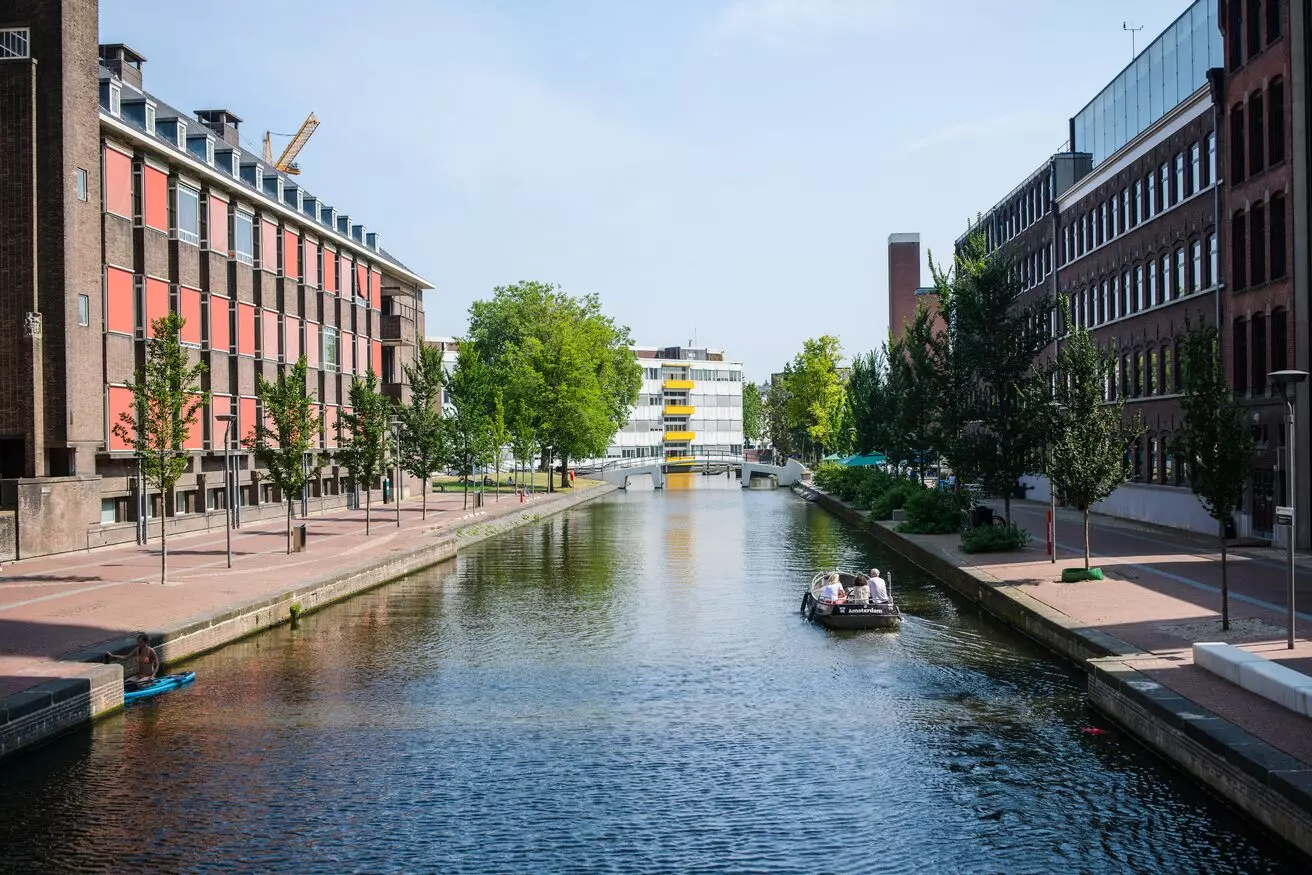
The Swammerdam Institute for Life Sciences (SILS) is located at the vibrant Amsterdam Science Park. SILS is one of eight institutes of the University of Amsterdam's Faculty of Science (FNWI). With around 240 employees, SILS carries out internationally high-quality life science research and provides education within various university programs. Research is also carried out in close cooperation with the medical, biotech, chemical, flavor, food & agricultural, and high-tech industries, and revolves around 4 main themes, Cell & Systems biology, Neurosciences, Microbiology and Green Life Sciences.
Want to know more about our organisation? Read more about working at the University of Amsterdam.
The Faculty of Science has a student body of around 8,000, as well as 1,800 members of staff working in education, research or support services. Researchers and students at the Faculty of Science are fascinated by every aspect of how the world works, be it elementary particles, the birth of the universe or the functioning of the brain.
The Swammerdam Institute for Life Sciences (SILS) is located at the vibrant Amsterdam Science Park. SILS is one of eight institutes of the University of Amsterdam's Faculty of Science (FNWI). With around 240 employees, SILS carries out internationally high-quality life science research and provides education within various university programs. Research is also carried out in close cooperation with the medical, biotech, chemical, flavor, food & agricultural, and high-tech industries, and revolves around 4 main themes, Cell & Systems biology, Neurosciences, Microbiology and Green Life Sciences.
Want to know more about our organisation? Read more about working at the University of Amsterdam.
If you feel the profile fits you, and you are interested in the job, we look forward to receiving your application. You can apply online via the button below. We accept applications until and including 26 April 2026.
If you have any questions or do you require additional information? Please contact:
Applications should include the following information (all files besides your cv should be submitted in one single pdf file):
A knowledge security check can be part of the selection procedure.
(for details: national knowledge security guidelines)
Only complete applications received within the response period via the link below will be considered.
If you feel the profile fits you, and you are interested in the job, we look forward to receiving your application. You can apply online via the button below. We accept applications until and including 26 April 2026.
If you have any questions or do you require additional information? Please contact:
Applications should include the following information (all files besides your cv should be submitted in one single pdf file):
A knowledge security check can be part of the selection procedure.
(for details: national knowledge security guidelines)
Only complete applications received within the response period via the link below will be considered.


.jpg)