Postdoc Quantifying Gender Inequality in Visual Art

Postdoc Quantifying Gender Inequality in Visual Art

Working at the UvA

Decode the Data Behind the Gender Gap in Art

You will be based in the Department of Psychology, working as part of a unique interdisciplinary team spanning Psychology, Informatics, and Digital History. By applying computational social science or computational humanities methods to large-scale longitudinal datasets, you will model how economic, educational, and political drivers have shaped the visibility of women artists over centuries. You will not only analyze these patterns but also collaborate with design partner Studio Bertels to translate your findings into public showcases and policy tools. We are looking for a researcher who is comfortable with advanced data analysis and eager to apply those skills to complex cultural questions.

The fulltime position is for 18 months, starting May 1st, 2026. The project is funded by CLICKNL.


Working at the UvA

Decode the Data Behind the Gender Gap in Art

You will be based in the Department of Psychology, working as part of a unique interdisciplinary team spanning Psychology, Informatics, and Digital History. By applying computational social science or computational humanities methods to large-scale longitudinal datasets, you will model how economic, educational, and political drivers have shaped the visibility of women artists over centuries. You will not only analyze these patterns but also collaborate with design partner Studio Bertels to translate your findings into public showcases and policy tools. We are looking for a researcher who is comfortable with advanced data analysis and eager to apply those skills to complex cultural questions.

The fulltime position is for 18 months, starting May 1st, 2026. The project is funded by CLICKNL.


All about this vacancy

What are you going to do

  • Construct and analyze longitudinal datasets of inclusion indicators to contextualize art collections.
  • Develop and test statistical models to determine how structural societal shifts influence women’s artistic visibility over time.
  • Translate statistical findings into narratives by collaborating with designers to create "what-if" simulations and visualizations for public-facing events.
  • Co-author scientific publications and present findings at interdisciplinary conferences alongside a team of psychologists, historians, and computer scientists.

What do you have to offer

  • Must-have: You have completed a PhD in psychology, computational social science, computational humanities, data science, AI, or a closely related quantitative field.
  • Must-have: You can independently and confidently analyze quantitative data and you can write reproducible code (for example, in R or Python).
  • Good-to-have: You have experience working with large-scale text or visual data, or datasets related to history or culture.
  • You tackle complex data challenges with curiosity and are driven to understand the why behind patterns.
  • You enjoy bridging the gap between technical analysis and social impact, translating complex results into clear stories for non-technical stakeholders

What else do we offer you

  • Development opportunities: We actively support your academic growth, including mentorship for writing your own grant application to acquire further funding on related topics.
  • Impact-driven work: Your research will directly feed into a public "pop-up kiosk" or exhibitions that travel to major museums, ensuring your work reaches a broad societal audience.
  • Resources: Access to state-of-the-art infrastructure and data engineering support from the UvA Informatics Institute and Psychology Research Institute.
  • Network expansion: You will collaborate with Studio Bertels and a high-level expert panel from the creative industries, expanding your professional network beyond academia.

All about this vacancy

What are you going to do

  • Construct and analyze longitudinal datasets of inclusion indicators to contextualize art collections.
  • Develop and test statistical models to determine how structural societal shifts influence women’s artistic visibility over time.
  • Translate statistical findings into narratives by collaborating with designers to create "what-if" simulations and visualizations for public-facing events.
  • Co-author scientific publications and present findings at interdisciplinary conferences alongside a team of psychologists, historians, and computer scientists.

What do you have to offer

  • Must-have: You have completed a PhD in psychology, computational social science, computational humanities, data science, AI, or a closely related quantitative field.
  • Must-have: You can independently and confidently analyze quantitative data and you can write reproducible code (for example, in R or Python).
  • Good-to-have: You have experience working with large-scale text or visual data, or datasets related to history or culture.
  • You tackle complex data challenges with curiosity and are driven to understand the why behind patterns.
  • You enjoy bridging the gap between technical analysis and social impact, translating complex results into clear stories for non-technical stakeholders

What else do we offer you

  • Development opportunities: We actively support your academic growth, including mentorship for writing your own grant application to acquire further funding on related topics.
  • Impact-driven work: Your research will directly feed into a public "pop-up kiosk" or exhibitions that travel to major museums, ensuring your work reaches a broad societal audience.
  • Resources: Access to state-of-the-art infrastructure and data engineering support from the UvA Informatics Institute and Psychology Research Institute.
  • Network expansion: You will collaborate with Studio Bertels and a high-level expert panel from the creative industries, expanding your professional network beyond academia.

Your place at the UvA

You will work here

The Postdoc will be based in Psychology and will join a vibrant, interdisciplinary lab environment led by co-PIs Eftychia Stamkou (Psychology), Nanne van Noord (Informatics), and Melvin Wevers (Digital History), including two other postdocs. The culture is one of close collaboration and open exchange to solve problems together. Additionally, you will work with cultural stakeholders that ground our scientific work in creative practice. This ensures you are part of a welcoming, dynamic team that bridges the gap between science, social psychology, and the cultural sector.

About the Faculty of Social and Behavioural Sciences

The Faculty of Social and Behavioural Sciences (FMG) is the largest educational and research institution in the field of social and behavioural sciences in Europe. Here, we explore societal and human-centered issues, driven by scientific curiosity but also with an eye for current themes. For example, the impact of media and communication on individuals and society, healthcare challenges, global urbanization, human development, the role of political institutions, understanding the human mind, growing inequality, diversity issues, and changing social relationships.
In Europe and beyond, the FMG holds a leading position, thanks in part to its more than 1,300 staff members who contribute to education and research. Will you be one of them?

Your place at the UvA

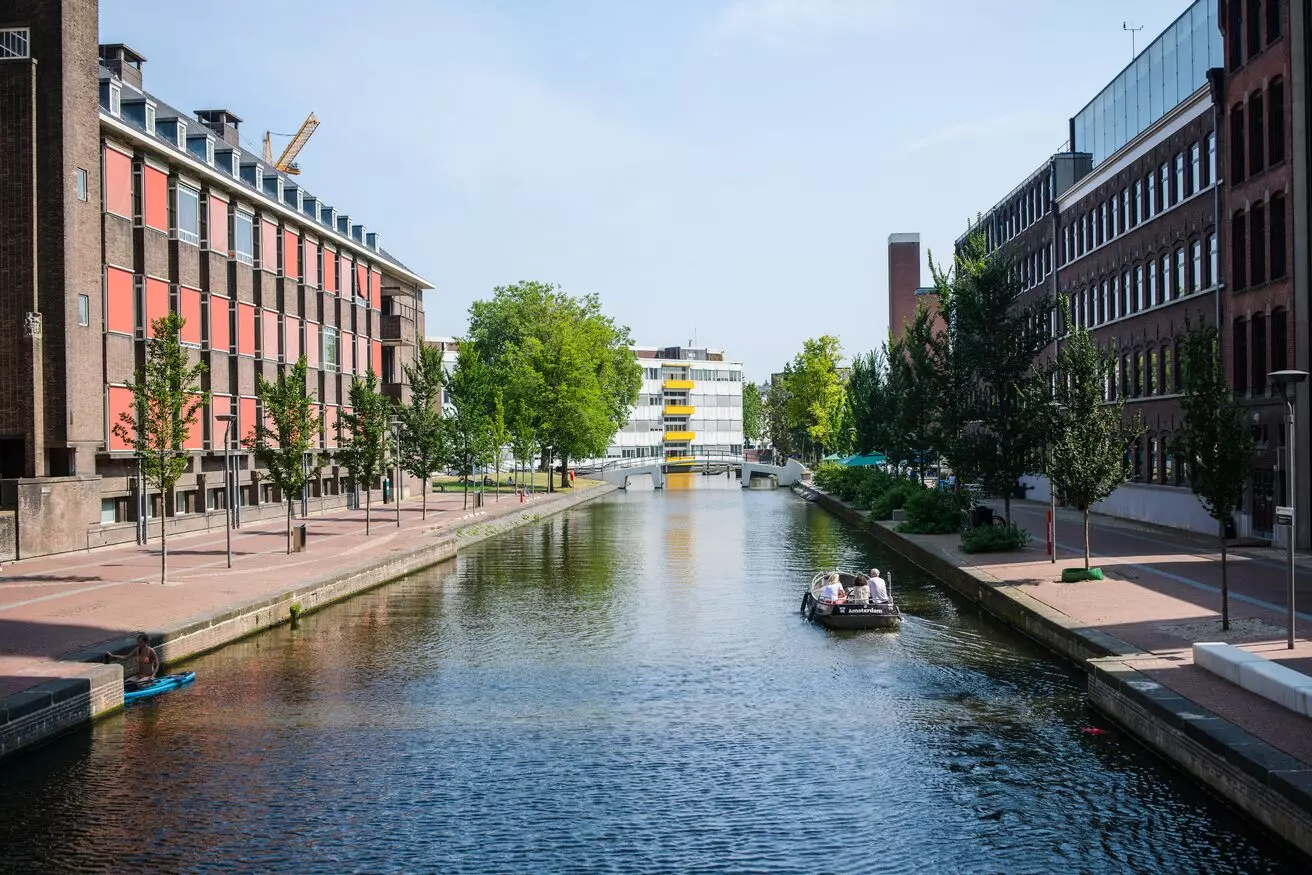
This is where you will be working

You will work here

The Postdoc will be based in Psychology and will join a vibrant, interdisciplinary lab environment led by co-PIs Eftychia Stamkou (Psychology), Nanne van Noord (Informatics), and Melvin Wevers (Digital History), including two other postdocs. The culture is one of close collaboration and open exchange to solve problems together. Additionally, you will work with cultural stakeholders that ground our scientific work in creative practice. This ensures you are part of a welcoming, dynamic team that bridges the gap between science, social psychology, and the cultural sector.

About the Faculty of Social and Behavioural Sciences

The Faculty of Social and Behavioural Sciences (FMG) is the largest educational and research institution in the field of social and behavioural sciences in Europe. Here, we explore societal and human-centered issues, driven by scientific curiosity but also with an eye for current themes. For example, the impact of media and communication on individuals and society, healthcare challenges, global urbanization, human development, the role of political institutions, understanding the human mind, growing inequality, diversity issues, and changing social relationships.
In Europe and beyond, the FMG holds a leading position, thanks in part to its more than 1,300 staff members who contribute to education and research. Will you be one of them?

Important to know

Your application & contact

If you recognize yourself in this profile and are interested in the role, we look forward to receiving your motivation letter (max 1 page) and brief CV (including educational background, publications, ongoing projects). You can apply via the red button until 23 February 2026. Interviews will take place on 3 March. In case of equal qualifications, internal candidates will be given preference over external candidates. For questions about the vacancy, you can contact Eftychia Stamkou ([email protected]).

Diversity, Equity & Inclusion

As an employer, the UvA maintains an equal opportunities policy. We value diversity and are fully committed to being a place where everyone feels at home. We nurture inquisitive minds and perseverance and allow room for persistent questioning. With us, curiosity and creativity are the prevailing culture.
Studies show that women and members of underrepresented groups only apply for jobs if they meet 100% of the qualifications. Do you meet the educational requirements but not yet all of the requested experience? The UvA encourages you to apply anyway.

Important to know

Your application & contact

If you recognize yourself in this profile and are interested in the role, we look forward to receiving your motivation letter (max 1 page) and brief CV (including educational background, publications, ongoing projects). You can apply via the red button until 23 February 2026. Interviews will take place on 3 March. In case of equal qualifications, internal candidates will be given preference over external candidates. For questions about the vacancy, you can contact Eftychia Stamkou ([email protected]).

As an employer, the UvA maintains an equal opportunities policy. We value diversity and are fully committed to being a place where everyone feels at home. We nurture inquisitive minds and perseverance and allow room for persistent questioning. With us, curiosity and creativity are the prevailing culture.
Studies show that women and members of underrepresented groups only apply for jobs if they meet 100% of the qualifications. Do you meet the educational requirements but not yet all of the requested experience? The UvA encourages you to apply anyway.

Don't miss out on your dream job!

Sign up for a job alert and you'll receive automatic updates about new and relevant vacancies.

Don't miss out on your dream job!

Sign up for a job alert and you'll receive automatic updates about new and relevant vacancies.