Postdoctoral Researcher in Soviet-African Educational Legacies and Alumni Networks

Postdoctoral Researcher in Soviet-African Educational Legacies and Alumni Networks

Working at the UvA

Trace the afterlives of socialist internationalism 

During the Cold War, thousands of Africans studied at universities and other higher-education institutions in the Soviet Union and other socialist countries. Existing research tells us considerably more about their experiences abroad than about their lives after returning home. We are seeking a postdoctoral researcher to study how Soviet-educated East Africans converted their acquired qualifications and connections into professional, political and social positions back home; how they remember and reinterpret their experiences; and how alumni organisations mobilise these histories today.

You will join IRInA, an interdisciplinary ERC Starting Grant project examining how East African actors navigate a diversified landscape of international partnerships. You will collaborate with the principal investigator, a PhD researcher and another postdoctoral researcher while developing a clearly identifiable individual project. In your project, Uganda will be the principal case study, which can be potentially extended to include another East African country for a comparison.

Working at the UvA

Trace the afterlives of socialist internationalism 

During the Cold War, thousands of Africans studied at universities and other higher-education institutions in the Soviet Union and other socialist countries. Existing research tells us considerably more about their experiences abroad than about their lives after returning home. We are seeking a postdoctoral researcher to study how Soviet-educated East Africans converted their acquired qualifications and connections into professional, political and social positions back home; how they remember and reinterpret their experiences; and how alumni organisations mobilise these histories today.

You will join IRInA, an interdisciplinary ERC Starting Grant project examining how East African actors navigate a diversified landscape of international partnerships. You will collaborate with the principal investigator, a PhD researcher and another postdoctoral researcher while developing a clearly identifiable individual project. In your project, Uganda will be the principal case study, which can be potentially extended to include another East African country for a comparison.

All about this vacancy

This is what you will be doing

  • Design and conduct an original postdoctoral project on Soviet-educated African professionals, memory and alumni networks, in consultation with the project leader;
  • Undertake archival research, oral-history interviews and qualitative fieldwork in Uganda and potentially in other selected East African countries;
  • Examine how former students and their families remember Soviet education, including professional formation, mobility, solidarity, friendship, racialisation and political change;
  • Map and analyse alumni organisations and their relationships with other institutions, embassies, universities and educational or commercial intermediaries;
  • Publish at least three peer-reviewed academic outputs, including at least two single- or lead-authored journal articles, and contribute to comparative project publications;
  • Present findings at international conferences and contribute to project workshops, research communication, data management and team activities.

This is what we ask of you

  • A completed PhD in history, anthropology, African studies, sociology, political science, international relations, or a related field;
  • Experience with qualitative research, preferably including interviews, oral history, ethnographic fieldwork or archival research in (East) Africa;
  • Knowledge of languages spoken in Uganda is a strong asset; knowledge of Russian or another language of the former Soviet Union is an advantage;
  • Good command of written and spoken English and a publication record appropriate to your career stage;
  • The ability to develop independent fieldwork design and willingness to undertake it in Uganda, while contributing actively to the larger project.

This is what we offer you

  • The employment will be for one year. Contingent on a positive performance evaluation the contract will be extended with two years. The preferred starting date is 1 February 2027;
  • Depending on relevant experience, the salary at the start of the employment is between 3.706,- and 5.760,- gross per month based on full-time employment for a 38-hour working week. In addition, you will receive an 8% holiday allowance and an 8.3% end-of-year allowance. The Collective Labour Agreement for Dutch Universities is applicable;
  • Excellent possibilities for further professional development and education; 
  • Funding and practical support for fieldwork, conference participation, research training and relevant archival visits within the project’s approved plans and budget;
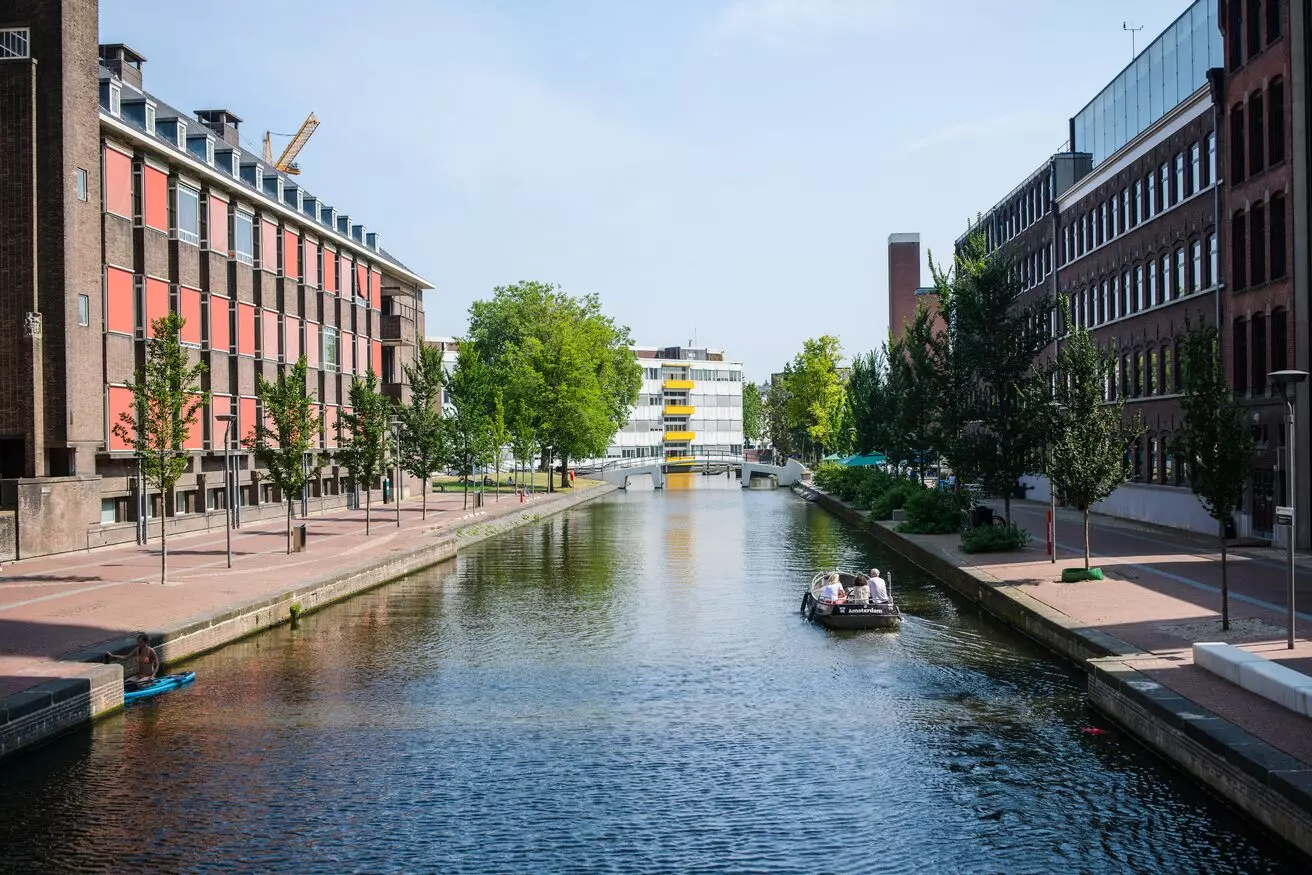
  • An inspiring academic and international work environment in the heart of Amsterdam.

All about this vacancy

This is what you will be doing

  • Design and conduct an original postdoctoral project on Soviet-educated African professionals, memory and alumni networks, in consultation with the project leader;
  • Undertake archival research, oral-history interviews and qualitative fieldwork in Uganda and potentially in other selected East African countries;
  • Examine how former students and their families remember Soviet education, including professional formation, mobility, solidarity, friendship, racialisation and political change;
  • Map and analyse alumni organisations and their relationships with other institutions, embassies, universities and educational or commercial intermediaries;
  • Publish at least three peer-reviewed academic outputs, including at least two single- or lead-authored journal articles, and contribute to comparative project publications;
  • Present findings at international conferences and contribute to project workshops, research communication, data management and team activities.

This is what we ask of you

  • A completed PhD in history, anthropology, African studies, sociology, political science, international relations, or a related field;
  • Experience with qualitative research, preferably including interviews, oral history, ethnographic fieldwork or archival research in (East) Africa;
  • Knowledge of languages spoken in Uganda is a strong asset; knowledge of Russian or another language of the former Soviet Union is an advantage;
  • Good command of written and spoken English and a publication record appropriate to your career stage;
  • The ability to develop independent fieldwork design and willingness to undertake it in Uganda, while contributing actively to the larger project.

This is what we offer you

  • The employment will be for one year. Contingent on a positive performance evaluation the contract will be extended with two years. The preferred starting date is 1 February 2027;
  • Depending on relevant experience, the salary at the start of the employment is between 3.706,- and 5.760,- gross per month based on full-time employment for a 38-hour working week. In addition, you will receive an 8% holiday allowance and an 8.3% end-of-year allowance. The Collective Labour Agreement for Dutch Universities is applicable;
  • Excellent possibilities for further professional development and education; 
  • Funding and practical support for fieldwork, conference participation, research training and relevant archival visits within the project’s approved plans and budget;
  • An inspiring academic and international work environment in the heart of Amsterdam.

Your place at the UvA

This is where you'll be working

You will be part of IRInA, an interdisciplinary ERC Starting Grant project led by Dr. Gulnaz Sibgatullina and based at the University of Amsterdam. The research team combines historical, ethnographic and digital approaches. It includes the principal investigator, a PhD researcher and two postdoctoral researchers. In addition to your direct colleagues within the team, you will also join the vibrant community of researchers at ARTES (the Amsterdam School for Regional and Transnational Studies).

The position is based in the department of History, European Studies and Religious Studies, capacity group European Studies (program group East European History supervised by Prof. Michael Kemper) in the Faculty of Humanities at the University of Amsterdam.

About the Faculty of Humanities

From modern and classical languages, history, arts and culture, archaeology, religious studies and philosophy to new media, digital humanities, and conservation and restoration, the Faculty of Humanities encompasses a broad spectrum of innovative teaching and research. Based in the historic heart of Amsterdam, it maintains close ties with many partners in the cultural sector, society and the business community. In doing so, it forms part of a humanities hub of international standing.

Your place at the UvA

This is where you will be working

This is where you'll be working

You will be part of IRInA, an interdisciplinary ERC Starting Grant project led by Dr. Gulnaz Sibgatullina and based at the University of Amsterdam. The research team combines historical, ethnographic and digital approaches. It includes the principal investigator, a PhD researcher and two postdoctoral researchers. In addition to your direct colleagues within the team, you will also join the vibrant community of researchers at ARTES (the Amsterdam School for Regional and Transnational Studies).

The position is based in the department of History, European Studies and Religious Studies, capacity group European Studies (program group East European History supervised by Prof. Michael Kemper) in the Faculty of Humanities at the University of Amsterdam.

About the Faculty of Humanities

From modern and classical languages, history, arts and culture, archaeology, religious studies and philosophy to new media, digital humanities, and conservation and restoration, the Faculty of Humanities encompasses a broad spectrum of innovative teaching and research. Based in the historic heart of Amsterdam, it maintains close ties with many partners in the cultural sector, society and the business community. In doing so, it forms part of a humanities hub of international standing.

Important to know

Your application & contact

Questions?
For questions about the position or department, you can contact us during office hours at:

Gulnaz Sibgatullina, [email protected]

University Lecturer

Application
If you recognize yourself in the profile and are interested in the position, we look forward to receiving your application. Please send us your application, consisting of the documents listed below, in one single PDF file:

  • A cover letter explaining your interest in the position and relevant experience;a curriculum vitae, including a list of publications;
  • A research proposal of 1,500–2,000 words identifying the research questions, potential cases, methods, sources, relevant linguistic preparation, and a feasible three-year publication plan;
  • One writing sample;
  • The names and contact details of two academic referees.

The vacancy closes on 15-10-2026. The first round of interviews will take place at the end of October 2026.

Acquisition in response to this vacancy is not appreciated.

Diversity, Equity & Inclusion

As an employer, the UvA maintains an equal opportunities policy. We value diversity and are fully committed to being a place where everyone feels at home. We nurture inquisitive minds and perseverance and allow room for persistent questioning. With us, curiosity and creativity are the prevailing culture.
Studies show that women and members of underrepresented groups only apply for jobs if they meet 100% of the qualifications. Do you meet the educational requirements but not yet all of the requested experience? The UvA encourages you to apply anyway.

Important to know

Your application & contact

Questions?
For questions about the position or department, you can contact us during office hours at:

Gulnaz Sibgatullina, [email protected]

University Lecturer

Application
If you recognize yourself in the profile and are interested in the position, we look forward to receiving your application. Please send us your application, consisting of the documents listed below, in one single PDF file:

  • A cover letter explaining your interest in the position and relevant experience;a curriculum vitae, including a list of publications;
  • A research proposal of 1,500–2,000 words identifying the research questions, potential cases, methods, sources, relevant linguistic preparation, and a feasible three-year publication plan;
  • One writing sample;
  • The names and contact details of two academic referees.

The vacancy closes on 15-10-2026. The first round of interviews will take place at the end of October 2026.

Acquisition in response to this vacancy is not appreciated.
As an employer, the UvA maintains an equal opportunities policy. We value diversity and are fully committed to being a place where everyone feels at home. We nurture inquisitive minds and perseverance and allow room for persistent questioning. With us, curiosity and creativity are the prevailing culture.
Studies show that women and members of underrepresented groups only apply for jobs if they meet 100% of the qualifications. Do you meet the educational requirements but not yet all of the requested experience? The UvA encourages you to apply anyway.

Don't miss out on your dream job!

Sign up for a job alert and you'll receive automatic updates about new and relevant vacancies.

Don't miss out on your dream job!

Sign up for a job alert and you'll receive automatic updates about new and relevant vacancies.