

Are you interested in how adolescents navigate AI-generated content? Do you want to know if synthetic content reshapes how they form knowledge? And do you want to know if increased reliance on AI-generated content may lead to a collapse of norms of knowledge and distrust in traditional knowledge providers such as academia and media? Then apply for this PhD project!
2 PhD positions: 'Agents of doubt: Synthetic content and adolescents' knowledge formation'
- Faculty of Social and Behavioural Sciences
- 15503
- Master's
- €3,204 - €4,051
- 38 hours
- Closes on16-10-2026
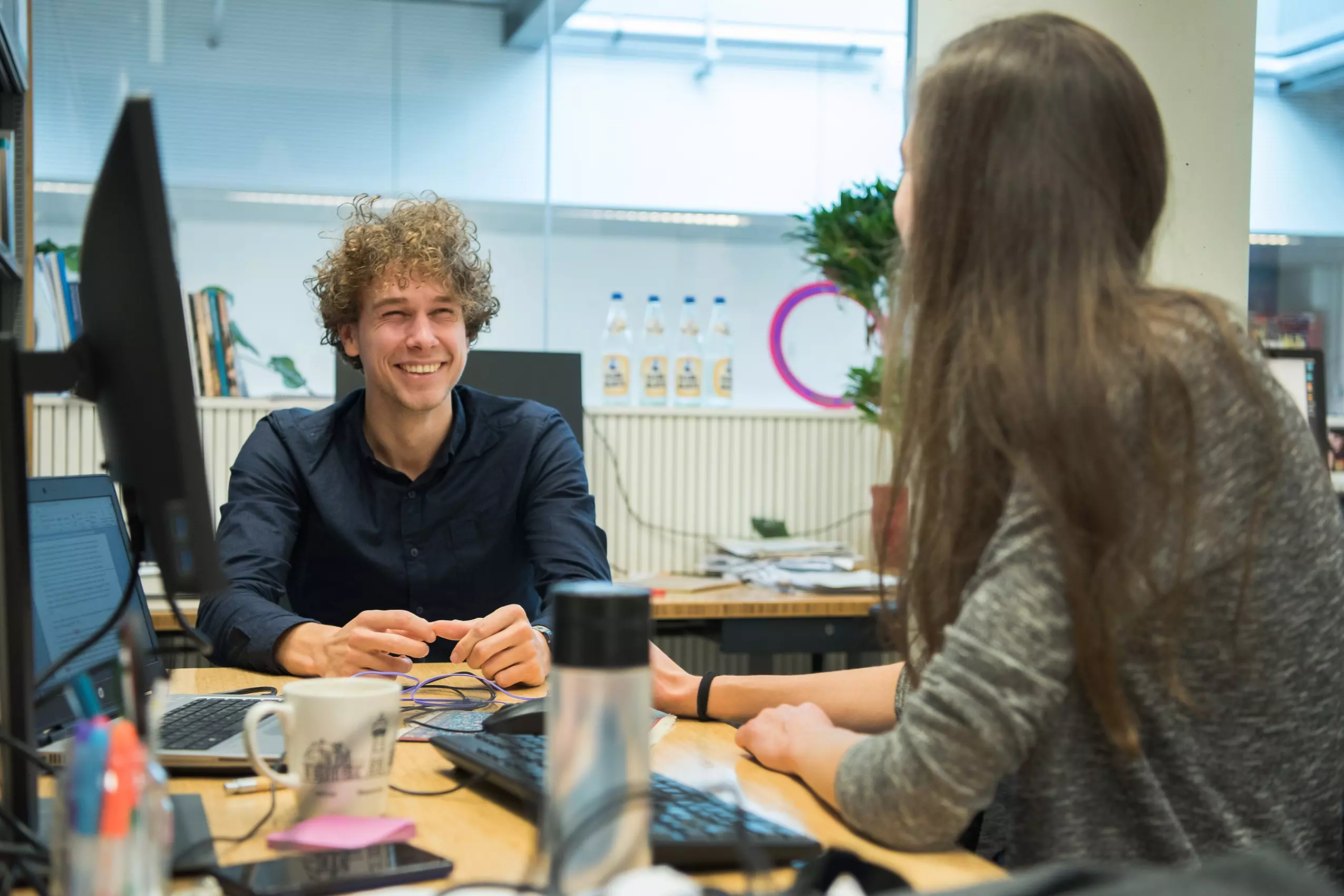
.jpg "/static/uploads/206-hippo-jp-g-employees-meeting-sblanchard-2023-lr-(2).jpg")
Are you interested in how adolescents navigate AI-generated content? Do you want to know if synthetic content reshapes how they form knowledge? And do you want to know if increased reliance on AI-generated content may lead to a collapse of norms of knowledge and distrust in traditional knowledge providers such as academia and media? Then apply for this PhD project!
2 PhD positions: 'Agents of doubt: Synthetic content and adolescents' knowledge formation'
- Faculty of Social and Behavioural Sciences
- 15503
- Master's
- €3,204 - €4,051
- 38 hours
- Closes on16-10-2026
Working at the UvA
Join us!
We are looking for two ambitious PhD Researchers for the four-year project “Agents of doubt: A novel framework for understanding the impact of synthetic content on adolescents’ knowledge formation.” The PhD Candidates are embedded in the Amsterdam School of Communication Research (ASCoR) and are part of the Youth and Media Entertainment Program Group. You will be working together with Jochen Peter and Toni van der Meer.

Working at the UvA
Join us!
We are looking for two ambitious PhD Researchers for the four-year project “Agents of doubt: A novel framework for understanding the impact of synthetic content on adolescents’ knowledge formation.” The PhD Candidates are embedded in the Amsterdam School of Communication Research (ASCoR) and are part of the Youth and Media Entertainment Program Group. You will be working together with Jochen Peter and Toni van der Meer.
All about this vacancy
What are you going to do
Adolescents heavily use synthetic content – AI-generated text, audio, images, and video. However, given their still developing cognitive skills, they may also be least equipped to deal with synthetic content. This project investigates how synthetic content reshapes how adolescents develop knowledge. We propose a novel framework that links synthetic content to adolescents’ increased doubt about what can be reliably known (epistemic uncertainty) and their diminishing capacity to form beliefs independently (epistemic agency). Epistemic uncertainty and reduced epistemic agency, in turn, may lead to a collapse of shared norms of knowledge, distrust in epistemic authorities, and declining intellectual engagement (epistemic anomie).
This project uses several quantitative and qualitative methods like (panel) survey, lab experiments focus groups, and data donation. Each PhD Candidate will write a paper-based dissertation and strive to publish the results of the individual sub-studies in journals in the field of communication science and related disciplines.
This project consists of two PhD projects and is funded by the Dutch Research Foundation (NWO) through an Open Competition L grant. Therefore, successful candidates are also expected to participate in activities related to the overall project. The PhD project will be supervised by prof. dr. Jochen Peter and dr. Toni van der Meer. The preferred starting date for the PhD Candidate is 1 January 2027.
Tasks include:
- completing an English-language PhD dissertation consisting of research articles within the appointment period;
- conducting (panel) surveys, lab experiments, data donation, and qualitative focus groups;
- conducting data analysis;
- presenting the work at national and international conferences;
- spending 10% of your time on teaching-related tasks.
What do you have to offer
You have:
- a (research) master’s degree in Communication Science or in another social science discipline relevant to the project, such as Political Science, Sociology, or (Social) Psychology;
- experience with aspects related to the topic of the proposal (e.g., digital communication, artificial intelligence, developmental research, research on mis/disinformation);
- experience with quantitative research methods (e.g., (panel) survey, (lab) experiment, data donation), ideally already demonstrated in your thesis or other research projects you were involved in;
- experience with various techniques of quantitative statistical data analysis, experience with longitudinal analyses is a plus;
- experience with, or knowledge of, focus groups and analysis of qualitative data;
- an excellent spoken and written command of English (as you will write an English-language dissertation and present at international conferences);
- an excellent spoken and written command of Dutch is a plus;
- the motivation and ability to work in an interdisciplinary team.
You are/have:
- passionate about research, particularly related to adolescents, misinformation, and/or artificial intelligence;
- an affinity with the topic of the project;
- open to feedback;
- committed to open science;
- able to work independently and in a team;
- eager to learn and to develop new (academic) skills;
- organized, flexible, and have attention to detail.
What else do we offer you
The position concerns temporary employment of 1.0 fte (38 hours per week) for a maximum term of 4 years. The initial employment is for one year. Following a positive assessment and barring altered financial and organizational circumstances, this term will be extended by a maximum of 3 years, which should result in the conferral of a doctorate. We will put together a curriculum which will also include the opportunity to attend training courses and both national and international events. You will also be tasked with teaching Bachelor's students.
For this position the University Job Classification profile “PhD Candidate” applies.
Your salary will be [€3,204] gross per month in the first year and will increase to [€4,051] in the final year, based on full-time employment and in keeping with the Collective Labour Agreement of Dutch Universities. We additionally offer an extensive package of secondary benefits, including 8% holiday allowance and a year-end bonus of 8.3%.
The UvA offers excellent possibilities for further professional development and education.
All about this vacancy
What are you going to do
Adolescents heavily use synthetic content – AI-generated text, audio, images, and video. However, given their still developing cognitive skills, they may also be least equipped to deal with synthetic content. This project investigates how synthetic content reshapes how adolescents develop knowledge. We propose a novel framework that links synthetic content to adolescents’ increased doubt about what can be reliably known (epistemic uncertainty) and their diminishing capacity to form beliefs independently (epistemic agency). Epistemic uncertainty and reduced epistemic agency, in turn, may lead to a collapse of shared norms of knowledge, distrust in epistemic authorities, and declining intellectual engagement (epistemic anomie).
This project uses several quantitative and qualitative methods like (panel) survey, lab experiments focus groups, and data donation. Each PhD Candidate will write a paper-based dissertation and strive to publish the results of the individual sub-studies in journals in the field of communication science and related disciplines.
This project consists of two PhD projects and is funded by the Dutch Research Foundation (NWO) through an Open Competition L grant. Therefore, successful candidates are also expected to participate in activities related to the overall project. The PhD project will be supervised by prof. dr. Jochen Peter and dr. Toni van der Meer. The preferred starting date for the PhD Candidate is 1 January 2027.
Tasks include:
- completing an English-language PhD dissertation consisting of research articles within the appointment period;
- conducting (panel) surveys, lab experiments, data donation, and qualitative focus groups;
- conducting data analysis;
- presenting the work at national and international conferences;
- spending 10% of your time on teaching-related tasks.
What do you have to offer
You have:
- a (research) master’s degree in Communication Science or in another social science discipline relevant to the project, such as Political Science, Sociology, or (Social) Psychology;
- experience with aspects related to the topic of the proposal (e.g., digital communication, artificial intelligence, developmental research, research on mis/disinformation);
- experience with quantitative research methods (e.g., (panel) survey, (lab) experiment, data donation), ideally already demonstrated in your thesis or other research projects you were involved in;
- experience with various techniques of quantitative statistical data analysis, experience with longitudinal analyses is a plus;
- experience with, or knowledge of, focus groups and analysis of qualitative data;
- an excellent spoken and written command of English (as you will write an English-language dissertation and present at international conferences);
- an excellent spoken and written command of Dutch is a plus;
- the motivation and ability to work in an interdisciplinary team.
You are/have:
- passionate about research, particularly related to adolescents, misinformation, and/or artificial intelligence;
- an affinity with the topic of the project;
- open to feedback;
- committed to open science;
- able to work independently and in a team;
- eager to learn and to develop new (academic) skills;
- organized, flexible, and have attention to detail.
What else do we offer you
The position concerns temporary employment of 1.0 fte (38 hours per week) for a maximum term of 4 years. The initial employment is for one year. Following a positive assessment and barring altered financial and organizational circumstances, this term will be extended by a maximum of 3 years, which should result in the conferral of a doctorate. We will put together a curriculum which will also include the opportunity to attend training courses and both national and international events. You will also be tasked with teaching Bachelor's students.
For this position the University Job Classification profile “PhD Candidate” applies.
Your salary will be [€3,204] gross per month in the first year and will increase to [€4,051] in the final year, based on full-time employment and in keeping with the Collective Labour Agreement of Dutch Universities. We additionally offer an extensive package of secondary benefits, including 8% holiday allowance and a year-end bonus of 8.3%.
The UvA offers excellent possibilities for further professional development and education.
Your place at the UvA
In this department, you will work
The Amsterdam School of Communication Research (ASCoR) is the research institute for the Communication Science Department in the Faculty of Social and Behavioural Sciences at the University of Amsterdam.
A challenging work environment with a variety of duties and ample scope for individual initiative and development within an inspiring organization. The social and behavioral sciences play a leading role in addressing the major societal challenges faced by the world, the Netherlands and Amsterdam, now and in the future.
About the Faculty of Social and Behavioural Sciences
Your place at the UvA
This is where you will be working
In this department, you will work
The Amsterdam School of Communication Research (ASCoR) is the research institute for the Communication Science Department in the Faculty of Social and Behavioural Sciences at the University of Amsterdam.
A challenging work environment with a variety of duties and ample scope for individual initiative and development within an inspiring organization. The social and behavioral sciences play a leading role in addressing the major societal challenges faced by the world, the Netherlands and Amsterdam, now and in the future.
About the Faculty of Social and Behavioural Sciences
Important to know
Your application & contact
If you recognize yourself in this profile and are interested in the role, we look forward to receiving your motivation letter and CV. You can apply via the red button until 16 October 2026. Interviews will probably take place at the end of October/ beginning of November. In case of equal qualifications, internal candidates will be given preference over external candidates.
For questions about the vacancy, you can contact:
- prof. dr. Jochen Peter ([email protected]) or
- dr. Toni van der Meer ([email protected])
Diversity, Equity & Inclusion
Important to know
Your application & contact
If you recognize yourself in this profile and are interested in the role, we look forward to receiving your motivation letter and CV. You can apply via the red button until 16 October 2026. Interviews will probably take place at the end of October/ beginning of November. In case of equal qualifications, internal candidates will be given preference over external candidates.
For questions about the vacancy, you can contact:
- prof. dr. Jochen Peter ([email protected]) or
- dr. Toni van der Meer ([email protected])
Other interesting vacancies for you
PhD Candidate in AI and Hardware Security
- Faculty of Science
- €3,204 - €4,051
- Closes on25-10-2026
- Master's
- 38 hours
PhD Position in Political Science: Militarization and Democratic Erosion in Latin America
- Faculty of Social and Behavioural Sciences
- €3,204 - €4,051
- Closes on06-11-2026
- Master's
- 38 hours

PhD Position 'Why Are the Super-Rich So Tax-Averse?'
- Faculty of Social and Behavioural Sciences
- €3,204 - €4,051
- Closes on26-10-2026
- Master's
- 38 hours
Other interesting vacancies for you
PhD Candidate in AI and Hardware Security
- Faculty of Science
- €3,204 - €4,051
- Closes on25-10-2026
- Master's
- 38 hours

PhD Position in Political Science: Militarization and Democratic Erosion in Latin America
- Faculty of Social and Behavioural Sciences
- €3,204 - €4,051
- Closes on06-11-2026
- Master's
- 38 hours
PhD Position 'Why Are the Super-Rich So Tax-Averse?'
- Faculty of Social and Behavioural Sciences
- €3,204 - €4,051
- Closes on26-10-2026
- Master's
- 38 hours

Don't miss out on your dream job!
Don't miss out on your dream job!
This website uses cookies
We, and third parties, use cookies on our website. We use cookies to ensure that our website functions properly, to store your preferences, to gain insight into visitor behavior, but also for marketing and social media purposes (showing personalized advertisements). By clicking 'Accept', you agree to the use of all cookies. In our Cookie Statement. you can read more about the cookies we use and save or change your preferences. By clicking 'Refuse' you only agree to the use of functional cookies.