This website uses cookies
We, and third parties, use cookies on our website. We use cookies to ensure that our website functions properly, to store your preferences, to gain insight into visitor behavior, but also for marketing and social media purposes (showing personalized advertisements). By clicking 'Accept', you agree to the use of all cookies. In our Cookie Statement. you can read more about the cookies we use and save or change your preferences. By clicking 'Refuse' you only agree to the use of functional cookies.


Are you fascinated by robots that can learn to manipulate the physical world — safely, reliably, and from just a handful of demonstrations? The University of Amsterdam’s VISLab is looking for a Postdoctoral Researcher in Robot World Models to push the frontier where computer vision, physics simulation, and embodied AI converge.
Postdoc on 3D Real-to-Sim Robot World Models (UvA+TOYOTA)
- Faculty of Science
- 14892
- PhD
- €3,546 - €5,538
- 38 hours
- Closes on12-07-2026

Are you fascinated by robots that can learn to manipulate the physical world — safely, reliably, and from just a handful of demonstrations? The University of Amsterdam’s VISLab is looking for a Postdoctoral Researcher in Robot World Models to push the frontier where computer vision, physics simulation, and embodied AI converge.
Postdoc on 3D Real-to-Sim Robot World Models (UvA+TOYOTA)
- Faculty of Science
- 14892
- PhD
- €3,546 - €5,538
- 38 hours
- Closes on12-07-2026
Working at the UvA
Join Us!
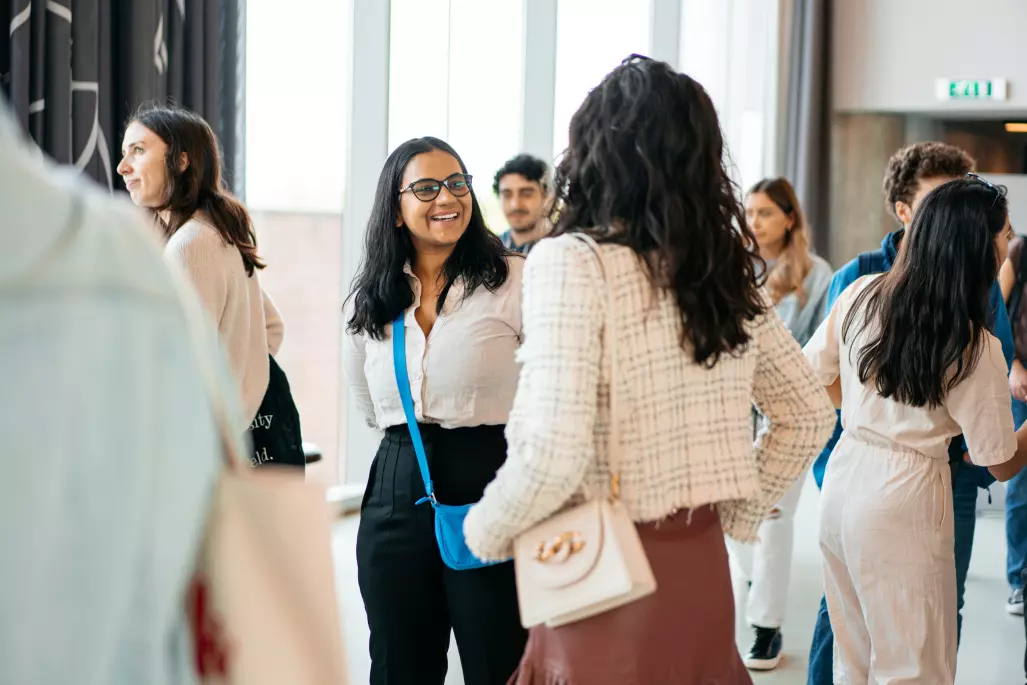
This position is part of a collaborative research programme between the University of Amsterdam, Toyota Motor Europe, and the Toyota Research Institute. Your work will directly shape the next generation of robots capable of autonomously learning complex manufacturing tasks, with safety, interpretability, and data efficiency at their core.
Working at the UvA
Join Us!
This position is part of a collaborative research programme between the University of Amsterdam, Toyota Motor Europe, and the Toyota Research Institute. Your work will directly shape the next generation of robots capable of autonomously learning complex manufacturing tasks, with safety, interpretability, and data efficiency at their core.
All about this vacancy
This is what you will do
As a postdoctoral researcher in robot world models, you will develop compositional, physics-grounded digital twins that enable robots to imagine novel task configurations and learn robust manipulation policies from just a few real demonstrations. You will work at the intersection of 3D computer vision, physical simulation, and robot learning — combining cutting-edge Gaussian Splatting reconstruction with physics engines such as Drake to build simulation environments that faithfully mirror the real world. Your research will directly feed into a concrete manufacturing challenge: automating door-frame assembly tasks at Toyota factories, a high-frequency, high-value use case operating across all global Toyota manufacturing sites. You will collaborate daily with researchers at Toyota Motor Europe and the Toyota Research Institute, and co-supervise PhD students within the VISLab.
Tasks and responsibilities:
- designing and developing compositional robot world models that integrate object-centric 3D representations (Gaussian Splatting) with physics simulators (Drake) to create efficient, physically grounded digital twins of real environments;
- developing real-to-sim-to-real pipelines that automatically construct simulation environments from video recordings or images of real-world robotic tasks, enabling scalable and low-cost training data generation;
- devising scene completion and occlusion-handling algorithms (e.g., using Zero123, OctMAE) to robustly reconstruct partially visible objects, ensuring accurate simulation for both training and test-time deployment;
- designing equivariant data augmentation strategies within the digital twin to generate diverse, physically valid demonstrations for imitation learning, enabling robots to learn robust manipulation policies from a minimal number of real examples;
- implementing and evaluating real-time task-execution monitoring and failure-prediction modules that leverage the digital twin as a safety validation environment during robot deployment, enabling pre-emptive failure detection;
- publishing research results at top-tier venues (CVPR, ICLR, NeurIPS, ICML, ECCV) and contributing to the project’s joint patent portfolio with Toyota;
- collaborating closely with industrial research partners at Toyota Motor Europe and Toyota Research Institute, contributing to joint milestones and technology transfer activities;
- co-supervising PhD students within the VISLab and contributing to the broader research activities of the University of Amsterdam.
What we ask of you
You are a driven researcher who combines technical depth with scientific curiosity. You thrive at the boundary of robot learning, computer vision, deep learning, and simulation, and you are excited to see your research running on real robots. You communicate clearly, collaborate openly across institutions, and have the stamina to push through the engineering challenges that come with real-world physical AI.
Your experience and profile:
- a PhD degree in Computer Vision, Machine Learning, Robotics, or a closely related field;
- a strong publication record in top-tier venues (CVPR, ICLR, NeurIPS, ECCV, ICML, or equivalent);
- solid expertise in 3D computer vision and scene reconstruction, in particular differentiable rendering or Gaussian Splatting methods;
- experience with robot learning, imitation learning, or reinforcement learning for manipulation, demonstrably applied in simulation or on real hardware;
- proficiency in PyTorch or JAX and hands-on familiarity with physics simulators (Drake, MuJoCo, PyBullet, or equivalent);
- demonstrated ability to independently lead research projects, from idea conception through to publication;
- strong communication and collaboration skills, with a proven ability to work across institutional and disciplinary boundaries;
- professional command of English (written and spoken).
- experience with vision foundation models (SAM, DINO, GroundingDINO) or generative 3D reconstruction is a plus.
This is what we offer you
We offer a temporary employment contract for 38 hours per week for a period of 12 months. The preferred starting date is as soon as possible.
The gross monthly salary, based on 38 hours per week and dependent on relevant experience, ranges between € 3,546 to € 5,538 (scale 10). This does not include 8% holiday allowance and 8,3% year-end allowance. The UFO profile Researcher 4 is applicable. A favourable tax agreement, the ‘30% ruling’, may apply to non-Dutch applicants. The Collective Labour Agreement of Universities of the Netherlands is applicable.
Curious about our extensive secondary benefits package? You can read more about it here.
All about this vacancy
This is what you will do
As a postdoctoral researcher in robot world models, you will develop compositional, physics-grounded digital twins that enable robots to imagine novel task configurations and learn robust manipulation policies from just a few real demonstrations. You will work at the intersection of 3D computer vision, physical simulation, and robot learning — combining cutting-edge Gaussian Splatting reconstruction with physics engines such as Drake to build simulation environments that faithfully mirror the real world. Your research will directly feed into a concrete manufacturing challenge: automating door-frame assembly tasks at Toyota factories, a high-frequency, high-value use case operating across all global Toyota manufacturing sites. You will collaborate daily with researchers at Toyota Motor Europe and the Toyota Research Institute, and co-supervise PhD students within the VISLab.
Tasks and responsibilities:
- designing and developing compositional robot world models that integrate object-centric 3D representations (Gaussian Splatting) with physics simulators (Drake) to create efficient, physically grounded digital twins of real environments;
- developing real-to-sim-to-real pipelines that automatically construct simulation environments from video recordings or images of real-world robotic tasks, enabling scalable and low-cost training data generation;
- devising scene completion and occlusion-handling algorithms (e.g., using Zero123, OctMAE) to robustly reconstruct partially visible objects, ensuring accurate simulation for both training and test-time deployment;
- designing equivariant data augmentation strategies within the digital twin to generate diverse, physically valid demonstrations for imitation learning, enabling robots to learn robust manipulation policies from a minimal number of real examples;
- implementing and evaluating real-time task-execution monitoring and failure-prediction modules that leverage the digital twin as a safety validation environment during robot deployment, enabling pre-emptive failure detection;
- publishing research results at top-tier venues (CVPR, ICLR, NeurIPS, ICML, ECCV) and contributing to the project’s joint patent portfolio with Toyota;
- collaborating closely with industrial research partners at Toyota Motor Europe and Toyota Research Institute, contributing to joint milestones and technology transfer activities;
- co-supervising PhD students within the VISLab and contributing to the broader research activities of the University of Amsterdam.
What we ask of you
You are a driven researcher who combines technical depth with scientific curiosity. You thrive at the boundary of robot learning, computer vision, deep learning, and simulation, and you are excited to see your research running on real robots. You communicate clearly, collaborate openly across institutions, and have the stamina to push through the engineering challenges that come with real-world physical AI.
Your experience and profile:
- a PhD degree in Computer Vision, Machine Learning, Robotics, or a closely related field;
- a strong publication record in top-tier venues (CVPR, ICLR, NeurIPS, ECCV, ICML, or equivalent);
- solid expertise in 3D computer vision and scene reconstruction, in particular differentiable rendering or Gaussian Splatting methods;
- experience with robot learning, imitation learning, or reinforcement learning for manipulation, demonstrably applied in simulation or on real hardware;
- proficiency in PyTorch or JAX and hands-on familiarity with physics simulators (Drake, MuJoCo, PyBullet, or equivalent);
- demonstrated ability to independently lead research projects, from idea conception through to publication;
- strong communication and collaboration skills, with a proven ability to work across institutional and disciplinary boundaries;
- professional command of English (written and spoken).
- experience with vision foundation models (SAM, DINO, GroundingDINO) or generative 3D reconstruction is a plus.
This is what we offer you
We offer a temporary employment contract for 38 hours per week for a period of 12 months. The preferred starting date is as soon as possible.
The gross monthly salary, based on 38 hours per week and dependent on relevant experience, ranges between € 3,546 to € 5,538 (scale 10). This does not include 8% holiday allowance and 8,3% year-end allowance. The UFO profile Researcher 4 is applicable. A favourable tax agreement, the ‘30% ruling’, may apply to non-Dutch applicants. The Collective Labour Agreement of Universities of the Netherlands is applicable.
Curious about our extensive secondary benefits package? You can read more about it here.
Your place at the UvA
You will work in this team
The Faculty of Science has a student body of around 8,000, as well as 1,800 members of staff working in education, research or support services. Researchers and students at the Faculty of Science are fascinated by every aspect of how the world works, be it elementary particles, the birth of the universe or the functioning of the brain.The position will be with Efstratios Gavves group and in very close collaboration with Toyota Core AI team. It is further embedded in VISLab, with more than 30 PhD students and postdocs working on theoretical and applied computer vision, deep learning, and Physical AI.
Want to know more about our organisation? Read more about working at the University of Amsterdam.
More about the UvA
Your place at the UvA
This is where you will be working
You will work in this team
The Faculty of Science has a student body of around 8,000, as well as 1,800 members of staff working in education, research or support services. Researchers and students at the Faculty of Science are fascinated by every aspect of how the world works, be it elementary particles, the birth of the universe or the functioning of the brain.The position will be with Efstratios Gavves group and in very close collaboration with Toyota Core AI team. It is further embedded in VISLab, with more than 30 PhD students and postdocs working on theoretical and applied computer vision, deep learning, and Physical AI.
Want to know more about our organisation? Read more about working at the University of Amsterdam.
More about the UvA
Important to know
Your application & contact
If you feel the profile fits you, and you are interested in the job, we look forward to receiving your application. You can apply online via the red button. We accept applications until and including 12 July 2026.
Applications should include the following information (all files besides your cv should be submitted in one single pdf file):
- a detailed CV including the months (not just years) when referring to your education and work experience (max 2 pages) with top K publications + motivation (max 1 page);
- a research statement (max 2 pages);
- the names and email addresses of two references who can provide letters of recommendation.
A knowledge security check can be part of the selection procedure.
(for details: national knowledge security guidelines)
Only complete applications received within the response period via the link below will be considered.
If you have any questions or do you require additional information? Please contact:
- Efstratios Gavves, Associate Professor, [email protected]
Diversity, Equity & Inclusion
Important to know
Your application & contact
If you feel the profile fits you, and you are interested in the job, we look forward to receiving your application. You can apply online via the red button. We accept applications until and including 12 July 2026.
Applications should include the following information (all files besides your cv should be submitted in one single pdf file):
- a detailed CV including the months (not just years) when referring to your education and work experience (max 2 pages) with top K publications + motivation (max 1 page);
- a research statement (max 2 pages);
- the names and email addresses of two references who can provide letters of recommendation.
A knowledge security check can be part of the selection procedure.
(for details: national knowledge security guidelines)
Only complete applications received within the response period via the link below will be considered.
If you have any questions or do you require additional information? Please contact:
- Efstratios Gavves, Associate Professor, [email protected]
Other interesting vacancies for you
Postdoctoral researcher in Plant-virus interactions
- Faculty of Science
- €3,546 - €5,538
- Closes on19-07-2026
- PhD
- 38 hours
Postdoctoral researcher in Plant-thrips-virus interactions
- Faculty of Science
- €3,546 - €5,538
- Closes on19-07-2026
- PhD
- 38 hours
Security and Network Engineering Education Technical Coordinator
- Faculty of Science
- €3,708 - €5,057
- Closes on15-08-2026
- Master's
- 38 hours
Other interesting vacancies for you
Postdoctoral researcher in Plant-virus interactions
- Faculty of Science
- €3,546 - €5,538
- Closes on19-07-2026
- PhD
- 38 hours
Postdoctoral researcher in Plant-thrips-virus interactions
- Faculty of Science
- €3,546 - €5,538
- Closes on19-07-2026
- PhD
- 38 hours
Security and Network Engineering Education Technical Coordinator
- Faculty of Science
- €3,708 - €5,057
- Closes on15-08-2026
- Master's
- 38 hours

Don't miss out on your dream job!