We, and third parties, use cookies on our website. We use cookies to ensure that our website functions properly, to store your preferences, to gain insight into visitor behavior, but also for marketing and social media purposes (showing personalized advertisements). By clicking 'Accept', you agree to the use of all cookies. In our Cookie Statement. you can read more about the cookies we use and save or change your preferences. By clicking 'Refuse' you only agree to the use of functional cookies.

Are you passionate about political communication, election campaigns, and quantitative empirical research? The Amsterdam School of Communication Research is seeking a highly motivated Postdoc for the research project ‘That’s (not) appropriate’– Role of Social Norms and Norm Transgression in Voters’ Acceptance of Negative Campaigning, led by Dr. Corinna Oschatz.

Are you passionate about political communication, election campaigns, and quantitative empirical research? The Amsterdam School of Communication Research is seeking a highly motivated Postdoc for the research project ‘That’s (not) appropriate’– Role of Social Norms and Norm Transgression in Voters’ Acceptance of Negative Campaigning, led by Dr. Corinna Oschatz.
Project goals
While considerable research exists on the causes and consequences of negative campaigning, the perceptual dynamics remain largely under-investigated. How is negative campaigning perceived by those who are exposed to it? How can differences in accepting such behaviour as legitimate action – a vital component for the success of a political candidate – be explained? Against the background of an increasingly polarized society with strong ideological camps, this project tests the idea that group belongings shape political judgements. We assume that political attitudes towards negative campaigning are not solely individually developed but socially constructed. If so, what are the consequences of normative violations of group standards on an electoral and systematic level? If working on these fundamental questions seems attractive to you, this Postdoc vacancy might be just for you.

Project goals
While considerable research exists on the causes and consequences of negative campaigning, the perceptual dynamics remain largely under-investigated. How is negative campaigning perceived by those who are exposed to it? How can differences in accepting such behaviour as legitimate action – a vital component for the success of a political candidate – be explained? Against the background of an increasingly polarized society with strong ideological camps, this project tests the idea that group belongings shape political judgements. We assume that political attitudes towards negative campaigning are not solely individually developed but socially constructed. If so, what are the consequences of normative violations of group standards on an electoral and systematic level? If working on these fundamental questions seems attractive to you, this Postdoc vacancy might be just for you.
The project builds on multiple rich panel survey datasets (with rolling cross-section components) conducted during previous elections in the Netherlands, USA, Germany and Japan.
Specifically, you will
You are:
You have:
The planned starting date for this project is 1 April 2026 (to be negotiated). The position concerns temporary employment of 38 hours for a maximum term of 2 years including a probation period of two months. You will have the opportunity to attend training courses and both national and international events. You will also be able to build up demonstratable teaching skills as part of the 20% teaching component of the contract.
The UFO profile Onderzoeker 4 or Onderzoeker 3 applies.Your salary will range from €4,412 to €5.057 (10.5 - 11.2) based on your experience, full-time employment and in keeping with the Collective Labour Agreement of Dutch Universities. We additionally offer an extensive package of secondary benefits, including 8% holiday allowance and a year-end bonus of 8.3%.
What else do we offer you
The project builds on multiple rich panel survey datasets (with rolling cross-section components) conducted during previous elections in the Netherlands, USA, Germany and Japan.
Specifically, you will
You are:
You have:
The planned starting date for this project is 1 April 2026 (to be negotiated). The position concerns temporary employment of 38 hours for a maximum term of 2 years including a probation period of two months. You will have the opportunity to attend training courses and both national and international events. You will also be able to build up demonstratable teaching skills as part of the 20% teaching component of the contract.
The UFO profile Onderzoeker 4 or Onderzoeker 3 applies.Your salary will range from €4,412 to €5.057 (10.5 - 11.2) based on your experience, full-time employment and in keeping with the Collective Labour Agreement of Dutch Universities. We additionally offer an extensive package of secondary benefits, including 8% holiday allowance and a year-end bonus of 8.3%.
What else do we offer you
This project is embedded within the Amsterdam School of Communication Research (ASCoR) at the Faculty of Social and Behavioural Sciences, University of Amsterdam. ASCoR is the research institute for Communication Science, structured around four program groups: Persuasive Communication, Corporate Communication, Political Communication & Journalism, and Youth & Media Entertainment. For more information, see the https://ascor.uva.nl/.
The Postdoc project is led by Dr. Corinna Oschatz in close cooperation with Dr. Alessandro Nai and Dr. Andreas Schuck. It will be embedded within the Political Communication & Journalism programme group. In our group, we explore the contributions of media and communication to citizens' perception, knowledge, and understanding of political issues and political and social groups, as well as citizens' participation in the political arena and their electoral behaviour.
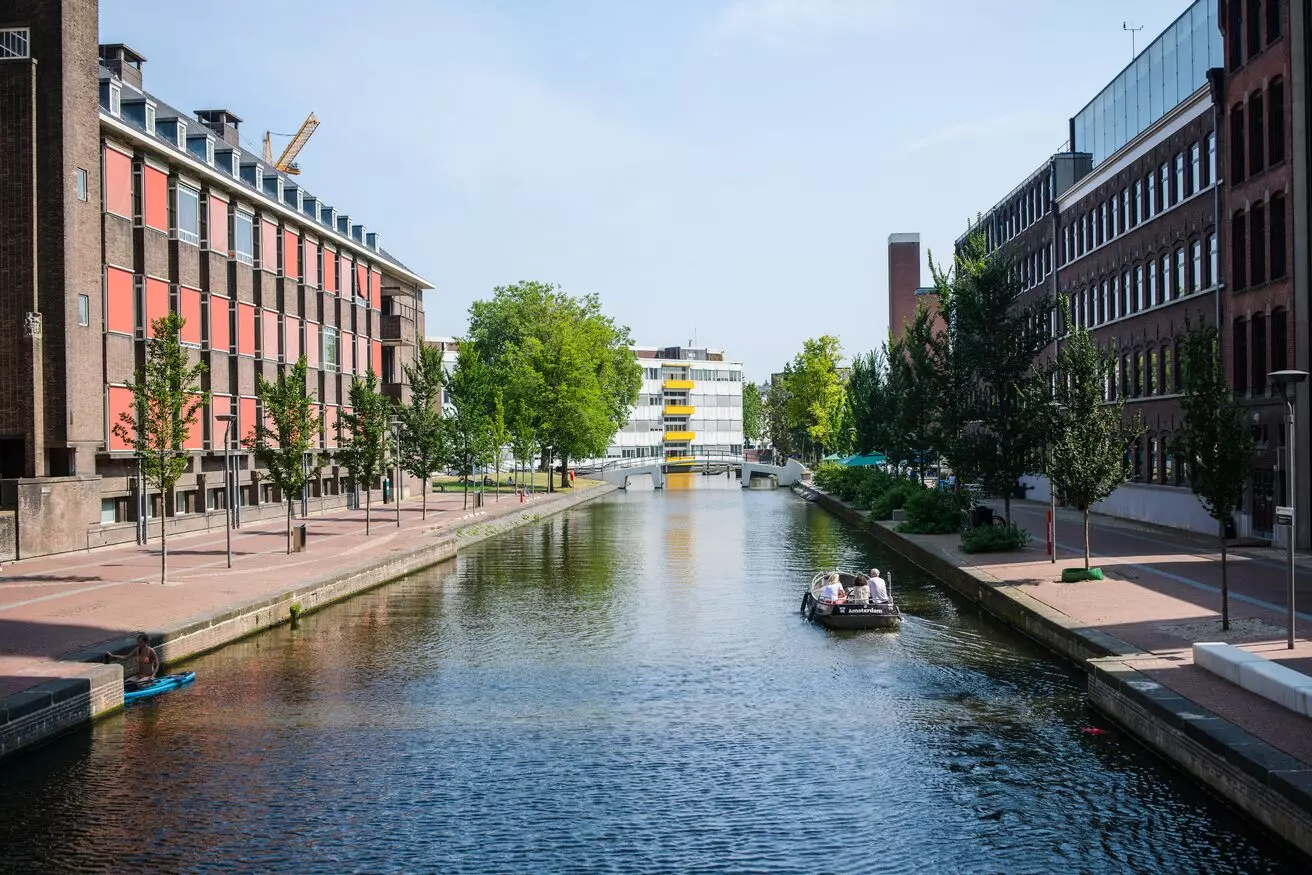
Within the PolCom & Journalism group and ASCoR at large, you’ll join a welcoming and dynamic research community where collaboration and interdisciplinary approaches are highly valued. Set in the vibrant city of Amsterdam, you’ll engage with impactful research addressing key challenges across the field of Communication Science.
This project is embedded within the Amsterdam School of Communication Research (ASCoR) at the Faculty of Social and Behavioural Sciences, University of Amsterdam. ASCoR is the research institute for Communication Science, structured around four program groups: Persuasive Communication, Corporate Communication, Political Communication & Journalism, and Youth & Media Entertainment. For more information, see the https://ascor.uva.nl/.
The Postdoc project is led by Dr. Corinna Oschatz in close cooperation with Dr. Alessandro Nai and Dr. Andreas Schuck. It will be embedded within the Political Communication & Journalism programme group. In our group, we explore the contributions of media and communication to citizens' perception, knowledge, and understanding of political issues and political and social groups, as well as citizens' participation in the political arena and their electoral behaviour.
Within the PolCom & Journalism group and ASCoR at large, you’ll join a welcoming and dynamic research community where collaboration and interdisciplinary approaches are highly valued. Set in the vibrant city of Amsterdam, you’ll engage with impactful research addressing key challenges across the field of Communication Science.
If you recognize yourself in this profile and are interested in the role, we look forward to receiving your motivation letter and CV by 18. January 2026.
Please submit your application as a single .pdf file, including:
Interviews will take place during the 2nd week of February. In case of equal qualifications, internal candidates will be given preference over external candidates.
For questions about the vacancy, you can contact: Dr. Corinna Oschatz ([email protected]).
No agencies please.
If you recognize yourself in this profile and are interested in the role, we look forward to receiving your motivation letter and CV by 18. January 2026.
Please submit your application as a single .pdf file, including:
Interviews will take place during the 2nd week of February. In case of equal qualifications, internal candidates will be given preference over external candidates.
For questions about the vacancy, you can contact: Dr. Corinna Oschatz ([email protected]).
No agencies please.