Postdoctoral Research in Critical AI, Deep Learning and Digital Cultures

Postdoctoral Research in Critical AI, Deep Learning and Digital Cultures

Working at the UvA

Develop a Critical AI perspective on Deep Learning and Culture

The Deep Culture project investigates the relations between deep learning and global cultural production and consumption. Deep learning technologies like ChatGPT have generated a lot of excitement about our new relations with AI but have also provoked much public anxiety. The project coins ‘deep culture’ to describe the global transformations that deep learning has brought on culture, and how culture is, in turn, key to deep learning. The project will first explore the relations between deep learning and historical-cultural concepts and practices. Secondly, it will work with deep-learning methods to address their limitations for critical analysis. Finally, it aims to foster public understanding of deep learning’s global relations to culture.

The PostDoc will work across all parts of the project with particular emphasis on broader theoretical and methodological questions concerning the interaction between culture and deep learning. They will have a background in fields such as Critical AI Studies, Science and Technology Studies, or related areas, and will play a key role in consolidating the project’s conceptual innovations. These include critically engaging with contemporary deep-learning theories, methodologies and infrastructures through close readings of AI literature and multi-method investigations of current AI practices. This work will examine the brittleness and knowledge regimes of dominant deep-learning cultures and their social boundaries. Through this approach, the Postdoctoral researcher will make substantive conceptual and methodological contributions to the development of a critical AI perspective on deep learning.

Working at the UvA

Develop a Critical AI perspective on Deep Learning and Culture

The Deep Culture project investigates the relations between deep learning and global cultural production and consumption. Deep learning technologies like ChatGPT have generated a lot of excitement about our new relations with AI but have also provoked much public anxiety. The project coins ‘deep culture’ to describe the global transformations that deep learning has brought on culture, and how culture is, in turn, key to deep learning. The project will first explore the relations between deep learning and historical-cultural concepts and practices. Secondly, it will work with deep-learning methods to address their limitations for critical analysis. Finally, it aims to foster public understanding of deep learning’s global relations to culture.

The PostDoc will work across all parts of the project with particular emphasis on broader theoretical and methodological questions concerning the interaction between culture and deep learning. They will have a background in fields such as Critical AI Studies, Science and Technology Studies, or related areas, and will play a key role in consolidating the project’s conceptual innovations. These include critically engaging with contemporary deep-learning theories, methodologies and infrastructures through close readings of AI literature and multi-method investigations of current AI practices. This work will examine the brittleness and knowledge regimes of dominant deep-learning cultures and their social boundaries. Through this approach, the Postdoctoral researcher will make substantive conceptual and methodological contributions to the development of a critical AI perspective on deep learning.

All about this vacancy

This is what you will be doing

You are asked:

  • to conduct independent research drawing on approaches from deep learning and critical AI and data studies;
  • to publish and present research results in leading international conferences and journals;
  • to support the PI and the PhD students in their work;
  • to participate in project meetings and relevant networks;
  • to participate in knowledge dissemination activities with academic and other stakeholders;
  • to contribute to the organizational and administrative work on the project.

This is what we ask of you

Required:

  • a completed PhD degree in cultural analysis, critical artificial intelligence, STS, and related areas; candidates with a background in conceptual and critical work on AI but also cross-disciplinary or interdisciplinary skills are especially encouraged to apply.
  • a demonstrable record in socio-technical research with respect to AI;
  • advanced knowledge of contemporary AI techniques and their historical developments;
  • an interest in and experience of work on AI/computational infrastructures;
  • experience in mixed methods research, including interviews and/or participant observations, especially researching AI projects;
  • a strong cooperative attitude and interest in working collaboratively with other researchers and external stakeholders;
  • a professional command of English and good presentation skills. Experience in Dutch that helps with qualitative research and interviews in the Netherlands is a plus.

This is what else we offer you

The employment will be for one year, with a full time employment (38h). Contingent on a positive performance evaluation the contract will be extended with ​1,5 years. The preferred starting date is 1 June 2026, with a probationary period of 2 months.

The salary will be between € 3.546,00 - € 5.538,00 gross per month, based on a full time employment, excl. 8% holiday allowance and 8,3% end of the year bonus. The collecive labour agremeent of Dutch Universities is appliccable. 

All about this vacancy

This is what you will be doing

You are asked:

  • to conduct independent research drawing on approaches from deep learning and critical AI and data studies;
  • to publish and present research results in leading international conferences and journals;
  • to support the PI and the PhD students in their work;
  • to participate in project meetings and relevant networks;
  • to participate in knowledge dissemination activities with academic and other stakeholders;
  • to contribute to the organizational and administrative work on the project.

This is what we ask of you

Required:

  • a completed PhD degree in cultural analysis, critical artificial intelligence, STS, and related areas; candidates with a background in conceptual and critical work on AI but also cross-disciplinary or interdisciplinary skills are especially encouraged to apply.
  • a demonstrable record in socio-technical research with respect to AI;
  • advanced knowledge of contemporary AI techniques and their historical developments;
  • an interest in and experience of work on AI/computational infrastructures;
  • experience in mixed methods research, including interviews and/or participant observations, especially researching AI projects;
  • a strong cooperative attitude and interest in working collaboratively with other researchers and external stakeholders;
  • a professional command of English and good presentation skills. Experience in Dutch that helps with qualitative research and interviews in the Netherlands is a plus.

This is what else we offer you

The employment will be for one year, with a full time employment (38h). Contingent on a positive performance evaluation the contract will be extended with ​1,5 years. The preferred starting date is 1 June 2026, with a probationary period of 2 months.

The salary will be between € 3.546,00 - € 5.538,00 gross per month, based on a full time employment, excl. 8% holiday allowance and 8,3% end of the year bonus. The collecive labour agremeent of Dutch Universities is appliccable. 

Your place at the UvA

This is where you'll be working

The team is based at:

The University of Amsterdam is the largest university in the Netherlands, with the broadest spectrum of degree programmes. It is an intellectual hub with 42,000 students, 6,000 employees and 3,000 doctoral students who are all committed to a culture of inquiring minds.

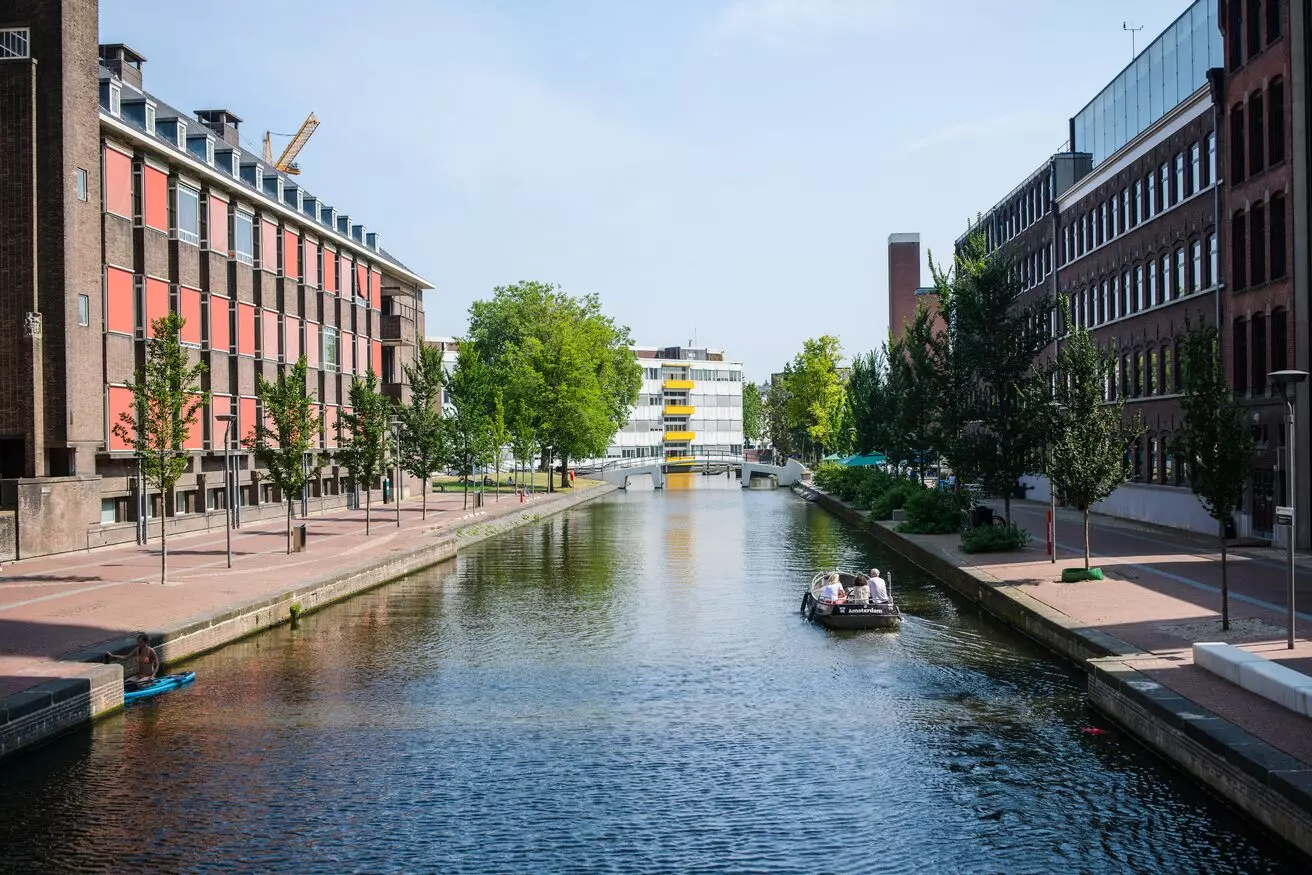
The Faculty of Humanities provides education and conducts research with a strong international profile in a large number of disciplines in de field of language and culture. Located in the heart of Amsterdam, the faculty maintains close ties with many cultural institutes in the capital city. Research and teaching staff focus on interdisciplinary collaboration and are active in several teaching programmes.

The Institute for Logic, Language and Computation is home to a thriving community of scholars, including philosophers, logicians, digital humanists, computer scientists, linguists, etc. who share a fascination with the interdisciplinary study of information. At the ILLC, we combine the problem-solving skills from the sciences with the reflective view of the humanities to discover the principles that regulate information processing and find answers to some of the hardest challenges of our time.

More about the UvA

The University of Amsterdam is ambitious, creative and committed. An inspiration to students since 1632, a vanguard player in international science and a partner in innovation.
The University of Amsterdam is the largest university in the Netherlands, with the broadest range of courses on offer. An intellectual hub with 42,000 students, 6,000 staff and 3,000 PhD students. Connected by a culture of curiosity.

Your place at the UvA

This is where you will be working

This is where you'll be working

The team is based at:

The University of Amsterdam is the largest university in the Netherlands, with the broadest spectrum of degree programmes. It is an intellectual hub with 42,000 students, 6,000 employees and 3,000 doctoral students who are all committed to a culture of inquiring minds.

The Faculty of Humanities provides education and conducts research with a strong international profile in a large number of disciplines in de field of language and culture. Located in the heart of Amsterdam, the faculty maintains close ties with many cultural institutes in the capital city. Research and teaching staff focus on interdisciplinary collaboration and are active in several teaching programmes.

The Institute for Logic, Language and Computation is home to a thriving community of scholars, including philosophers, logicians, digital humanists, computer scientists, linguists, etc. who share a fascination with the interdisciplinary study of information. At the ILLC, we combine the problem-solving skills from the sciences with the reflective view of the humanities to discover the principles that regulate information processing and find answers to some of the hardest challenges of our time.

More about the UvA

The University of Amsterdam is ambitious, creative and committed. An inspiration to students since 1632, a vanguard player in international science and a partner in innovation.
The University of Amsterdam is the largest university in the Netherlands, with the broadest range of courses on offer. An intellectual hub with 42,000 students, 6,000 staff and 3,000 PhD students. Connected by a culture of curiosity.

Important to know

Your application & contact

Questions?
For questions about the position or department, you can contact us during office hours at: 

​​Prof. Tobias Blanke; [email protected]

Professor AI and Humanities

Application
If you recognize yourself in the profile and are interested in the position, we look forward to receiving your application. Please send your cover letter and CV as a single PDF file. The cover letter should outline how you fit the project and position and initial research ideas.

The vacancy closes on 28-2-2026. The first round of interviews will take place in the two weeks after.

Diversity, Equity & Inclusion

As an employer, the UvA maintains an equal opportunities policy. We value diversity and are fully committed to being a place where everyone feels at home. We nurture inquisitive minds and perseverance and allow room for persistent questioning. With us, curiosity and creativity are the prevailing culture.
Studies show that women and members of underrepresented groups only apply for jobs if they meet 100% of the qualifications. Do you meet the educational requirements but not yet all of the requested experience? The UvA encourages you to apply anyway.

Important to know

Your application & contact

Questions?
For questions about the position or department, you can contact us during office hours at: 

​​Prof. Tobias Blanke; [email protected]

Professor AI and Humanities

Application
If you recognize yourself in the profile and are interested in the position, we look forward to receiving your application. Please send your cover letter and CV as a single PDF file. The cover letter should outline how you fit the project and position and initial research ideas.

The vacancy closes on 28-2-2026. The first round of interviews will take place in the two weeks after.

As an employer, the UvA maintains an equal opportunities policy. We value diversity and are fully committed to being a place where everyone feels at home. We nurture inquisitive minds and perseverance and allow room for persistent questioning. With us, curiosity and creativity are the prevailing culture.
Studies show that women and members of underrepresented groups only apply for jobs if they meet 100% of the qualifications. Do you meet the educational requirements but not yet all of the requested experience? The UvA encourages you to apply anyway.

Don't miss out on your dream job!

Sign up for a job alert and you'll receive automatic updates about new and relevant vacancies.

Don't miss out on your dream job!

Sign up for a job alert and you'll receive automatic updates about new and relevant vacancies.