PhD position in AI-driven inference for gravitational-wave cosmology with LISA

PhD position in AI-driven inference for gravitational-wave cosmology with LISA

Working at the UvA

Join us!

We are seeking an enthusiastic PhD candidate to develop cutting-edge, AI-driven inference methods for next-generation gravitational-wave astronomy, with a focus on cosmology and astroparticle physics. The position is based at the University of Amsterdam within the GRAPPA Center of Excellence, where you will join the research group of Dr. Christoph Weniger and work in close collaboration with an international network of theorists, machine-learning and AI experts, and LISA instrument and data-analysis teams, at the interface of fundamental physics and modern data science.

The PhD project is centered on the analysis of data from the Laser Interferometer Space Antenna (LISA) and addresses key challenges such as the global inference of large populations of overlapping gravitational-wave sources and stochastic backgrounds. The ultimate goal is to extract new information about the early Universe and fundamental physics—including inflationary processes, dark matter, and dark energy—from LISA’s rich gravitational-wave data.

Working at the UvA

Join us!

We are seeking an enthusiastic PhD candidate to develop cutting-edge, AI-driven inference methods for next-generation gravitational-wave astronomy, with a focus on cosmology and astroparticle physics. The position is based at the University of Amsterdam within the GRAPPA Center of Excellence, where you will join the research group of Dr. Christoph Weniger and work in close collaboration with an international network of theorists, machine-learning and AI experts, and LISA instrument and data-analysis teams, at the interface of fundamental physics and modern data science.

The PhD project is centered on the analysis of data from the Laser Interferometer Space Antenna (LISA) and addresses key challenges such as the global inference of large populations of overlapping gravitational-wave sources and stochastic backgrounds. The ultimate goal is to extract new information about the early Universe and fundamental physics—including inflationary processes, dark matter, and dark energy—from LISA’s rich gravitational-wave data.

All about this vacancy

What you will do

You will work as part of a strong, collaborative research team on the development and application of AI-based inference methods for gravitational-wave cosmology, focusing on complex, high-dimensional LISA data.

A central element of the project is the use of simulation-based inference (SBI)—a rapidly developing alternative to classical likelihood-based data analysis enabled by recent advances in deep learning. Within the LISA context, these methods are developed in a complementary way to existing likelihood-based and pipeline-driven efforts aimed at achieving a global fit of the data, providing new tools to address LISA’s computational and statistical challenges.

In particular, you will work on sequential, hierarchical, and population-level inference methods for LISA data analysis. Your work will result in publications in leading peer-reviewed journals and presentations at international conferences. You will also contribute to open-source research software and participate in the supervision of Bachelor and Master students.

Tasks and responsibilities:

  • Conducting independent research in gravitational-wave cosmology and data analysis, leading to publications in international peer-reviewed journals;
  • Developing and applying AI-driven inference methods for LISA data;
  • Contributing to open-source software for AI-driven gravitational-wave analysis;
  • Presenting research results at international conferences and workshops;
  • Assisting in the supervision of Bachelor and Master students, including co-supervision of theses and tutoring.

What we ask of you

You are a highly motivated and self-driven candidate with a strong background in physics and a genuine interest in modern data-analysis, machine-learning, and AI-based statistical inference techniques. You enjoy working at the interface of theory, computation, and data analysis, and are keen to develop new AI-driven inference methods and implement them in scalable, high-performance research code, with the goal of extracting fundamental insights about the Universe from gravitational-wave data, including its cosmological and astroparticle-physics content.

Your experience and profile:

  • A Master’s degree in physics, astronomy, or a closely related field;
  • Strong analytical skills and a solid foundation in theoretical physics and cosmology;
  • Experience with scientific programming and numerical methods;
  • Prior experience with machine learning, deep learning, or simulation-based inference is a strong advantage;
  • Fluency in spoken and written English;
  • An excellent academic record, as evidenced by your curriculum vitae and grade transcript.

What we offer you

We offer a temporary contract for 38 hours per week for the duration of 4 years (the initial contract will be for a period of 18 months and after satisfactory evaluation it will be extended for a total duration of 4 years). The gross monthly salary, based on 38 hours per week ranges between € 3,059 to € 3,881 (Scale P). This does not include 8% holiday allowance and 8,3% year-end allowance. The UFO profile PhD candidate is applicable. A favourable tax agreement, the ‘30% ruling’, may apply to non-Dutch applicants.

The preferred starting date is fall 2026. This employment should lead to a dissertation (PhD thesis). We will draft an educational plan that includes attendance of courses and (international) meetings. We also expect you to assist in teaching undergraduates and master students. Partially working from home is possible; regular on-site presence in Amsterdam is required.

All about this vacancy

What you will do

You will work as part of a strong, collaborative research team on the development and application of AI-based inference methods for gravitational-wave cosmology, focusing on complex, high-dimensional LISA data.

A central element of the project is the use of simulation-based inference (SBI)—a rapidly developing alternative to classical likelihood-based data analysis enabled by recent advances in deep learning. Within the LISA context, these methods are developed in a complementary way to existing likelihood-based and pipeline-driven efforts aimed at achieving a global fit of the data, providing new tools to address LISA’s computational and statistical challenges.

In particular, you will work on sequential, hierarchical, and population-level inference methods for LISA data analysis. Your work will result in publications in leading peer-reviewed journals and presentations at international conferences. You will also contribute to open-source research software and participate in the supervision of Bachelor and Master students.

Tasks and responsibilities:

  • Conducting independent research in gravitational-wave cosmology and data analysis, leading to publications in international peer-reviewed journals;
  • Developing and applying AI-driven inference methods for LISA data;
  • Contributing to open-source software for AI-driven gravitational-wave analysis;
  • Presenting research results at international conferences and workshops;
  • Assisting in the supervision of Bachelor and Master students, including co-supervision of theses and tutoring.

What we ask of you

You are a highly motivated and self-driven candidate with a strong background in physics and a genuine interest in modern data-analysis, machine-learning, and AI-based statistical inference techniques. You enjoy working at the interface of theory, computation, and data analysis, and are keen to develop new AI-driven inference methods and implement them in scalable, high-performance research code, with the goal of extracting fundamental insights about the Universe from gravitational-wave data, including its cosmological and astroparticle-physics content.

Your experience and profile:

  • A Master’s degree in physics, astronomy, or a closely related field;
  • Strong analytical skills and a solid foundation in theoretical physics and cosmology;
  • Experience with scientific programming and numerical methods;
  • Prior experience with machine learning, deep learning, or simulation-based inference is a strong advantage;
  • Fluency in spoken and written English;
  • An excellent academic record, as evidenced by your curriculum vitae and grade transcript.

What we offer you

We offer a temporary contract for 38 hours per week for the duration of 4 years (the initial contract will be for a period of 18 months and after satisfactory evaluation it will be extended for a total duration of 4 years). The gross monthly salary, based on 38 hours per week ranges between € 3,059 to € 3,881 (Scale P). This does not include 8% holiday allowance and 8,3% year-end allowance. The UFO profile PhD candidate is applicable. A favourable tax agreement, the ‘30% ruling’, may apply to non-Dutch applicants.

The preferred starting date is fall 2026. This employment should lead to a dissertation (PhD thesis). We will draft an educational plan that includes attendance of courses and (international) meetings. We also expect you to assist in teaching undergraduates and master students. Partially working from home is possible; regular on-site presence in Amsterdam is required.

Your place at the UvA

You will work in this team

The Faculty of Science has a student body of around 8,000, as well as 1,800 members of staff working in education, research or support services. Researchers and students at the Faculty of Science are fascinated by every aspect of how the world works, be it elementary particles, the birth of the universe or the functioning of the brain.

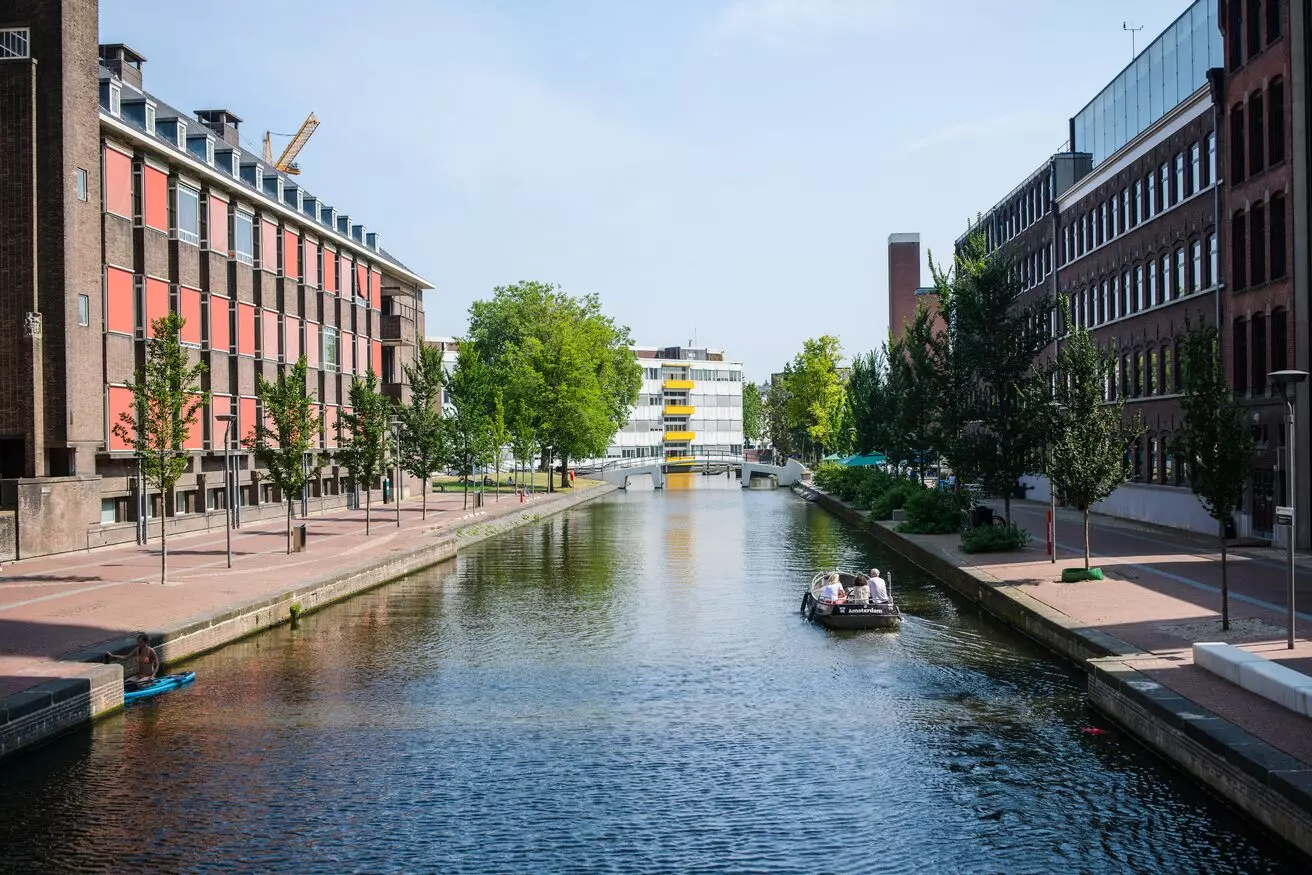
The Institute of Physics (IoP) of the University of Amsterdam is located in the center of the Amsterdam Science Park. The IoP – as part of the Faculty of Science –is housed in a modern building with excellent labs and technical facilities. Surrounded by several national research institutes and with our partners at the Vrije Universiteit (VU) Amsterdam, the institute is part of a strong physics center of international standing.

You will be based at GRAPPA — an internationally recognized hub in gravitation, astroparticle physics, and cosmology. GRAPPA hosts experts in gravitational waves, numerical relativity, multimessenger astrophysics, and dark matter, and collaborates with LIGO/Virgo/KAGRA, LISA, and the Einstein Telescope communities. GRAPPA was established as a research priority area of the university in 2010 and is part of the Anton Pannekoek Institute for Astronomy and the Institute of Physics and connects to Nikhef and Institute for Informatics. Over the last 15 years, GRAPPA has established an excellent track record in groundbreaking research and has produced many junior scientists who went on to successful careers. GRAPPA members have won high-profile awards including the Breakthrough Prize in Fundamental Physics, the Shakti Duggal Prize and the Humboldt Research Award. GRAPPA members play key roles in the Einstein Telescope and CTAO, as well as in ongoing efforts including black hole imaging with the Event Horizon Telescope, neutrino detection with KM3NeT, gamma-ray observations with H.E.S.S., and gravitational wave observations with LIGO/VIRGO.

More about the UvA

The University of Amsterdam is ambitious, creative and committed. An inspiration to students since 1632, a vanguard player in international science and a partner in innovation.
The University of Amsterdam is the largest university in the Netherlands, with the broadest range of courses on offer. An intellectual hub with 42,000 students, 6,000 staff and 3,000 PhD students. Connected by a culture of curiosity.

Your place at the UvA

This is where you will be working

You will work in this team

The Faculty of Science has a student body of around 8,000, as well as 1,800 members of staff working in education, research or support services. Researchers and students at the Faculty of Science are fascinated by every aspect of how the world works, be it elementary particles, the birth of the universe or the functioning of the brain.

The Institute of Physics (IoP) of the University of Amsterdam is located in the center of the Amsterdam Science Park. The IoP – as part of the Faculty of Science –is housed in a modern building with excellent labs and technical facilities. Surrounded by several national research institutes and with our partners at the Vrije Universiteit (VU) Amsterdam, the institute is part of a strong physics center of international standing.

You will be based at GRAPPA — an internationally recognized hub in gravitation, astroparticle physics, and cosmology. GRAPPA hosts experts in gravitational waves, numerical relativity, multimessenger astrophysics, and dark matter, and collaborates with LIGO/Virgo/KAGRA, LISA, and the Einstein Telescope communities. GRAPPA was established as a research priority area of the university in 2010 and is part of the Anton Pannekoek Institute for Astronomy and the Institute of Physics and connects to Nikhef and Institute for Informatics. Over the last 15 years, GRAPPA has established an excellent track record in groundbreaking research and has produced many junior scientists who went on to successful careers. GRAPPA members have won high-profile awards including the Breakthrough Prize in Fundamental Physics, the Shakti Duggal Prize and the Humboldt Research Award. GRAPPA members play key roles in the Einstein Telescope and CTAO, as well as in ongoing efforts including black hole imaging with the Event Horizon Telescope, neutrino detection with KM3NeT, gamma-ray observations with H.E.S.S., and gravitational wave observations with LIGO/VIRGO.

More about the UvA

The University of Amsterdam is ambitious, creative and committed. An inspiration to students since 1632, a vanguard player in international science and a partner in innovation.
The University of Amsterdam is the largest university in the Netherlands, with the broadest range of courses on offer. An intellectual hub with 42,000 students, 6,000 staff and 3,000 PhD students. Connected by a culture of curiosity.

Important to know

Your application & contact

If you feel the profile fits you, and you are interested in the job, we look forward to receiving your application. You can apply online via the red button. The application deadline is 15 February 2026. Review of applications may continue after this date until the position is filled.

If you have any questions or do you require additional information? Please contact:

Applications should include the following information (all files besides your cv should be submitted in one single pdf file):

  • A detailed CV including the months (not just years) when referring to your education and work experience;
  • A brief motivation (cover) letter describing your background, research interests, relevant experience and motivation for this PhD position, including your interest in AI-driven inference methods and gravitational-wave cosmology;
  • A list of publications (if applicable);
  • The names and email addresses of two references who can provide letters of recommendation.

The UvA attaches great importance to the contribution of female scientists in research and education. We particularly encourage women and candidates from other under-represented groups to apply. Studies show that women and members of underrepresented groups only apply for jobs if they meet 100% of the qualifications. Do you meet the educational requirements but not yet all of the requested experience? The UvA encourages you to apply anyway.

A knowledge security check can be part of the selection procedure (for details: national knowledge security guidelines). Only complete applications received within the response period via the link below are guaranteed full consideration.

Diversity, Equity & Inclusion

As an employer, the UvA maintains an equal opportunities policy. We value diversity and are fully committed to being a place where everyone feels at home. We nurture inquisitive minds and perseverance and allow room for persistent questioning. With us, curiosity and creativity are the prevailing culture.
Studies show that women and members of underrepresented groups only apply for jobs if they meet 100% of the qualifications. Do you meet the educational requirements but not yet all of the requested experience? The UvA encourages you to apply anyway.

Important to know

Your application & contact

If you feel the profile fits you, and you are interested in the job, we look forward to receiving your application. You can apply online via the red button. The application deadline is 15 February 2026. Review of applications may continue after this date until the position is filled.

If you have any questions or do you require additional information? Please contact:

Applications should include the following information (all files besides your cv should be submitted in one single pdf file):

  • A detailed CV including the months (not just years) when referring to your education and work experience;
  • A brief motivation (cover) letter describing your background, research interests, relevant experience and motivation for this PhD position, including your interest in AI-driven inference methods and gravitational-wave cosmology;
  • A list of publications (if applicable);
  • The names and email addresses of two references who can provide letters of recommendation.

The UvA attaches great importance to the contribution of female scientists in research and education. We particularly encourage women and candidates from other under-represented groups to apply. Studies show that women and members of underrepresented groups only apply for jobs if they meet 100% of the qualifications. Do you meet the educational requirements but not yet all of the requested experience? The UvA encourages you to apply anyway.

A knowledge security check can be part of the selection procedure (for details: national knowledge security guidelines). Only complete applications received within the response period via the link below are guaranteed full consideration.

As an employer, the UvA maintains an equal opportunities policy. We value diversity and are fully committed to being a place where everyone feels at home. We nurture inquisitive minds and perseverance and allow room for persistent questioning. With us, curiosity and creativity are the prevailing culture.
Studies show that women and members of underrepresented groups only apply for jobs if they meet 100% of the qualifications. Do you meet the educational requirements but not yet all of the requested experience? The UvA encourages you to apply anyway.

Don't miss out on your dream job!

Sign up for a job alert and you'll receive automatic updates about new and relevant vacancies.

Don't miss out on your dream job!

Sign up for a job alert and you'll receive automatic updates about new and relevant vacancies.