Postdoc and Research Engineer Position: Digital Data Donation and Computational Social Science

Postdoc and Research Engineer Position: Digital Data Donation and Computational Social Science

Working at the UvA

Join Us!

The Amsterdam School of Communication Research (ASCoR) and the Digital Data Donation Infrastructure (D3I) are seeking a highly motivated Postdoc / Research Engineer to support, maintain and extend the data donation infrastructure (datadonation.eu) while also applying your skills in collaborations with SSH researchers across the Netherlands, and specifically (for one day per week) in the project cAlibrate (calibratedtrust.eu) understanding how individuals interact with Generative AI in their daily lives.

Working at the UvA

Join Us!

The Amsterdam School of Communication Research (ASCoR) and the Digital Data Donation Infrastructure (D3I) are seeking a highly motivated Postdoc / Research Engineer to support, maintain and extend the data donation infrastructure (datadonation.eu) while also applying your skills in collaborations with SSH researchers across the Netherlands, and specifically (for one day per week) in the project cAlibrate (calibratedtrust.eu) understanding how individuals interact with Generative AI in their daily lives.

All about this vacancy

Project Goals

Digital Data Donation Infrastructure

Individuals generate a rich, diverse set of digital traces as they use digital platforms – such as Google, Instagram, TikTok, WhatsApp, ChatGPT – in their daily lives. The Digital Data Donation Infrastructure (D3I) offers an infrastructure through which individuals can donate their digital traces for academic research in a secure, privacy-protecting and transparent manner. This infrastructure has been used by multiple research projects to answer questions as diverse as how social media influences the well-being of teenagers, the effects of exposure to political videos on YouTube, how parents share crucial information about their children with rare diseases on Facebook, or how different individuals use Netflix.

cAlibrate

Hundreds of millions of individuals now interact with generative artificial intelligence (GenAI) in the form of conversational agents such as ChatGPT. We know, however, little about how individuals use GenAI-agents in their personal lives, and even less about under which circumstances they trust these agents. Partnering with GenAI users willing to donate their interaction data to academic research, the project cAlibrate will investigate how individuals use – and calibrate their trust in GenAI across time and contexts of use.


What are you going to do

In this combined position of postdoctoral researcher and research engineer, you will develop technical tools and infrastructures as well as do methodological research. In addition, you provide technical support to users of the Digital Data Donation Infrastructure. At the same time, using your methodological skills to analyse Gen AI interaction data and extend the data donation infrastructure to support experimental research, conducting experiments and interventions aimed at empowering users to calibrate their trust in GenAI.

Responsibilities for the Digital Donation Infrastructure: 

  • Be the central point of contact for researchers across the Netherlands interested in conducting data donation studies, supporting and collaborating with research projects (e.g., to configure and deploy data donation workflows)
  • Create, maintain and expand a library of scripts for conducting research across the most used digital platforms
  • Maintain and expand the library of scripts that allow participants to visualize their data
  • Serve as a point of contact for questions regarding security and Data Protection Impact Assessments for data conation studies
  • Work together with the software development partner on the development and improvement of the data donation interface
  • Ensure Open Science principles are applied to all data donation projects

Responsibilities for cAlibrate: 

  • Analyse conversational & survey longitudinal data to understand the dynamics between trust and use of Generative AI
  • Extend the data donation infrastructure to support tailored experiments and interventions based on individual digital trace data
  • Collaborate on writing papers and conference presentations with the broader cAlibrate team

You are:

  • Curious, creative, and interested in learning from different disciplines
  • Resilient in the face of challenges that come
  • Able to balance the demands of several tasks successfully
  • Organized, flexible, and demonstrate attention to detail
  • Able to work both independently and collaboratively. You are a team player but also have a proactive attitude

You have:

  • A PhD in communication science, computation social science (or related disciplines) - or are expected to obtain it soon.
  • Strong interest in methodological work, and demonstrated experience in quantitative methods, including natural language processing, automated content analysis and handling panel data
  • Web development skills, including familiarity with HTML, CSS, JavaScript, and/or TypeScript. Experience with frameworks such as React or Vue.js is desirable. Knowledge of a popular web framework is a plus.
  • DevOps skills, including deploying applications, using automation tools, and working with command-line tools.
  • Experience with Git
  • Advanced skills in Python, with a willingness to learn a new language if the project demands it.
  • Advanced analytical/statistical skills using R and Python
  • Excellent proficiency in English


What we offer

The planned starting date for this project is 1 April 2026 (to be negotiated). The position concerns temporary employment of 30,4 hours for a maximum term of 2 years including a probation period of two months. Depending on the candidate and needs of the department, a 0.2FTE teaching contract alongside this post-doctoral appointment can be discussed. You will have the opportunity to attend training courses and both national and international events. Depending on the specific needs from the Department of Communication Science, the contract may in some instances be extended to include teaching at the Graduate School of Communication or the College of Communication. This is determined after the interview process.

Your salary will range from €4,412 to €4,728 (scale 10.5 - 11.0) be based on your experience, full-time employment and in keeping with the Collective Labour Agreement of Dutch Universities. We additionally offer an extensive package of secondary benefits, including 8% holiday allowance and a year-end bonus of 8.3%.

The UvA offers excellent possibilities for further professional development and education.


All about this vacancy

Project Goals

Digital Data Donation Infrastructure

Individuals generate a rich, diverse set of digital traces as they use digital platforms – such as Google, Instagram, TikTok, WhatsApp, ChatGPT – in their daily lives. The Digital Data Donation Infrastructure (D3I) offers an infrastructure through which individuals can donate their digital traces for academic research in a secure, privacy-protecting and transparent manner. This infrastructure has been used by multiple research projects to answer questions as diverse as how social media influences the well-being of teenagers, the effects of exposure to political videos on YouTube, how parents share crucial information about their children with rare diseases on Facebook, or how different individuals use Netflix.

cAlibrate

Hundreds of millions of individuals now interact with generative artificial intelligence (GenAI) in the form of conversational agents such as ChatGPT. We know, however, little about how individuals use GenAI-agents in their personal lives, and even less about under which circumstances they trust these agents. Partnering with GenAI users willing to donate their interaction data to academic research, the project cAlibrate will investigate how individuals use – and calibrate their trust in GenAI across time and contexts of use.


What are you going to do

In this combined position of postdoctoral researcher and research engineer, you will develop technical tools and infrastructures as well as do methodological research. In addition, you provide technical support to users of the Digital Data Donation Infrastructure. At the same time, using your methodological skills to analyse Gen AI interaction data and extend the data donation infrastructure to support experimental research, conducting experiments and interventions aimed at empowering users to calibrate their trust in GenAI.

Responsibilities for the Digital Donation Infrastructure: 

  • Be the central point of contact for researchers across the Netherlands interested in conducting data donation studies, supporting and collaborating with research projects (e.g., to configure and deploy data donation workflows)
  • Create, maintain and expand a library of scripts for conducting research across the most used digital platforms
  • Maintain and expand the library of scripts that allow participants to visualize their data
  • Serve as a point of contact for questions regarding security and Data Protection Impact Assessments for data conation studies
  • Work together with the software development partner on the development and improvement of the data donation interface
  • Ensure Open Science principles are applied to all data donation projects

Responsibilities for cAlibrate: 

  • Analyse conversational & survey longitudinal data to understand the dynamics between trust and use of Generative AI
  • Extend the data donation infrastructure to support tailored experiments and interventions based on individual digital trace data
  • Collaborate on writing papers and conference presentations with the broader cAlibrate team

You are:

  • Curious, creative, and interested in learning from different disciplines
  • Resilient in the face of challenges that come
  • Able to balance the demands of several tasks successfully
  • Organized, flexible, and demonstrate attention to detail
  • Able to work both independently and collaboratively. You are a team player but also have a proactive attitude

You have:

  • A PhD in communication science, computation social science (or related disciplines) - or are expected to obtain it soon.
  • Strong interest in methodological work, and demonstrated experience in quantitative methods, including natural language processing, automated content analysis and handling panel data
  • Web development skills, including familiarity with HTML, CSS, JavaScript, and/or TypeScript. Experience with frameworks such as React or Vue.js is desirable. Knowledge of a popular web framework is a plus.
  • DevOps skills, including deploying applications, using automation tools, and working with command-line tools.
  • Experience with Git
  • Advanced skills in Python, with a willingness to learn a new language if the project demands it.
  • Advanced analytical/statistical skills using R and Python
  • Excellent proficiency in English


What we offer

The planned starting date for this project is 1 April 2026 (to be negotiated). The position concerns temporary employment of 30,4 hours for a maximum term of 2 years including a probation period of two months. Depending on the candidate and needs of the department, a 0.2FTE teaching contract alongside this post-doctoral appointment can be discussed. You will have the opportunity to attend training courses and both national and international events. Depending on the specific needs from the Department of Communication Science, the contract may in some instances be extended to include teaching at the Graduate School of Communication or the College of Communication. This is determined after the interview process.

Your salary will range from €4,412 to €4,728 (scale 10.5 - 11.0) be based on your experience, full-time employment and in keeping with the Collective Labour Agreement of Dutch Universities. We additionally offer an extensive package of secondary benefits, including 8% holiday allowance and a year-end bonus of 8.3%.

The UvA offers excellent possibilities for further professional development and education.


Your place at the UvA

You will work here

This position is embedded within the Amsterdam School of Communication Research (ASCoR) at the Faculty of Social and Behavioural Sciences, University of Amsterdam. ASCoR is the research institute for Communication Science, structured around four program groups: Persuasive Communication, Communication, Organizations and Society, Political Communication & Journalism, and Youth & Media Entertainment. For more information, see the ASCoR website.

This position is supervised by prof. dr. Theo Araujo, who leads D3I in close cooperation with dr. Laura Boeschoten (Utrecht University) and is the principal investigator of cAlibrate. It will be embedded within the Communication, Organizations and Society programme group, which investigates the dynamic interplay of organizations, (new) media and the general public. The position will also be embedded in the larger D3I network, with researchers and research engineers spread across the Netherlands.  

About the Faculty of Social and Behavioural Sciences

The Faculty of Social and Behavioural Sciences (FMG) is the largest educational and research institution in the field of social and behavioural sciences in Europe. Here, we explore societal and human-centered issues, driven by scientific curiosity but also with an eye for current themes. For example, the impact of media and communication on individuals and society, healthcare challenges, global urbanization, human development, the role of political institutions, understanding the human mind, growing inequality, diversity issues, and changing social relationships.
In Europe and beyond, the FMG holds a leading position, thanks in part to its more than 1,300 staff members who contribute to education and research. Will you be one of them?

Your place at the UvA

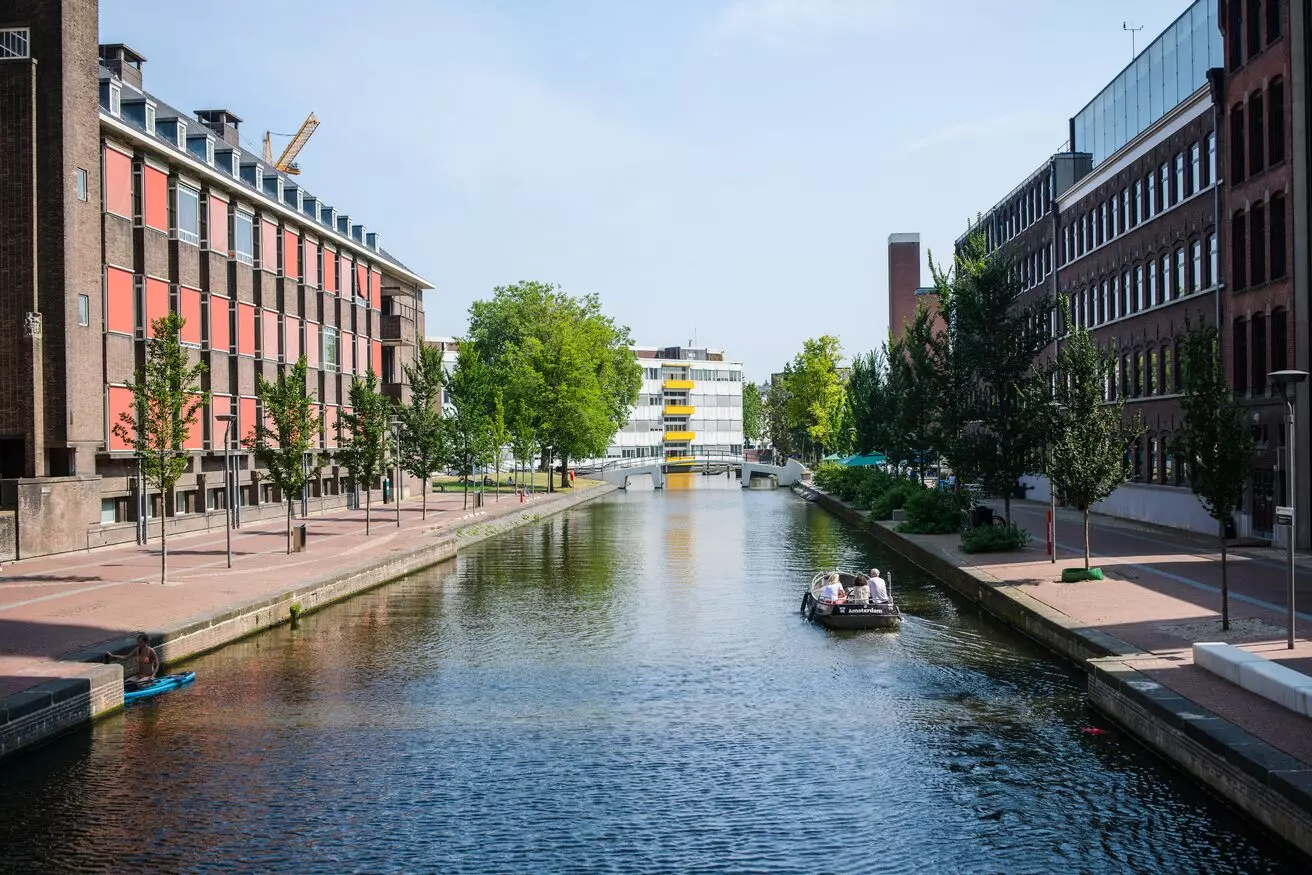
This is where you will be working

You will work here

This position is embedded within the Amsterdam School of Communication Research (ASCoR) at the Faculty of Social and Behavioural Sciences, University of Amsterdam. ASCoR is the research institute for Communication Science, structured around four program groups: Persuasive Communication, Communication, Organizations and Society, Political Communication & Journalism, and Youth & Media Entertainment. For more information, see the ASCoR website.

This position is supervised by prof. dr. Theo Araujo, who leads D3I in close cooperation with dr. Laura Boeschoten (Utrecht University) and is the principal investigator of cAlibrate. It will be embedded within the Communication, Organizations and Society programme group, which investigates the dynamic interplay of organizations, (new) media and the general public. The position will also be embedded in the larger D3I network, with researchers and research engineers spread across the Netherlands.  

About the Faculty of Social and Behavioural Sciences

The Faculty of Social and Behavioural Sciences (FMG) is the largest educational and research institution in the field of social and behavioural sciences in Europe. Here, we explore societal and human-centered issues, driven by scientific curiosity but also with an eye for current themes. For example, the impact of media and communication on individuals and society, healthcare challenges, global urbanization, human development, the role of political institutions, understanding the human mind, growing inequality, diversity issues, and changing social relationships.
In Europe and beyond, the FMG holds a leading position, thanks in part to its more than 1,300 staff members who contribute to education and research. Will you be one of them?

Important to know

Your application & contact

If you recognize yourself in this profile and are interested in the role, we look forward to receiving your motivation letter and CV by 2 March 2026.

Please submit your application as a single .pdf file, including:

  • Curriculum vitae, with grade transcripts from your (research) master’s studies; and potentially your PhD diploma
  • Letter of motivation: Outline your fit to this topic, your readiness for the Postdoc project, and how you meet the selection criteria. If any criteria are not yet fully met, explain how you plan to develop the necessary skills. Optionally, include contact details of two academic referees familiar with your work;
  • Writing sample in English, such as a recent article.
  • Coding sample, such as a GitHub repository, accompanied by a short (max 1 page) description of the code/project, and an explanation as to how (parts of the code/project) may be relevant to what you would do in this position.


Interviews will take place in March. In case of equal qualifications, internal candidates will be given preference over external candidates. In addition, those with a PhD in communication science will be preferred to allow for teaching possibilities within the Department.

For questions about the vacancy, you can contact: prof. dr. Theo Araujo ([email protected])

No agencies please

Diversity, Equity & Inclusion

As an employer, the UvA maintains an equal opportunities policy. We value diversity and are fully committed to being a place where everyone feels at home. We nurture inquisitive minds and perseverance and allow room for persistent questioning. With us, curiosity and creativity are the prevailing culture.
Studies show that women and members of underrepresented groups only apply for jobs if they meet 100% of the qualifications. Do you meet the educational requirements but not yet all of the requested experience? The UvA encourages you to apply anyway.

Important to know

Your application & contact

If you recognize yourself in this profile and are interested in the role, we look forward to receiving your motivation letter and CV by 2 March 2026.

Please submit your application as a single .pdf file, including:

  • Curriculum vitae, with grade transcripts from your (research) master’s studies; and potentially your PhD diploma
  • Letter of motivation: Outline your fit to this topic, your readiness for the Postdoc project, and how you meet the selection criteria. If any criteria are not yet fully met, explain how you plan to develop the necessary skills. Optionally, include contact details of two academic referees familiar with your work;
  • Writing sample in English, such as a recent article.
  • Coding sample, such as a GitHub repository, accompanied by a short (max 1 page) description of the code/project, and an explanation as to how (parts of the code/project) may be relevant to what you would do in this position.


Interviews will take place in March. In case of equal qualifications, internal candidates will be given preference over external candidates. In addition, those with a PhD in communication science will be preferred to allow for teaching possibilities within the Department.

For questions about the vacancy, you can contact: prof. dr. Theo Araujo ([email protected])

No agencies please

As an employer, the UvA maintains an equal opportunities policy. We value diversity and are fully committed to being a place where everyone feels at home. We nurture inquisitive minds and perseverance and allow room for persistent questioning. With us, curiosity and creativity are the prevailing culture.
Studies show that women and members of underrepresented groups only apply for jobs if they meet 100% of the qualifications. Do you meet the educational requirements but not yet all of the requested experience? The UvA encourages you to apply anyway.

Don't miss out on your dream job!

Sign up for a job alert and you'll receive automatic updates about new and relevant vacancies.

Don't miss out on your dream job!

Sign up for a job alert and you'll receive automatic updates about new and relevant vacancies.