We, and third parties, use cookies on our website. We use cookies to ensure that our website functions properly, to store your preferences, to gain insight into visitor behavior, but also for marketing and social media purposes (showing personalized advertisements). By clicking 'Accept', you agree to the use of all cookies. In our Cookie Statement. you can read more about the cookies we use and save or change your preferences. By clicking 'Refuse' you only agree to the use of functional cookies.

.jpg)
Are you interested in pursuing a PhD in physics at the interface between metamaterials and quantum gases? The Institute of Physics at the University of Amsterdam is looking for an ambitious and motivated PhD student to combine metasurface optics with ultracold atoms.
.jpg)
Are you interested in pursuing a PhD in physics at the interface between metamaterials and quantum gases? The Institute of Physics at the University of Amsterdam is looking for an ambitious and motivated PhD student to combine metasurface optics with ultracold atoms.
Metasurfaces are new nanostructured, ultra-thin optics used to manipulate light with sub-wavelength precision. They can implement functions that are difficult or impractical with conventional lenses and mirrors, and are now used across many areas of optics and photonics. A particularly promising application for these capabilities is the control of ultracold atoms. These atoms, cooled to near absolute zero, are among the cleanest and most controllable quantum systems we have. By arranging these in optical “tweezer” arrays (tiny traps made from laser light), researchers can build programmable quantum matter for quantum simulation, precision measurements, and for exploring new few- and many-body physics. A central challenge is to not only make more traps but to create richer functionality in these landscapes of light.
In this PhD project, you will investigate, develop and explore new functionalities of metasurfaces that go beyond those of the standard approaches for ultracold atoms (such as spatial light modulators). The goal is to realize new forms of control over ultracold-atom arrays by combining multiple optical functionalities into a single, intrinsically stable element, enabling access to novel trapping and control regimes. What new quantum control becomes possible, what limits arise, and what phenomena can be accessed?
Your research will be part of both the Quantum Matter cluster, specifically the LightMatters group (mannlab.nl), and the Quantum Gases and Quantum Information (iop.uva.nl/qgqi) cluster. By joining the PhD program, you will become part of a diverse group of people with different scientific backgrounds, nationalities, and expertise. By the end of your PhD, you will have become an independent scientist, capable of working effectively in a team, and with excellent communication skills. We take great pride in the growth and development of our students.

Metasurfaces are new nanostructured, ultra-thin optics used to manipulate light with sub-wavelength precision. They can implement functions that are difficult or impractical with conventional lenses and mirrors, and are now used across many areas of optics and photonics. A particularly promising application for these capabilities is the control of ultracold atoms. These atoms, cooled to near absolute zero, are among the cleanest and most controllable quantum systems we have. By arranging these in optical “tweezer” arrays (tiny traps made from laser light), researchers can build programmable quantum matter for quantum simulation, precision measurements, and for exploring new few- and many-body physics. A central challenge is to not only make more traps but to create richer functionality in these landscapes of light.
In this PhD project, you will investigate, develop and explore new functionalities of metasurfaces that go beyond those of the standard approaches for ultracold atoms (such as spatial light modulators). The goal is to realize new forms of control over ultracold-atom arrays by combining multiple optical functionalities into a single, intrinsically stable element, enabling access to novel trapping and control regimes. What new quantum control becomes possible, what limits arise, and what phenomena can be accessed?
Your research will be part of both the Quantum Matter cluster, specifically the LightMatters group (mannlab.nl), and the Quantum Gases and Quantum Information (iop.uva.nl/qgqi) cluster. By joining the PhD program, you will become part of a diverse group of people with different scientific backgrounds, nationalities, and expertise. By the end of your PhD, you will have become an independent scientist, capable of working effectively in a team, and with excellent communication skills. We take great pride in the growth and development of our students.
You will perform fundamental physics research on the development of metasurfaces for advanced optical trapping and control of ultracold atoms. More specifically, you will:
To support you throughout your PhD, you will meet regularly with your supervisors, both individually and in team meetings with other group members. You will take courses on how to successfully navigate a PhD. Additionally, optional courses for personal development are available (see benefits).
You:
We offer a temporary contract for 38 hours per week for the duration of 4 years (the initial contract will be for a period of 18 months and after satisfactory evaluation it will be extended for a total duration of 4 years). The gross monthly salary, based on 38 hours per week ranges between € 3,059 to € 3,881 (Scale P). This does not include 8% holiday allowance and 8,3% year-end allowance. The UFO profile PhD candidate is applicable. A favourable tax agreement, the ‘30% ruling’, may apply to non-Dutch applicants.
The preferred starting date September 2026 (earlier is possible if MSc requirements have been fulfilled). This employment should lead to a dissertation (PhD thesis). We will draft an educational plan that includes attendance of courses and (international) meetings. We also expect you to assist in teaching undergraduates and master students.
The Collective Labour Agreement of Universities of the Netherlands is applicable.
You will perform fundamental physics research on the development of metasurfaces for advanced optical trapping and control of ultracold atoms. More specifically, you will:
To support you throughout your PhD, you will meet regularly with your supervisors, both individually and in team meetings with other group members. You will take courses on how to successfully navigate a PhD. Additionally, optional courses for personal development are available (see benefits).
You:
We offer a temporary contract for 38 hours per week for the duration of 4 years (the initial contract will be for a period of 18 months and after satisfactory evaluation it will be extended for a total duration of 4 years). The gross monthly salary, based on 38 hours per week ranges between € 3,059 to € 3,881 (Scale P). This does not include 8% holiday allowance and 8,3% year-end allowance. The UFO profile PhD candidate is applicable. A favourable tax agreement, the ‘30% ruling’, may apply to non-Dutch applicants.
The preferred starting date September 2026 (earlier is possible if MSc requirements have been fulfilled). This employment should lead to a dissertation (PhD thesis). We will draft an educational plan that includes attendance of courses and (international) meetings. We also expect you to assist in teaching undergraduates and master students.
The Collective Labour Agreement of Universities of the Netherlands is applicable.
The Faculty of Science has a student body of around 8,000, as well as 1,800 members of staff working in education, research or support services. Researchers and students at the Faculty of Science are fascinated by every aspect of how the world works, be it elementary particles, the birth of the universe or the functioning of the brain.
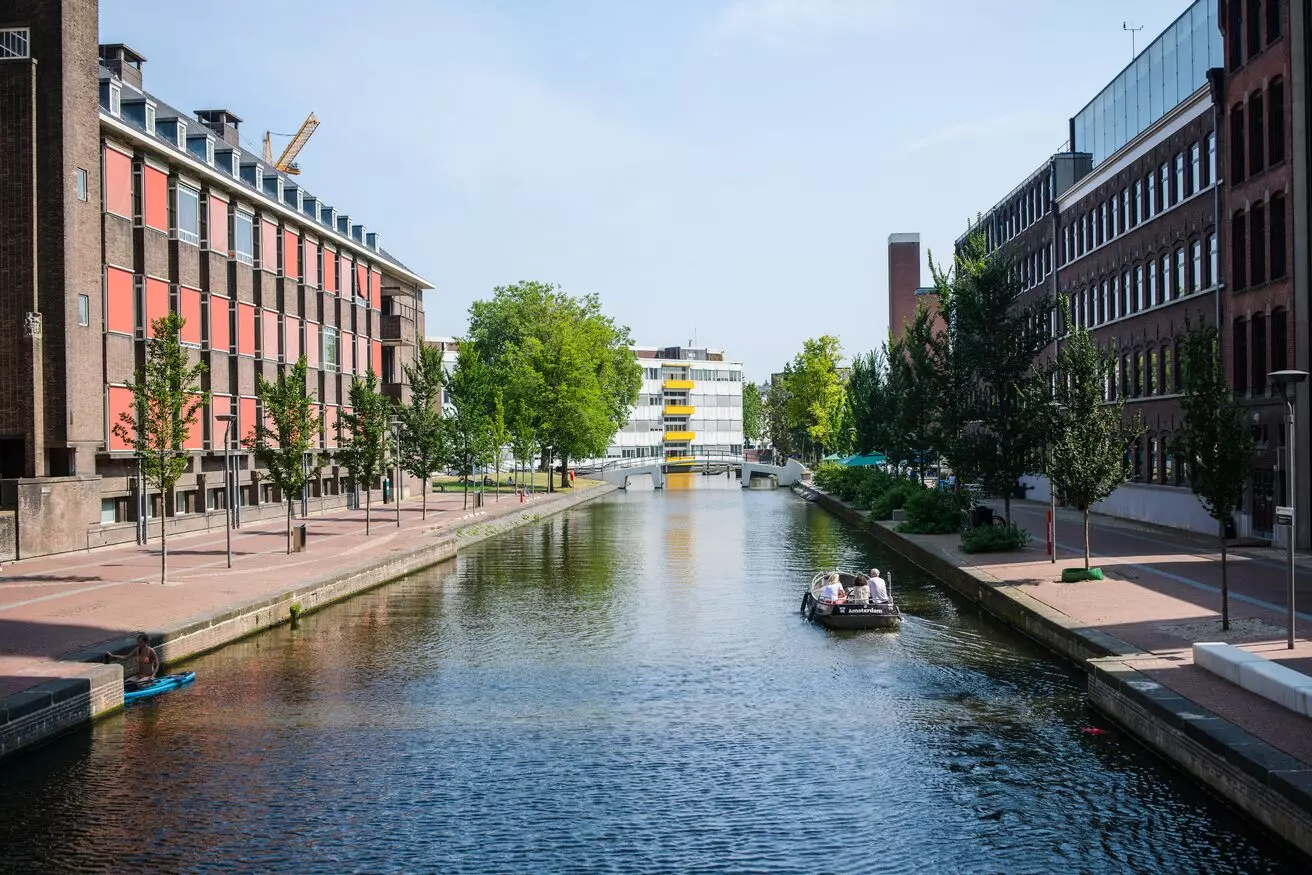
The Institute of Physics (IoP) of the University of Amsterdam is located in the centre of the Amsterdam Science Park. The IoP – as part of the Faculty of Science –is housed in a modern building with excellent labs and technical facilities. Surrounded by several national research institutes and with our partners at the Vrije Universiteit (VU) Amsterdam, the institute is part of a strong physics centre of international standing.
The Van der Waals - Zeeman Institute for Experimental Physics (IoP-WZI) is part of the IoP and home to three research clusters: Quantum Gases & Quantum Information (QG&QI), Quantum Materials (QMat), and Soft Matter (SM).
The Faculty of Science has a student body of around 8,000, as well as 1,800 members of staff working in education, research or support services. Researchers and students at the Faculty of Science are fascinated by every aspect of how the world works, be it elementary particles, the birth of the universe or the functioning of the brain.
The Institute of Physics (IoP) of the University of Amsterdam is located in the centre of the Amsterdam Science Park. The IoP – as part of the Faculty of Science –is housed in a modern building with excellent labs and technical facilities. Surrounded by several national research institutes and with our partners at the Vrije Universiteit (VU) Amsterdam, the institute is part of a strong physics centre of international standing.
The Van der Waals - Zeeman Institute for Experimental Physics (IoP-WZI) is part of the IoP and home to three research clusters: Quantum Gases & Quantum Information (QG&QI), Quantum Materials (QMat), and Soft Matter (SM).
If you feel the profile fits you, and you are interested in the job, we look forward to receiving your application. You can apply online via the button below. We accept applications until and including 31 March 2026.
Do you have any questions or do you require additional information? Please contact:
Applications should include the following information (all files besides your cv should be submitted in one single pdf file):
We value diversity and encourage applicants from all backgrounds to apply, even if you don't meet every requirement. A knowledge security check can be part of the selection procedure (for details: national knowledge security guidelines). Only complete applications received within the response period via the link below will be considered.
If you feel the profile fits you, and you are interested in the job, we look forward to receiving your application. You can apply online via the button below. We accept applications until and including 31 March 2026.
Do you have any questions or do you require additional information? Please contact:
Applications should include the following information (all files besides your cv should be submitted in one single pdf file):
We value diversity and encourage applicants from all backgrounds to apply, even if you don't meet every requirement. A knowledge security check can be part of the selection procedure (for details: national knowledge security guidelines). Only complete applications received within the response period via the link below will be considered.

.jpg)
.jpg)


.jpg)