Postdoc Traumascapes & International Crisis

Postdoc Traumascapes & International Crisis

Working at the UvA

Postdoc Traumascapes & international crisis

The NWA-NWO project ‘Traumascapes. Valuing, Negotiating and Sharing Sites of Trauma, Pain, and Loss’ has a vacant postdoc researcher position as part of the sub-project ‘traumascapes in times of international crisis’. This postdoc project examines the impact of these international crises on the experience of, and social dialogue about, Dutch and (post)colonial traumascapes. In the face of global crises such as the wars in Gaza and Ukraine, migration, and systemic injustice, traumascapes in the Netherlands play a crucial role in connecting historical memory to contemporary international crises and societal challenges. Key Dutch collective memories, such as the Holocaust, resistance during the Second World War, and the colonial legacy of the Netherlands, particularly in Indonesia and Suriname continue to shape both national and international discourses of heritage, memory, and trauma. This means that considering Dutch traumascapes solely from a national perspective would limit the possible interpretations and meanings these places carry. Building on this transnational framing, the project approaches Dutch and (post)colonial traumascapes as sites of agonistic memory: spaces in which historical meaning is not settled but continuously negotiated, contested, and rearticulated (Hansen, Bull 2016). Rather than treating memory as a consensual or stabilising force, the project foregrounds contestation as a productive and constitutive element of democratic memory cultures, and equally destabilising of liberal norms. Traumascapes are understood not only as lieux de mémoire that commemorate past suffering, but as arenas in which conflicting interpretations, moral claims, and political demands coexist and come into tension. From this standpoint, memories of the Holocaust, colonial violence, and slavery cannot be fully integrated into a single, coherent narrative without obscuring the asymmetries of power, responsibility, and historical experience that continue to shape contemporary debates. Agonistic memory acknowledges these asymmetries while insisting on the legitimacy of conflict as a mode of engagement with the past. Within the Dutch context, such contestation is increasingly visible. Public debates around colonial monuments, apologies and reparations for slavery, the interpretation of resistance and collaboration during the Second World War, and the place of Holocaust memory in multicultural society reveal how traumascapes function as flashpoints for broader struggles over identity, belonging, and historical accountability. These struggles are further intensified by global developments, such as ongoing wars, migration flows, and international justice claims, which reframe local memory sites within wider geopolitical and moral horizons. The project, therefore, examines how Dutch traumascapes mediate this context rather than resolve it.  In doing so, the project contributes to ongoing debates on democratic memory cultures by demonstrating how agonistic approaches to heritage and remembrance can foster critical engagement without collapsing into relativism or denial.

Working at the UvA

Postdoc Traumascapes & international crisis

The NWA-NWO project ‘Traumascapes. Valuing, Negotiating and Sharing Sites of Trauma, Pain, and Loss’ has a vacant postdoc researcher position as part of the sub-project ‘traumascapes in times of international crisis’. This postdoc project examines the impact of these international crises on the experience of, and social dialogue about, Dutch and (post)colonial traumascapes. In the face of global crises such as the wars in Gaza and Ukraine, migration, and systemic injustice, traumascapes in the Netherlands play a crucial role in connecting historical memory to contemporary international crises and societal challenges. Key Dutch collective memories, such as the Holocaust, resistance during the Second World War, and the colonial legacy of the Netherlands, particularly in Indonesia and Suriname continue to shape both national and international discourses of heritage, memory, and trauma. This means that considering Dutch traumascapes solely from a national perspective would limit the possible interpretations and meanings these places carry. Building on this transnational framing, the project approaches Dutch and (post)colonial traumascapes as sites of agonistic memory: spaces in which historical meaning is not settled but continuously negotiated, contested, and rearticulated (Hansen, Bull 2016). Rather than treating memory as a consensual or stabilising force, the project foregrounds contestation as a productive and constitutive element of democratic memory cultures, and equally destabilising of liberal norms. Traumascapes are understood not only as lieux de mémoire that commemorate past suffering, but as arenas in which conflicting interpretations, moral claims, and political demands coexist and come into tension. From this standpoint, memories of the Holocaust, colonial violence, and slavery cannot be fully integrated into a single, coherent narrative without obscuring the asymmetries of power, responsibility, and historical experience that continue to shape contemporary debates. Agonistic memory acknowledges these asymmetries while insisting on the legitimacy of conflict as a mode of engagement with the past. Within the Dutch context, such contestation is increasingly visible. Public debates around colonial monuments, apologies and reparations for slavery, the interpretation of resistance and collaboration during the Second World War, and the place of Holocaust memory in multicultural society reveal how traumascapes function as flashpoints for broader struggles over identity, belonging, and historical accountability. These struggles are further intensified by global developments, such as ongoing wars, migration flows, and international justice claims, which reframe local memory sites within wider geopolitical and moral horizons. The project, therefore, examines how Dutch traumascapes mediate this context rather than resolve it.  In doing so, the project contributes to ongoing debates on democratic memory cultures by demonstrating how agonistic approaches to heritage and remembrance can foster critical engagement without collapsing into relativism or denial.

All about this vacancy

This is what you will be doing

Required:

  • Designing and conducting research under the guidance of the project leader, resulting in at least three peer-reviewed academic publications (co-authored or single-authored) in (inter)national scientific journals, edited volumes, and/or monographs;
  • Conducting historical and ethnographic fieldwork research, presenting intermediate research results at workshops and conferences;
  • Participating with the project leader in project’s meetings and activities of the sub-projects and research groups and developing a shared database;
  • Co-organising with the project leader knowledge dissemination activities; expert meetings and an international conference;
  • Participating in committees and working groups, as well as performing project-related administrative tasks.
  • Actively contributing to the research activities of AHM and developing national and international research networks and other forms of cooperation.

This is what we ask of you

Required:

  • PhD in heritage and memory studies or a relevant field;
  • Excellent research skills demonstrated by a track record of publishing in high-ranking journals and/or with leading presses or a demonstrable capacity to develop such a record;
  • A strong cooperative attitude and willingness to engage in collaborative research, and capacity to writing funding grant proposals;
  • Enthusiasm for communicating academic research to non-academic audiences;
  • Excellent command of English (and preferably good command of Dutch;
  • Excellent social, communication, and organizational skills;

This is what we offer you

  • The employment will be for 12 months. Contingent on a positive performance evaluation the contract will be extended with ​30 months (total 42 months). The preferred starting date is 15 April 2026;
  • The Collective Labour Agreement Dutch Universities is applicable;
  • The salary will be scale 10 based on the Collective Labour Agreement Dutch Universities, this is excl. 8% holiday allowance and 8,3% end of the year bonus;
  • UvA offers excellent possibilities for further professional development and education;
  • an enthusiastic and professional academic team;
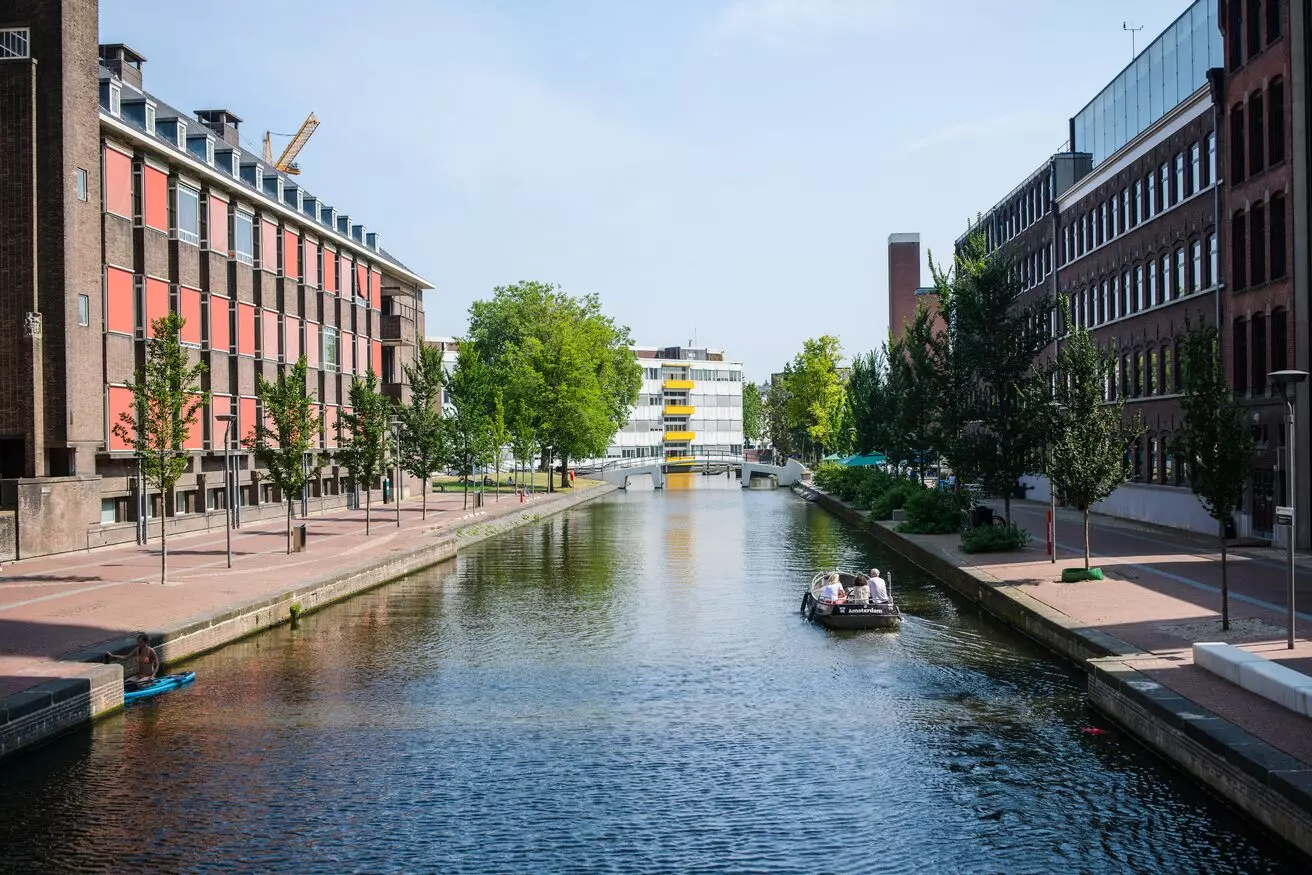
  • an inspiring academic and international work environment in the heart of Amsterdam;
  • the opportunity to collaborate with leading researchers at research institutes that - partly as a result of their interdisciplinary approach - are world renowned.

All about this vacancy

This is what you will be doing

Required:

  • Designing and conducting research under the guidance of the project leader, resulting in at least three peer-reviewed academic publications (co-authored or single-authored) in (inter)national scientific journals, edited volumes, and/or monographs;
  • Conducting historical and ethnographic fieldwork research, presenting intermediate research results at workshops and conferences;
  • Participating with the project leader in project’s meetings and activities of the sub-projects and research groups and developing a shared database;
  • Co-organising with the project leader knowledge dissemination activities; expert meetings and an international conference;
  • Participating in committees and working groups, as well as performing project-related administrative tasks.
  • Actively contributing to the research activities of AHM and developing national and international research networks and other forms of cooperation.

This is what we ask of you

Required:

  • PhD in heritage and memory studies or a relevant field;
  • Excellent research skills demonstrated by a track record of publishing in high-ranking journals and/or with leading presses or a demonstrable capacity to develop such a record;
  • A strong cooperative attitude and willingness to engage in collaborative research, and capacity to writing funding grant proposals;
  • Enthusiasm for communicating academic research to non-academic audiences;
  • Excellent command of English (and preferably good command of Dutch;
  • Excellent social, communication, and organizational skills;

This is what we offer you

  • The employment will be for 12 months. Contingent on a positive performance evaluation the contract will be extended with ​30 months (total 42 months). The preferred starting date is 15 April 2026;
  • The Collective Labour Agreement Dutch Universities is applicable;
  • The salary will be scale 10 based on the Collective Labour Agreement Dutch Universities, this is excl. 8% holiday allowance and 8,3% end of the year bonus;
  • UvA offers excellent possibilities for further professional development and education;
  • an enthusiastic and professional academic team;
  • an inspiring academic and international work environment in the heart of Amsterdam;
  • the opportunity to collaborate with leading researchers at research institutes that - partly as a result of their interdisciplinary approach - are world renowned.

Your place at the UvA

This is where you'll be working

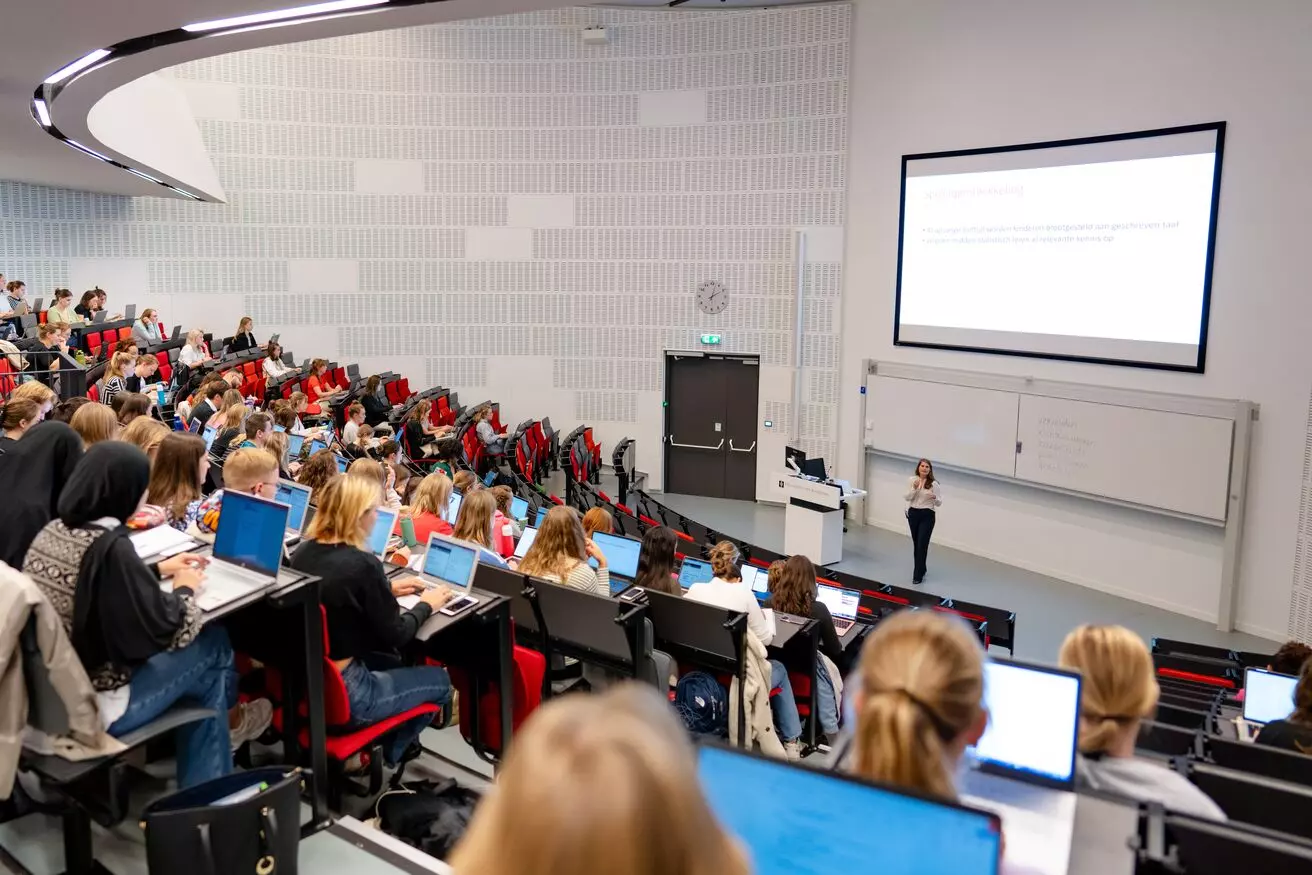
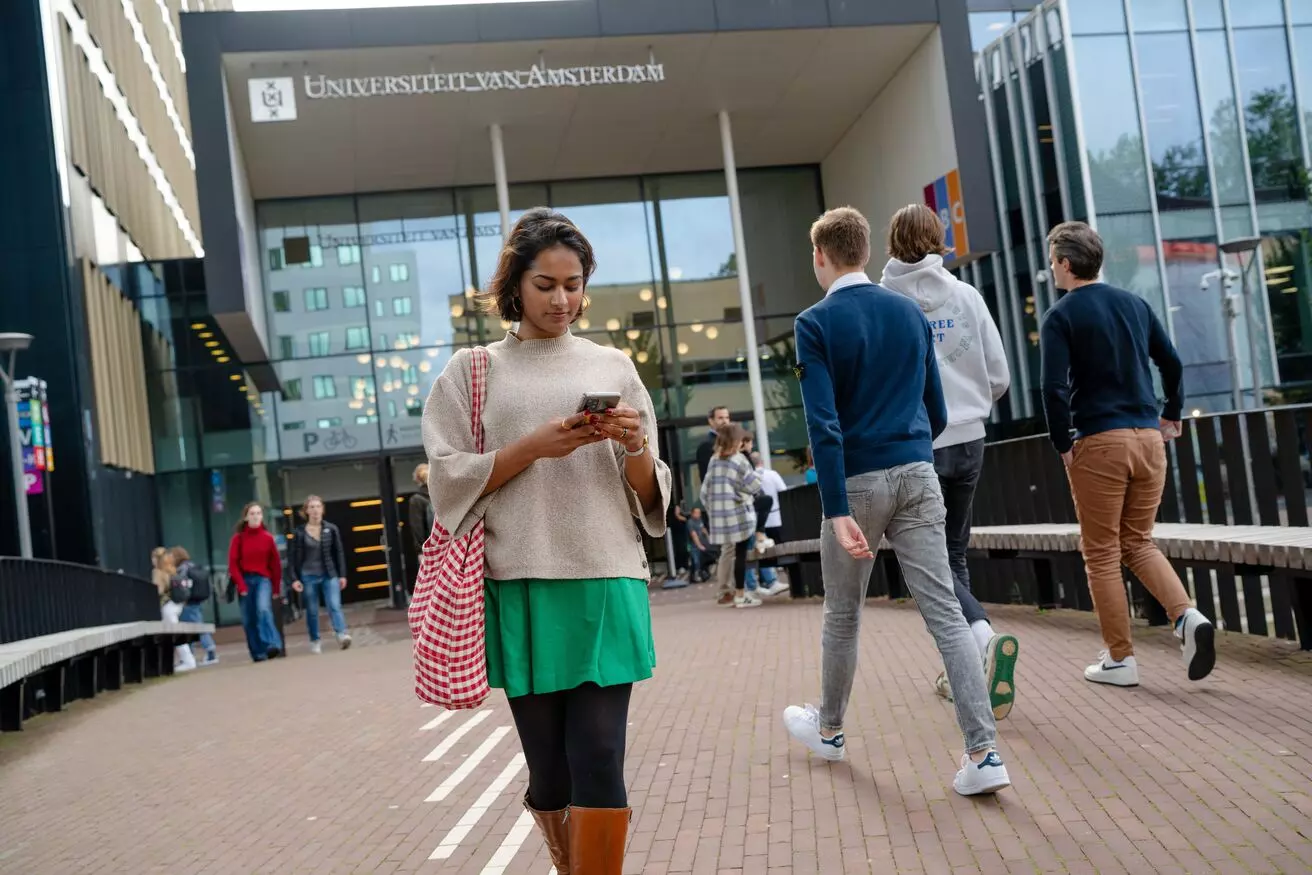
The University of Amsterdam is the Netherlands' largest university, offering the widest range of academic programmes. At the UvA, 30,000 students, 6,000 staff members and 3,000 PhD candidates study and work in a diverse range of fields, connected by a culture of curiosity.

The Faculty of Humanities provides education and conducts research with a strong international profile in a large number of disciplines in de field of language and culture. Located in the heart of Amsterdam, the faculty maintains close ties with many cultural institutes in the capital city. Research and teaching staff focus on interdisciplinary collaboration and are active in several teaching programmes.

More about the UvA

The University of Amsterdam is ambitious, creative and committed. An inspiration to students since 1632, a vanguard player in international science and a partner in innovation.
The University of Amsterdam is the largest university in the Netherlands, with the broadest range of courses on offer. An intellectual hub with 42,000 students, 6,000 staff and 3,000 PhD students. Connected by a culture of curiosity.

Your place at the UvA

This is where you will be working

This is where you'll be working

The University of Amsterdam is the Netherlands' largest university, offering the widest range of academic programmes. At the UvA, 30,000 students, 6,000 staff members and 3,000 PhD candidates study and work in a diverse range of fields, connected by a culture of curiosity.

The Faculty of Humanities provides education and conducts research with a strong international profile in a large number of disciplines in de field of language and culture. Located in the heart of Amsterdam, the faculty maintains close ties with many cultural institutes in the capital city. Research and teaching staff focus on interdisciplinary collaboration and are active in several teaching programmes.

More about the UvA

The University of Amsterdam is ambitious, creative and committed. An inspiration to students since 1632, a vanguard player in international science and a partner in innovation.
The University of Amsterdam is the largest university in the Netherlands, with the broadest range of courses on offer. An intellectual hub with 42,000 students, 6,000 staff and 3,000 PhD students. Connected by a culture of curiosity.

Important to know

Your application & contact

Questions?
For questions about the position or department, you can contact us during office hours at: 

​​Prof. Ihab Saloul ([email protected])

Project Leader and Research Director AHM

Department of Arts and Culture

Department Head: Prof. Julia Kursell

Application
If you recognize yourself in the profile and are interested in the position, we look forward to receiving your application. Please send your cover letter and CV as a single PDF file. 

The vacancy closes on 21 March 2026. The first round of interviews will take place on ​6 April 2026.

Diversity, Equity & Inclusion

As an employer, the UvA maintains an equal opportunities policy. We value diversity and are fully committed to being a place where everyone feels at home. We nurture inquisitive minds and perseverance and allow room for persistent questioning. With us, curiosity and creativity are the prevailing culture.
Studies show that women and members of underrepresented groups only apply for jobs if they meet 100% of the qualifications. Do you meet the educational requirements but not yet all of the requested experience? The UvA encourages you to apply anyway.

Important to know

Your application & contact

Questions?
For questions about the position or department, you can contact us during office hours at: 

​​Prof. Ihab Saloul ([email protected])

Project Leader and Research Director AHM

Department of Arts and Culture

Department Head: Prof. Julia Kursell

Application
If you recognize yourself in the profile and are interested in the position, we look forward to receiving your application. Please send your cover letter and CV as a single PDF file. 

The vacancy closes on 21 March 2026. The first round of interviews will take place on ​6 April 2026.

As an employer, the UvA maintains an equal opportunities policy. We value diversity and are fully committed to being a place where everyone feels at home. We nurture inquisitive minds and perseverance and allow room for persistent questioning. With us, curiosity and creativity are the prevailing culture.
Studies show that women and members of underrepresented groups only apply for jobs if they meet 100% of the qualifications. Do you meet the educational requirements but not yet all of the requested experience? The UvA encourages you to apply anyway.

Don't miss out on your dream job!

Sign up for a job alert and you'll receive automatic updates about new and relevant vacancies.

Don't miss out on your dream job!

Sign up for a job alert and you'll receive automatic updates about new and relevant vacancies.